

Sneak peek: The key for how to raise a happy child is, ironically, to focus less on happiness. As I explored this topic more deeply, I realized there was something more I wanted for my kids
Remember how you felt when your kids were babies and they would cry? Other people might be bothered by crying, but we moms are undone by our babies’ crying. I remember being shocked by my physiological reaction to my son’s crying—I would become so distressed I could hardly carry on a conversation and my blood pressure would rise. It was like nails on a chalkboard.
I would do anything to help him stop crying.
We now know that this reaction is not just new mom craziness. It’s actually a physiological reaction that all moms experience due to an interesting mix of hormones and brain chemistry.
Fast forward a few years, and I learned that not every cry from my child is as pressing as the next. By the time they are toddlers, we learn that sometimes they cry out of frustration or boredom. We learn a little more about social-emotional development and start to realize that we can’t always make them “happy.” We can’t make the tears stop by simply feeding or changing a diaper. The key for how to raise a happy child becomes a little more complex and nuanced. They now have bigger emotions that they need help managing.
It was at this point in my parenting journey that I realized that maybe my child’s “happiness” shouldn’t even be my goal in parenting. I slowly started to realize that there were some bigger emotional goals I had for my children than just happiness.
Related reading: Kids Emotional Intelligence: Why Low-Tech Skills are the Key to Success in a High-Tech World
Raising Happy Kids: What the Lesson of the Old Boots Taught Me
This idea has stuck with me and came in handy the other day with my 8-year-old son. He was getting ready for school on the first snowy day of the season. It came a bit early this year, and I was not prepared with new snow boots, gloves, etc. He started putting on last year’s boots, and they were a bit worse for wear if you know what I mean. Some parts were torn, and the strap didn’t tighten as well as it should. He was getting more and more frustrated, complaining about how he needed new boots. I explained that I was planning to get new ones, but I just hadn’t gotten to it yet. He was about to start to “lose it” when another thought popped into my mind.

Before even thinking about it much, I blurted out, “You know, some kids in the world don’t even have boots. They have to walk to school in the snow with just regular shoes on.”

Okay, I realize I just sounded like my mother (or grandmother). The words just came pouring out of me before I could even consider them.
But…it worked! He settled down, put his boots on, and went to school quite nicely.
How to Raise a Happy Child (the secret)
“Why was this helpful to him?” I wondered. Then it hit me. He didn’t need me to “fix” the situation of the boots. He was old enough and capable enough to deal with torn boots for one day. He needed me to hear his feelings, and most importantly, he needed me to provide a context of meaning. By giving him some meaning for his frustrations, I gave him an emotional coping strategy for his situation.
This is ultimately what parents do to raise happy kids—we are the meaning-makers for our kids until they find ways to make meaning for themselves.
Now this situation was minor and almost insignificant, but consider all the other situations that he might face in the future that I will not be able to “fix”: the first time a crush breaks his heart, that time he bombs a test in college or that first job that he doesn’t land. Even if I had all the resources or connections in the world, I would not be able to take away these struggles or moments of suffering.

Unlike when he was a baby, I can’t “make” him happy by stopping the source of his discomfort. The discomfort I feel because of his suffering is not easily pushed away either. This is why I quit making his happiness my main goal. I started looking beyond happiness at some deeper emotional skills that will serve him better.
Related reading: Social-Emotional Development: A Parent’s Guide
Raising a Happy Child: Making Meaning
This reminds me of all those research articles I read while working on my dissertation (I knew those would come in handy someday). I was working on a project that studied how moms coped with divorce, so I read a lot of research on stress coping and meaning.
What we see is that one key way people cope with stressful events is by making some sort of meaning from it.
Most of this research focuses on very stressful life events like divorce, death, or being the victim of a violent crime. But the lesson here for smaller stressful events is the same—finding meaning in our suffering is perhaps one of the best coping strategies we can employ.
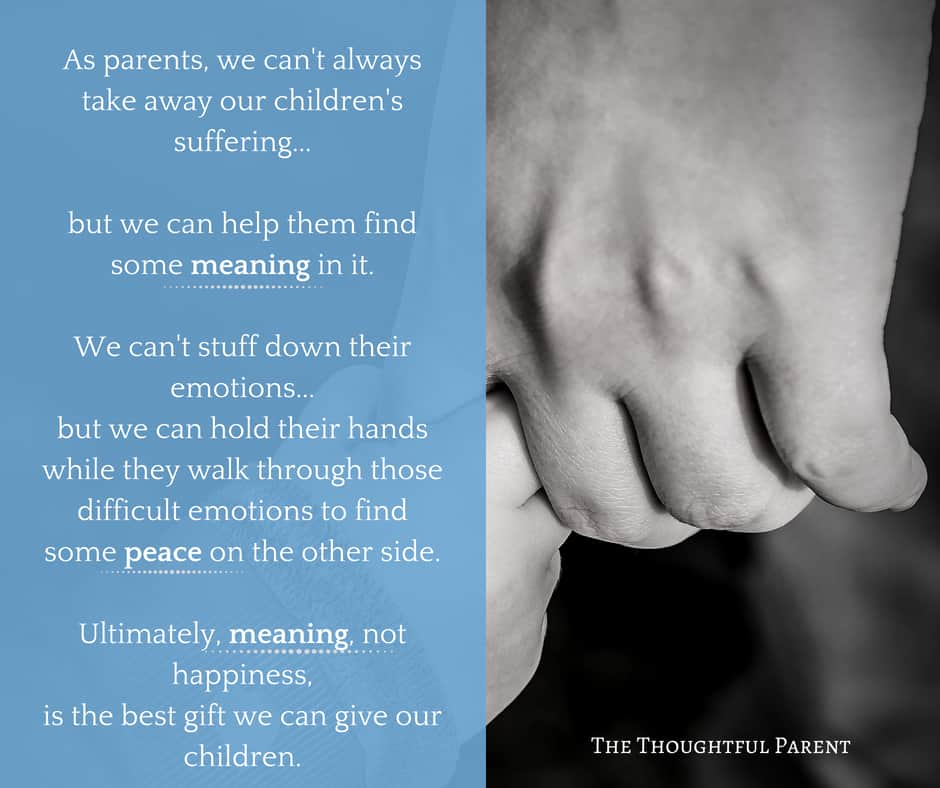
For parents, what this means, I think, is that we can’t always take away our children’s suffering, but we can help them find some meaning in it. The key to children’s happiness is not stuffing down their emotions—but we can hold their hands and walk beside them while they walk through those difficult emotions to find some peace on the other side.
Ultimately, meaning, not happiness, is the best gift we can give our children.
Are you interested in learning how to foster true joy in your kids’ lives by fostering social-emotional skills?
Sign up for The Thoughtful Parent newsletter on Substack to learn about this and other parenting tips.
You might also enjoy:
Social-Emotional Development: A Parent’s Guide
What is the Goal of Childrearing?
We Want Our Kids to be Kind…But How Do We Foster It?
The Art and Science of Raising a Sensitive Boy (without crushing his spirit)
Related Resources:
How to Talk so Kids Will Listen


Perfect for Pinning:

Leave a Reply