

Sneak peek: What does child rearing really mean? Learn why it matters and the goals behind raising emotionally healthy children.
W
On the face of it, this may seem like a silly question—what does child-rearing mean to you? Another way of saying it is: What is your parenting philosophy? When you really think about the core of your parenting ideas, what do you feel is the purpose of parenting? I think most parents would say something along the lines of their goal being to raise a happy, healthy, kind child who can function independently in the world as an adult. Depending on your particular beliefs, aspects of religious, spiritual, or moral teaching may be part of your answer as well. In looking for the best parenting advice, taking into account your beliefs about child rearing is crucial.
What Is Child Rearing?
Child rearing refers to the process of raising, guiding, and supporting a child’s physical, emotional, social, and intellectual development from infancy to adulthood.
While many people think child rearing is mainly about discipline or behavior, modern child development research shows it also involves emotional connection, resilience, independence, and healthy relationships.
Key Takeaway
Child rearing is the process of guiding a child’s emotional, social, physical, and intellectual development from infancy to adulthood. The goal is not to raise perfect children, but to help children grow into emotionally healthy, resilient, compassionate, and capable adults through consistent support, connection, and guidance.
Why Is Child Rearing Important?
Child rearing matters because childhood experiences help shape the foundation for nearly every aspect of adult life. The relationships, support, guidance, and emotional environment children experience early on influence how they see themselves, interact with others, and cope with challenges later in life.
Research in child development consistently shows that children thrive when they have strong emotional connections with caring adults. Secure relationships help children develop confidence, resilience, empathy, emotional regulation, and healthy social skills.
This is one reason why parenting involves much more than discipline or academic achievement. Children are constantly learning through their interactions with caregivers. They learn how relationships work, how emotions are handled, how conflict is resolved, and whether they are valued and understood.
Even small everyday moments matter. The conversations we have with children, the way we respond to their emotions, and the consistency of our support all contribute to their long-term development.
While no parent gets everything right, the overall emotional climate children experience can have a lasting impact.
A Child Rearing Philosophy Based on What?
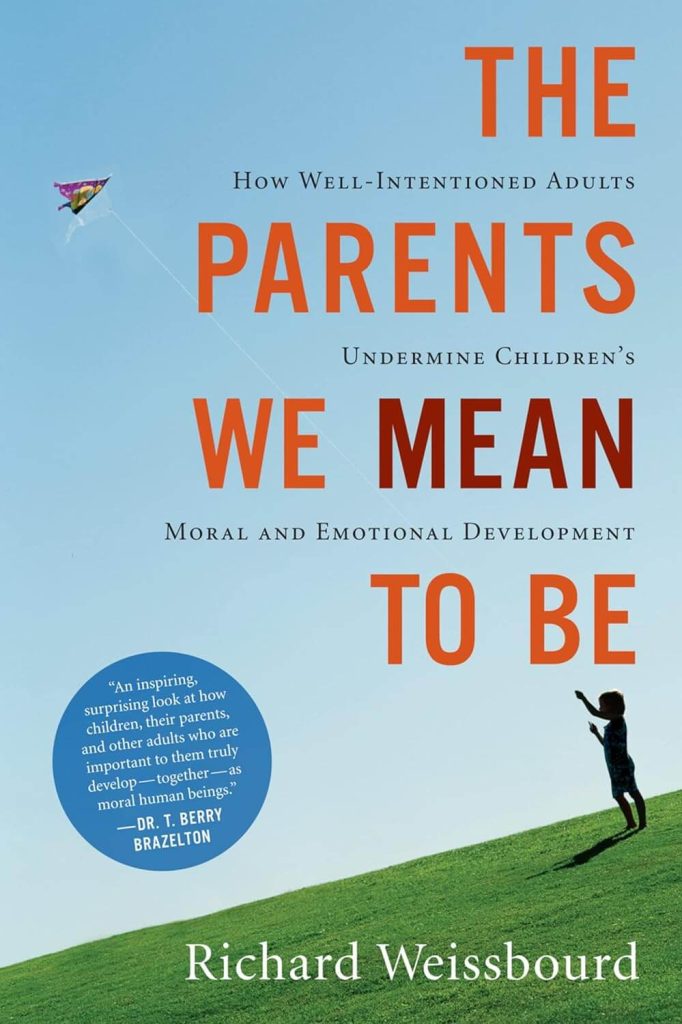
I raise the question of child rearing philosophy after reading an interesting article by psychologist Richard Weissbourd. He turns research like that of Baumrind’s on its head. Essentially, he contends that children’s happiness or self-esteem shouldn’t be the end-all measure of parenting “success.” He argues (and research backs this up) that many parents in today’s American culture have begun to put their child’s happiness and self-esteem as a primary parenting goal, often over morality and maturity.
Now, of course, all parents want their children to be happy. The real question, however, is what is the best route to get there? This becomes one of the driving questions behind our child rearing philosophies. Weissbourd contends (and I agree) that the best way to promote children’s happiness is to help them learn to focus on their relationships with others. He states,
“Yet the irony is that when parents prioritize their children’s happiness or self-esteem over their attentiveness and care for others, children are not only less likely to be moral: they are less likely to be happy in the long run. Too much attention to how children feel moment to moment, and to how they feel about themselves, can make children preoccupied with their own feelings and less able to tune in to or organize themselves around others. It can deprive children of key capacities they need to have gratifying relationships– to be good friends, colleagues, parents, grandparents– the true source of lasting well-being.”
What Are the Main Goals of Child Rearing?
For many years, parenting culture has often emphasized external markers of success: good grades, achievements, obedience, or impressive accomplishments. But many child development experts argue that the deeper goals of parenting extend far beyond performance.
Harvard researcher Richard Weissbourd has written extensively about the importance of raising children who are caring, ethical, and emotionally grounded — not simply high-achieving.
In a culture that often prioritizes success and productivity, Weissbourd argues that children also need strong moral and emotional foundations. They need to learn empathy, responsibility, kindness, and the ability to form meaningful relationships. Weissbourd thinks that instead of happiness, our goal in parenting should be helping our children develop maturity. Maturity involves learning to regulate your own emotions, handle conflict amicably, and self-evaluate your behavior.
This perspective shifts the focus of child rearing away from perfection and toward healthy human development.
The main goals of child rearing may include:
- helping children feel emotionally secure
- teaching empathy and compassion
- developing resilience and independence
- encouraging curiosity and problem-solving
- building strong moral values
- preparing children for healthy relationships
- helping children develop a strong sense of identity and self-worth
Ultimately, the goal is not to control children or shape them into flawless individuals. Instead, child rearing is about gradually helping children become capable adults who can navigate life with confidence, connection, and emotional health.
By focusing on a child rearing philosophy that puts less emphasis on momentary happiness and more on maturity and relationships, happiness will be the ultimate prize.
Related Reading: The Secret to Raising Happy Kids: Don’t Focus on Happiness
Understanding Our Children
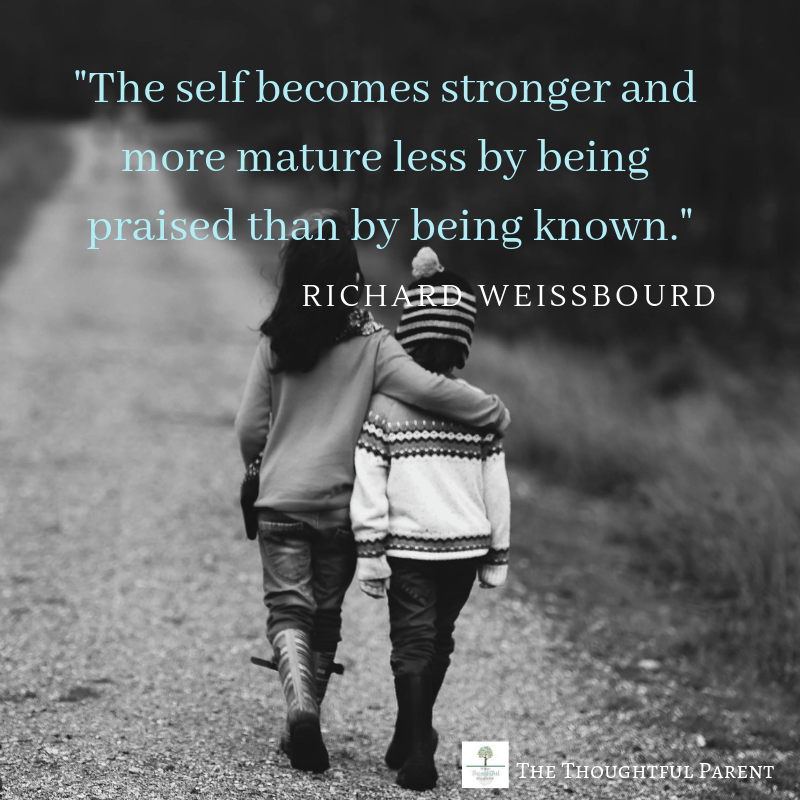
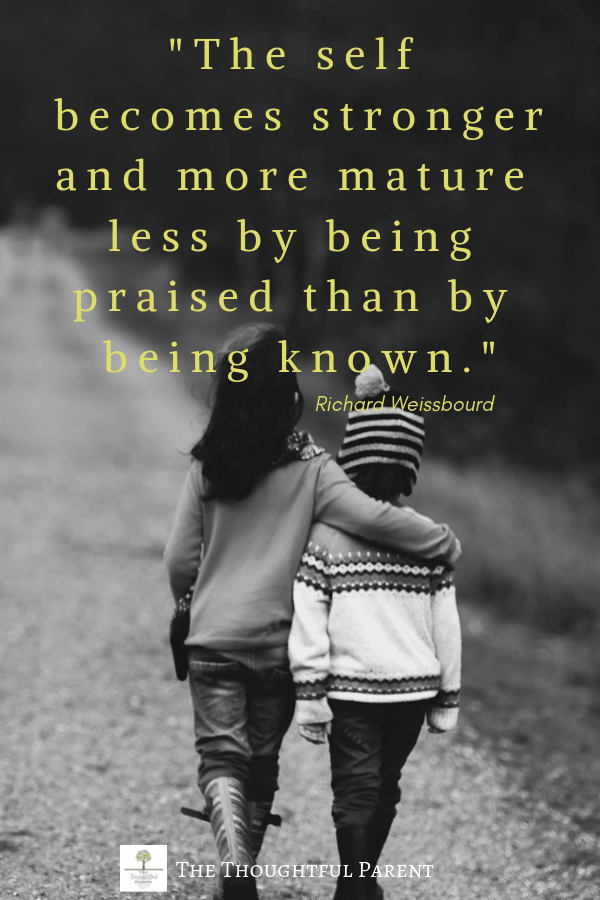
Weissbourd offers several great suggestions for how to nurture maturity in children, but his discussion of the strength of self is particularly good. While it is tempting to think that praising children all the time helps build their sense of self, Weissbourd makes what I think is a compelling statement,
“The self becomes stronger and more mature less by being praised than by being known.”
This is something I know I want to remember. As adults, we all know we can easily see through false praise; whether it be from a boss, friend, coworker, etc. I think kids can see through false praise many times too. According to Weissbourd, it is more important that a child feels that the parent knows him/her—their unique qualities, likes and dislikes, and ways of interaction.
All good things to remember! Happiness (for ourselves and our children) may be one of our goals, but actually focusing less on ourselves may be the path to get there.
What Does Good Child Rearing Look Like?
Good child rearing does not require perfect parenting.
In fact, one of the most reassuring findings from developmental psychology is that children benefit most from relationships that are generally responsive, supportive, and emotionally safe — not flawless.
Good child rearing often includes:
- warmth and emotional connection
- consistent boundaries and expectations
- opportunities for independence
- emotional support during challenges
- guidance rather than harsh control
- open communication
- repair after conflict or mistakes
Children do not need parents who never lose patience or always know the right answer. They need caregivers who are willing to stay connected, continue learning, and repair relationships when difficulties arise.
Good parenting also recognizes that children are individuals, not projects to perfect. Each child has unique strengths, challenges, temperaments, and emotional needs.
Part of effective child rearing is learning to guide children while also respecting who they are becoming.

Audible: listen to books while still doing all your parenting tasks
This can be difficult in a culture that often pressures parents to optimize every aspect of childhood. But many experts increasingly emphasize that emotional connection and secure relationships matter far more than perfection.
At the end of the day, successful child rearing is not measured by whether children behave perfectly or achieve constant success. It is reflected in whether children grow up feeling loved, emotionally secure, capable of healthy relationships, and able to move through the world with both resilience and compassion.
Why the Same Strategy Doesn’t Work for Every Child
Good child rearing isn’t just responsive and consistent — it’s also specific to the child in front of you. A strategy that calms one child down can escalate another, and that’s not a sign you’re doing it wrong. It’s information.
This is one of the most common frustrations I hear from parents: you read a well-reviewed parenting book, follow its steps closely, and still watch your child react exactly the way you were told they wouldn’t. The book wasn’t wrong, exactly — it was written for an average child, and your child isn’t average. No child is.
Each child is a unique assignment. Not every parenting strategy works the same for every child, because parenting isn’t something that happens to a child — it’s shaped just as much by who that child is. A child’s temperament — how sensitive they are to stimulation, how quickly they recover from upset, how they approach new situations — changes which version of “warmth” or “structure” actually lands. Understanding the different types of temperament is often more useful than any single parenting method, because it tells you which methods are worth trying first for your specific kid.
So when a strategy doesn’t work, the goal isn’t to try harder at the same approach — it’s to look at what your child’s reaction is telling you, and adjust accordingly.
What is your philosophy of child rearing? Let me know in the comments!
Related Resources:

Perfect for Pinning:
The Mother
The myth of self-esteem parenting seems to have grown out of the ME generation.
I’m not suggesting that bashing your kid is a good idea. But the primary job of parenting is to raise a self-sufficient, morally and ethically capable child who can THINK and act responsibly.
And that requires discipline. Something that the self-esteem parenters seem to forget.
Mine have all been raised in a more or less tough love environment, where they were forced to own up to their mistakes and responsibility.
And they, paradoxically, are among the most self-assured young men I have ever met.
Amazing what self-reliance can do for your ego.
TheFeministBreeder
I agree with this. I think it is important for a child to have a healthy dose of self-esteem, but also to understand that they need to place their needs in relation to the needs of others. I want my children to feel good about themselves, but not think that getting their way is the only thing that matters. For this reason, we don’t give into their every little whim. They are loved and well cared for, but we don’t allow either child to dictate the happiness of the entire household.
On the other hand, I cannot help bu tell my child how smart or talented he is when he names all the presidents, or says his ABCs (he’s 2.5). I also praise him for sharing with others and being nice to his baby brother. I want him to feel pride for his accomplishments.
sarasophia
Following from MBC—please follow back…
<3 sarasophia
HerMedia
"their attentiveness and care for others" this is sooo true ! Great post. I am reading a book right now about raising we children in a me society. Sociallbly responsible children that is my childrearing goal 😉
I would love to see your blog at herblogdirectory.com
Julia Moravcsik, PhD
Maturity seems like a great goal for kids. But honestly, the happiest adults I see aren't particularly mature. They have a childlike quality to them. If a kid learns to regulate emotions, handle conflict, and self-evaluate, that's great. But adults who seem REALLY good at that seem kind of anal — the ones who don't know how to have fun.
Maybe there are a lot of ways of being happy and we should nurture all of them.
Brenda C
I agree will all of you ladies. Great post. It’s not my first rodeo but I let my guard down as a single mother im the fun mom and the bad mom. I wish kids came with a manual, I lost mine that’s why im here. I’m like a sponge open to receive info. But yes happy stress free, full of self love and maturity is the goal