
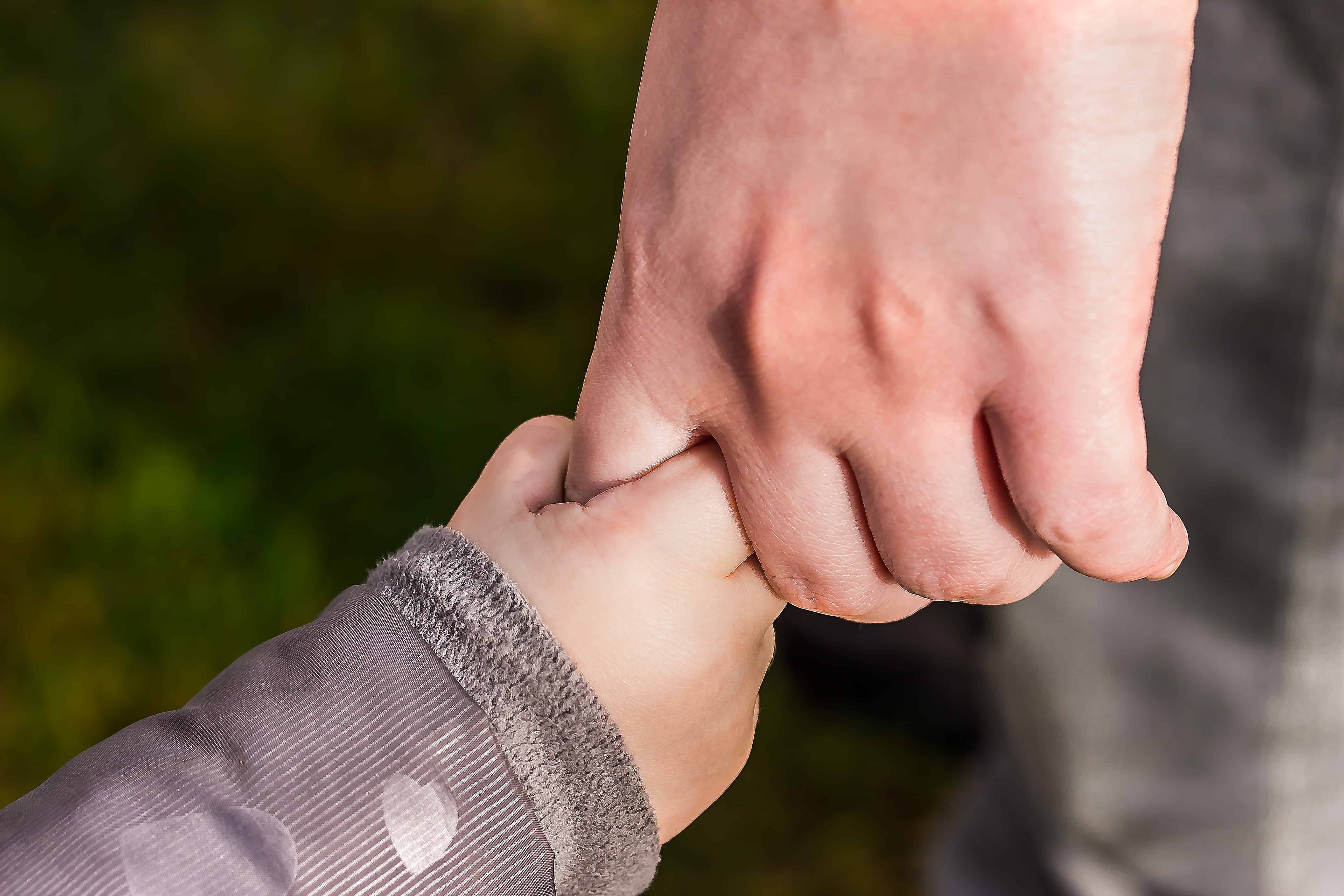
Sneak peek: The concept of attachment in child development is mentioned a lot in the parenting world, but there are many misconceptions about what it really means. A research-based look at “attachment.”
The word “attachment” is used a lot in parenting magazines and often comes up in discussions of child development and parenting. Of course, all us have some notion of what the parent-child attachment is all about, but attachment in child development has a very specific meaning. In fact, a whole line of research has developed focused solely on child attachment theory. So I thought I’d offer a little background on what psychologists mean when they discuss attachment (and yes, it’s different from attachment parenting).
The academic understanding of attachment was developed primarily by two psychologists—John Bowlby and Mary Ainsworth. Bowlby became interested in parent-child attachments in post-World War II Europe after he saw the distress and psychological damage caused by children being separated from their parents due to war and disease. At that time, parents were often not allowed to see their hospitalized children, sometimes for months on end.

Related reading: How Breaking the Attachment Parenting “Rules” Taught Me One of the Best Parenting Lessons
He began to theorize that infants and children were evolutionarily wired to seek proximity to an attachment figure (usually a parent) due to the need for safety, security, and care. Infants and young children use “attachment behaviors” such as crying, clinging and following to try to meet this need to be close to their attachment figure.
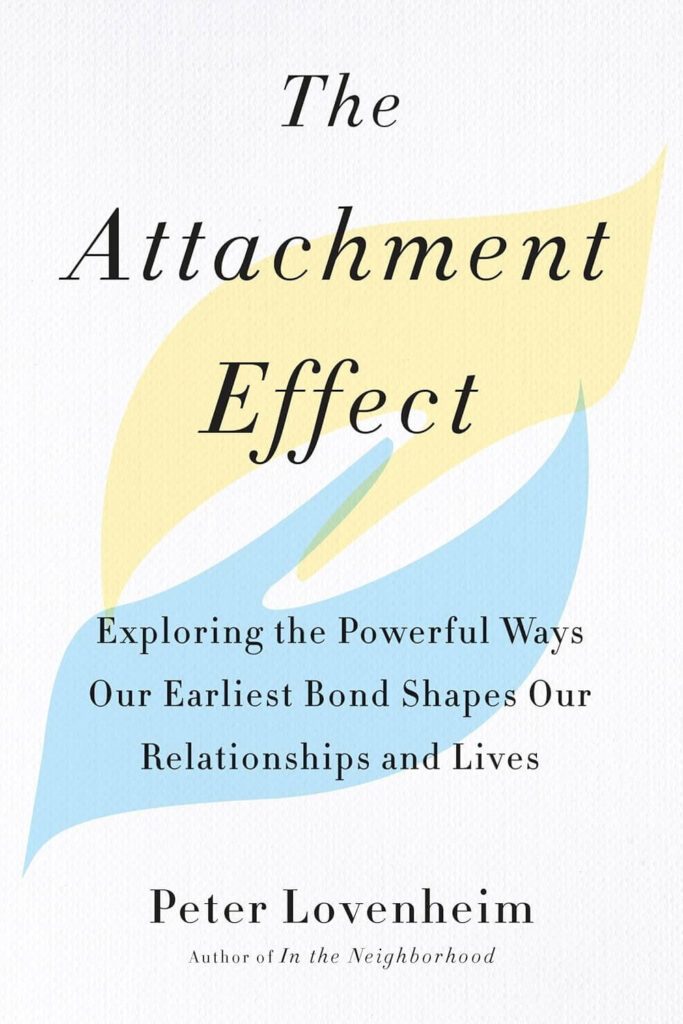
He also theorized that children who experience insensitive or unresponsive reactions from parents will be much more likely to have psychological problems later in life. This understanding of attachment became the basis of much of the psychological study of child development of the time and continues to inform child psychology studies of attachment today.
Related reading: A Parent’s Guide for Understanding the 4 Attachment Styles
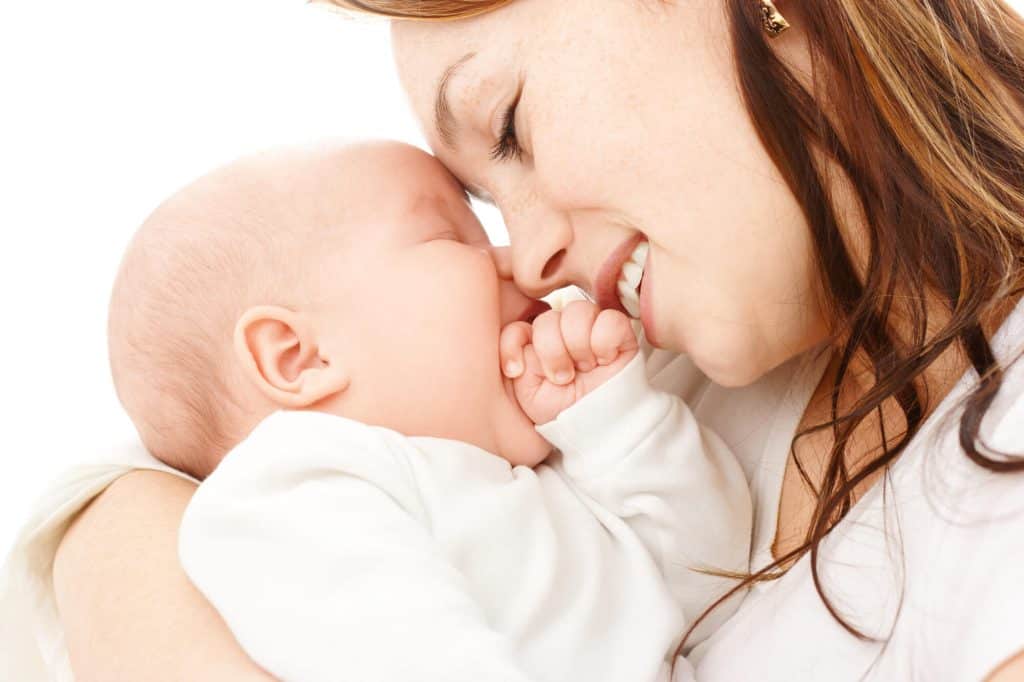
Why is Attachment Important in Child Development?
Mary Ainsworth, a student of Bowlby’s, further refined attachment theory. She argued that the interaction between the parent and child is key to determining what type of attachment is formed. If the parent is responsive to the child’s need for security and safety, the child learns that the parent can be relied upon. In contrast, if the child’s needs are met with unresponsiveness from the parent, the child learns that the parent cannot be relied upon and the child may develop means of coping with this such as becoming overly clingy or avoiding the parent.
Another interesting aspect of attachment in child development is the idea that children develop an “internal working model” of how relationships work based on their attachment with their parent. In other words, if a child feels their parent can be trusted to meet their needs, they (unconsciously) feel that other adults (i.e., teachers, friends) are also trustworthy. Similarly, children also develop internal working models of themselves also. If their parent is responsive to them, they come to understand that they themselves are worthy of care.
At this point you may be thinking that all this theory sounds great but is there any evidence to back it up and what does all this mean in real life? In my next post on attachment styles, I will discuss the procedure Mary Ainsworth used to study attachment and her results.

How Does Attachment Affect Child Development?
Based on the scientific understanding of attachment, it is easy to see how the presence or lack of secure attachment could influence a child’s development in numerous ways. Children who lack a secure attachment with a caregiver are at risk for a variety of emotional challenges including:
- lack of social skills
- poor emotional regulation
- depression or anxiety
These issues arise, in large part, because children lacking secure attachment do not have an adult modeling emotional skills and emotional regulation for them. Additionally, without a secure attachment, children may find other ways of coping with emotional distress (e.g., avoiding others, clinginess) since their caregiver is not emotionally responsive enough to help them through these emotions.
You Don’t Have to be Perfect
One common misunderstanding of attachment in child development is the idea that if a parent is not “perfect” in meeting the emotional needs of their child, then attachment will suffer. This could not be further from the truth. In fact, the subtle emotional attunement that plays out between parent and child is an ongoing, fluid process. Sometimes, especially in infancy (when nonverbal cues are so prevalent), parents misjudge a cue or are not completely attuned to the needs of their infant. The key aspect of this interaction that helps maintain the attachment is the repair of this mismatch. If the parent is able to “try again” and meet the missed cue or reestablish the emotional attunement, the secure attachment will prevail.
See more on this topic: What Every Parent Needs to Know About Attachment Parenting
This is a really powerful message that is built into attachment theory—the idea that mismatches occur and that they can be repaired. This constant mismatch and repair process actually further strengthens the attachment relationship. Authors Ed Tronick and Claudia Gold express this beautifully in their new book,
“A baby who experiences typical mismatch and repair develops into a person with an internal voice that says, I can change things. When people move through mismatch to repair over and over again in relationships, whether as infants or adults, they develop agency, defined earlier as a sense that one has control over one’s life and the power to act effectively in the world. They come to new situations with a hopeful feeling, armed with a positive affective core. But when they carry an expectation of perfection, they miss out on the success of moving through a bad moment to a good one, of bumping the boundaries of their own selves against the boundaries of another.”
― Ed Tronick and Claudia Gold, The Power of Discord: Why the Ups and Downs of Relationships Are the Secret to Building Intimacy, Resilience, and Trust
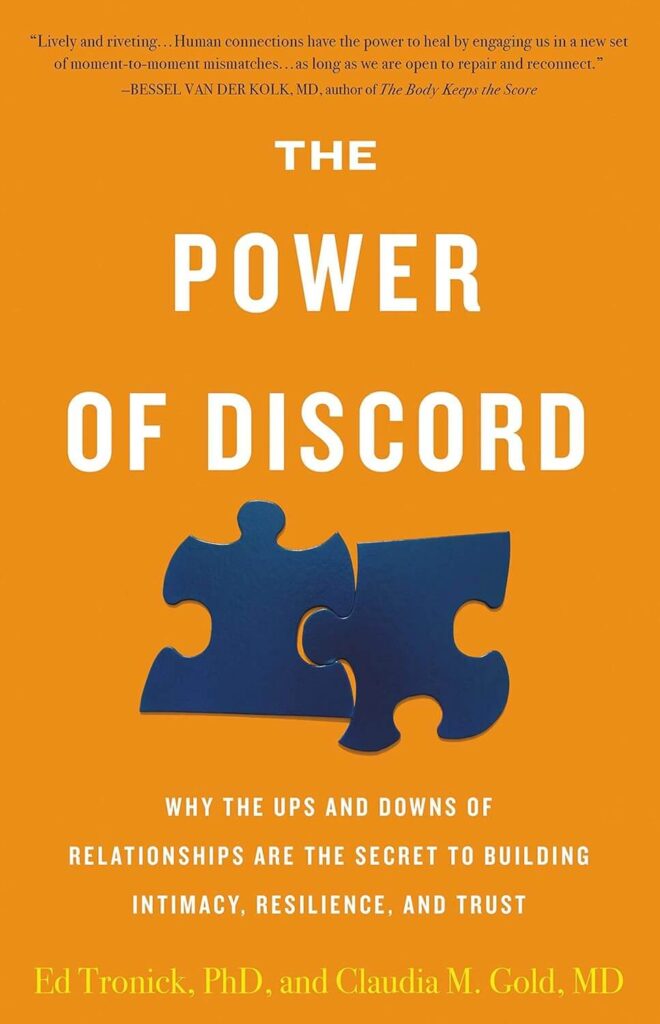
Isn’t this a lovely thought? That a bit of discord or mismatch in our relationship with our children might actually build our children’s emotional strength. This happens when we stay open to learning from our children and striving to meet their needs.

Related Resources:

Leave a Reply