
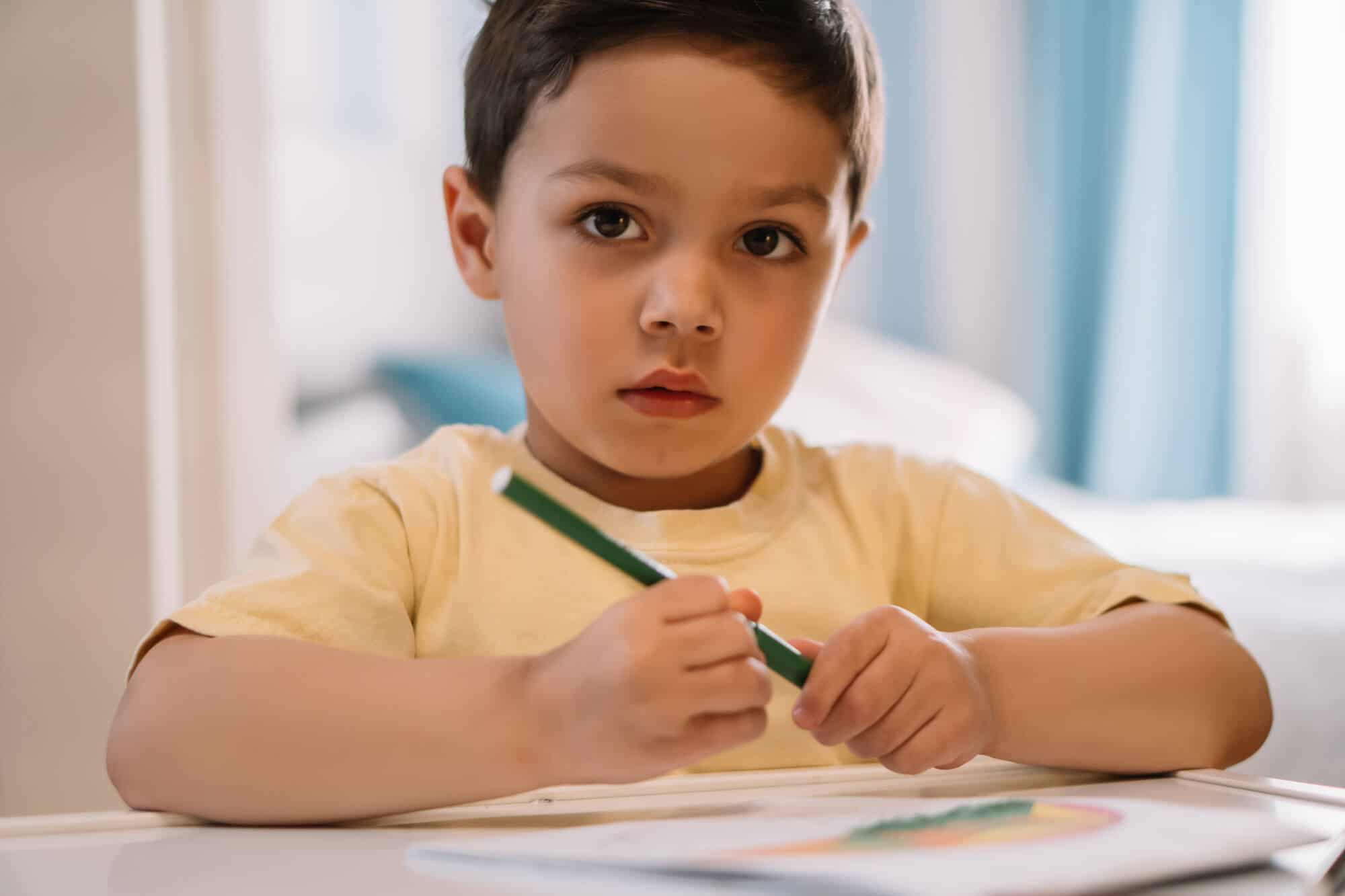
Sneak peek: The first day of kindergarten for parents is almost as big an event as it is for children. While your child’s new independence may make you feel less needed, there are many important life lessons your kindergartener still needs from you.
This school year is THE year for me — my youngest is going off to kindergarten. As a stay-at-home mom, this feels like graduation day. I’m sure moms of all varieties feel the same, though. The bittersweet feeling of this transition is acute. As much as this is a big moment for my son, the first day of kindergarten for parents is equally momentous.
Key Takeaways
Here’s what your kindergartner still needs from you, even as they grow more independent:
Kindness, modeled at home — not just talked about
Help finding their passions — even if school doesn’t spark it
Help naming their emotions — especially after the school-day meltdown
Help finding meaning in hard moments — without you swooping in to fix everything
Help sorting fact from fiction — as the outside world gets louder
The last 5 years have been filled with so much parenting intensity. There’s been joy, exhaustion, struggle, love, self-doubt, and all the rollercoaster of emotions that come with the early years of parenting. We’ve survived sleep deprivation, tried to keep our patience during many a toddler tantrum, managed the ups and downs of potty training, and now we have a 5-year-old who hardly resembles that little baby we brought home years ago.
This post contains affiliate links. Purchasing through these links provides me with a small commission (at no added cost to you). Thanks!
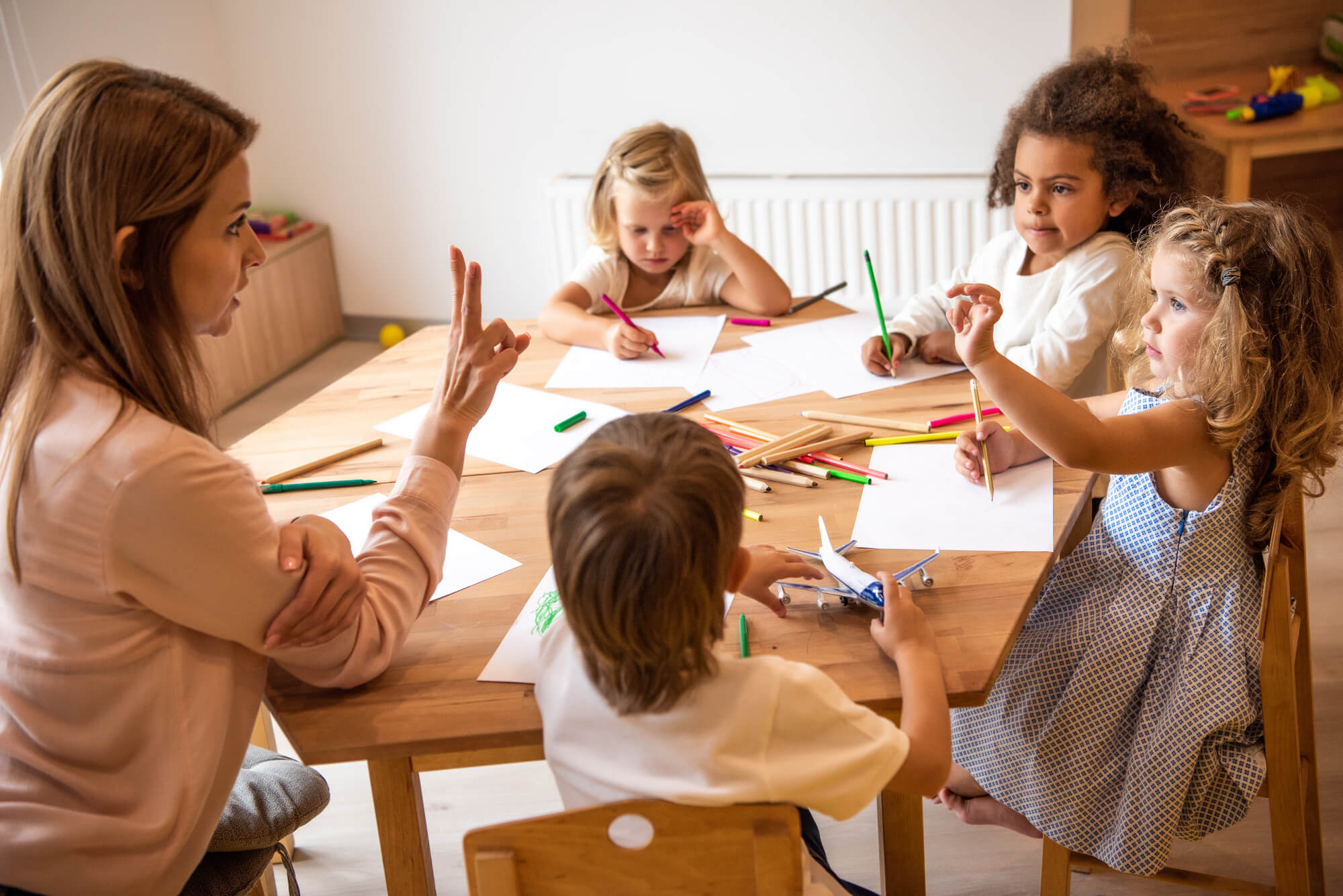
Our 5-year-olds are now eager learners, excited by the world around them. They are now able to (mostly) hold a conversation with us for longer than a minute, even if it’s about their favorite insect or fictional character. With our help and guidance, they have made amazing developmental leaps and are now ready to take on the new adventures that kindergarten will bring.
Related reading: The Key to Making Sense of Your Child’s Crankiness: Understanding Toddler Growth Spurts
What Does My Kindergartner Still Need From Me on the First Day?
As a mom in this stage of life, it’s easy to feel like our kids don’t need us much anymore. Sure, they are still young, but they are so independent in many ways. There’s no more changing diapers, hourly feeding (unless raiding the pantry counts), rocking, or singing soothing songs. However, after experiencing the first day of kindergarten with my 9-year-old a few years ago, I have a little more perspective on what this transistion means for parenting. As you might have guessed, these kids of ours, even with their “big kid” mentality, still really need us.
They Still Need You to Model Kindness
With school and more interaction with friends, our kindergartners will inevitably encounter some experience of unkindness. Many of our kids have probably encountered a bit of this already. Kids tease, they “unfriend,” and they may even push or shove. This is typical (although not acceptable), but it’s difficult for us when we realize that the safe bubble we’ve tried to create for our kids no longer exists. They will get their feelings hurt. The first day of kindergarten for parents means mentally preparing yourself for this reality.
What we do know from research, however, is that kids are wired for kindness at some level. In lab experiments, babies as young as 6 months old gravitate toward the kind puppet or character. For this kindness instinct to really take hold in older kids, however, it has to be modeled…a lot. Schools that implement kindness programs such as Paths tend to maintain a kind atmosphere, even into the middle school years (yes, it’s possible).
Related reading: Social-Emotional Development: A Parent’s Guide
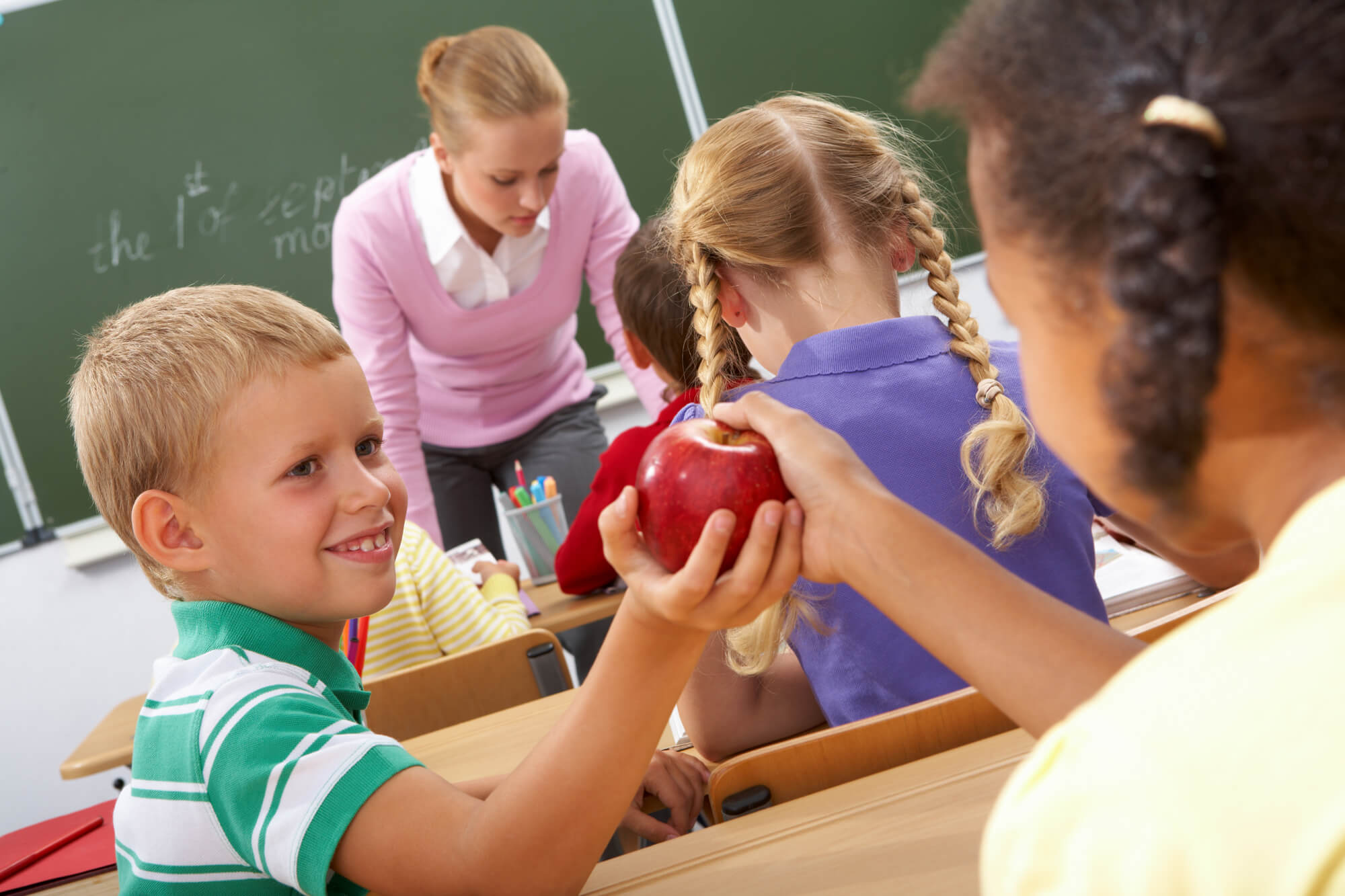
Modeling kindness at home is crucial too, of course. Our daily interactions with our kids, but also with store clerks, servers, and yes, even other drivers, all illustrate to our youngest observers what it looks like to be kind in a sometimes harsh world.
They Still Need You to Help Them Find Their Passions
With the first day of kindergarten comes a whole new world of learning for our kids. Many kids gravitate towards certain topics right away — dinosaurs, trains, cowboys, mermaids. These intense interests in a single topic is perfectly normal and actually kind of awesome for kids’ developing brains.
While kids don’t have to find their lifelong passion in kindergarten, I have found it helpful and fun (for them and me) to offer them opportunities that might spark their interests. School does a lot of this for us by exposing them to many different topics and skills. Some kids, however, may not find their interest in school. The first day of kindergarten for parents means that you may have to play a big role in helping them find their passion.
My youngest child, while he loved preschool, didn’t find anything that totally piqued his interest. It took it upon myself to find books, videos, and resources that might be something he could really get into. So far, it’s been comic books! He loves “reading” them and trying to write his own. You never can tell where a simple interest can take kids’ learning.
Related reading: Executive Functioning Skills: The New Research that Convinced Me to be a Soccer Mom Dropout
They Still Need You to Help Them Figure Out Emotions
Little kids (and even not-so-little ones) have big emotions. Although our kindergartners may be mostly past the tantrum days, those big emotions sometimes still overtake them. Long days of learning and less quiet time often mean meltdowns for kids at the end of the day
Many schools are getting on the bandwagon with social-emotional learning, but it mostly falls on us parents to help our kids cope when big emotions try to overwhelm them. Kids often hold themselves together emotionally well at school and the teachers report that they did great. Once at home, they often break down and let out all the emotional tension that has piled up during the day — this is often called “after school restraint collapse.” We should consider this a good sign! As hard as it is to be the “emotional trash can” for our kids, it means they feel safe and comfortable with us to let their guard down.
This struggle has been real for me and my now 9-year-old. Even as a third-grader last year, he often came home an emotional mess after school. We can become the “emotion coaches” for our kids to help them figure out these emotions, label them, and understand that no emotions are “bad.” It’s also important to realize, however, that we don’t have to get our kids “back to happy” too soon. Trying to make them happy all the time isn’t really our job. We can listen, guide, but we usually can’t force the emotions we want them to have.
Ultimately, modeling self-regulation is the best gift we can give them. We don’t have to join their emotional turmoil, but we can be there to support them as they work through it.
They Still Need You to Help Them Find Meaning in Hard Moments
Upon entering school, kids encounter a lot of challenges they haven’t experienced before — kids who don’t “play nice,” teachers they may not enjoy, schoolwork that’s hard, etc. These are real challenges and our kids need real guidance. However, in many cases, we cannot “fix” the problem. It’s tempting to try to fix it all: change teachers, separate classmates, call the principal…the list could go on forever.
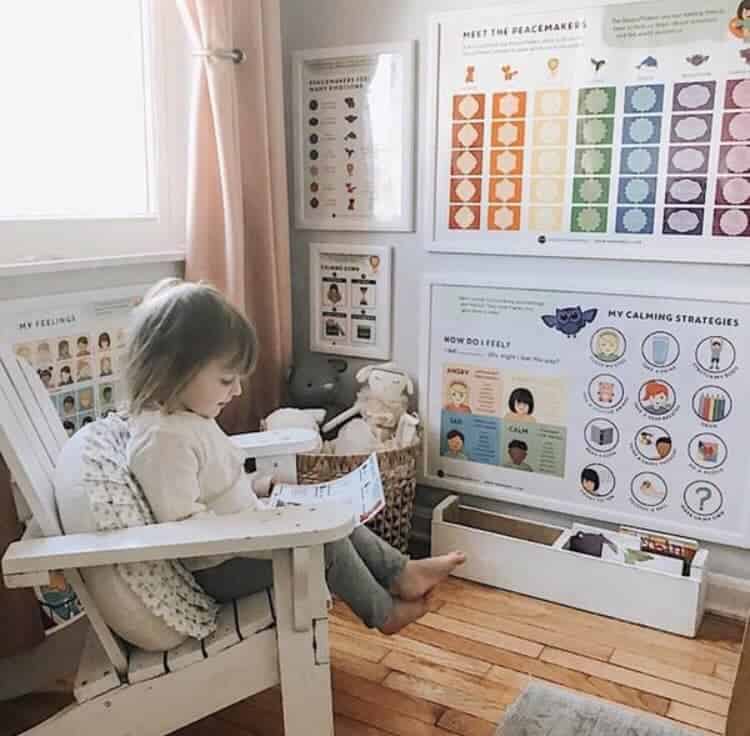
Calming Corner for Emotional Regulation
In some cases, this type of intervention may be needed, but in many cases, we just need to be patient. The first day of kindergarten for parents often means reminding ourselves of this fact. Many times kids work out their differences with classmates, they learn to love that teacher after all, or find that the extra explanation you give on that math problem makes the concept “click.” Patience often pays big dividends in their maturity and growth (and for ours too).
Many times, our kids don’t really need us to fix the problem. They often just need us to listen and provide a context of meaning for the struggle. They need a hand to hold as they face the challenge themselves.
Case in point: my son got in trouble at school last year. Let’s be honest, this is not one of those parenting moments you love. He had to go see the principal because he hit another boy over a football game at recess. I’ll admit it — it was not one of my proudest parenting moments. However, once he faced the consequences of his actions and we talked it ou, he and that other boy became good friends later in the year. In fact, he played with him for much of the summer! Growth and maturity require patience.
They Still Need You to Help Them Sort Fact From Fiction
How many times have your kids come home from school with a tale from a friend that you know is not true? Or maybe it’s a story of something a classmate saw online that you know is fake. As my oldest has gotten older, this, unfortunately, has happened more frequently. Last year, it was a classmate watching videos of ouija boards and convincing others that they were real. Other times, it was watching the news and not getting the story quite straight.
All this is to say: our kids will hear all sorts of things and school and much of it we will probably not like. It’s our job to help them make sense of what is real, what is exaggerated, what fits our vales, and what they really need to be shielded from. In our age of technology, this has become one of our biggest and most important parenting tasks.
As kindergarteners, this may not be so much of an issue (I hope), but as they grow this issue becomes more daunting. Numerous times I’ve had to sit down and explain to my 9-year-old about how his friends may not be seeing the whole story or that everything they see online may not be true or appropriate. Hard lessons for a little brain to comprehend, but important nonetheless.
A Few Questions Parents Ask Me About the Kindergarten Transition
Yes — it’s actually a good sign. It’s called “after-school restraint collapse”: kids hold it together all day, then let it out once they’re home with you. It means they feel safe with you.
It varies. Some kids settle in within days; others take a couple of months. A few weeks of extra tiredness or bigger emotions at home is normal — if it’s getting worse after a month, mention it to the teacher.
Keep goodbyes short and confident — lingering usually makes it harder on them. Beyond that, it’s less about one perfect day and more about what you keep showing up with all year.
Kindergarten parents, I will be with you in spirit as you drop off your little ones. Enjoy the moments and be ready for a whole new parenting job. Best wishes for the first day of kindergarten!
Related Resources:
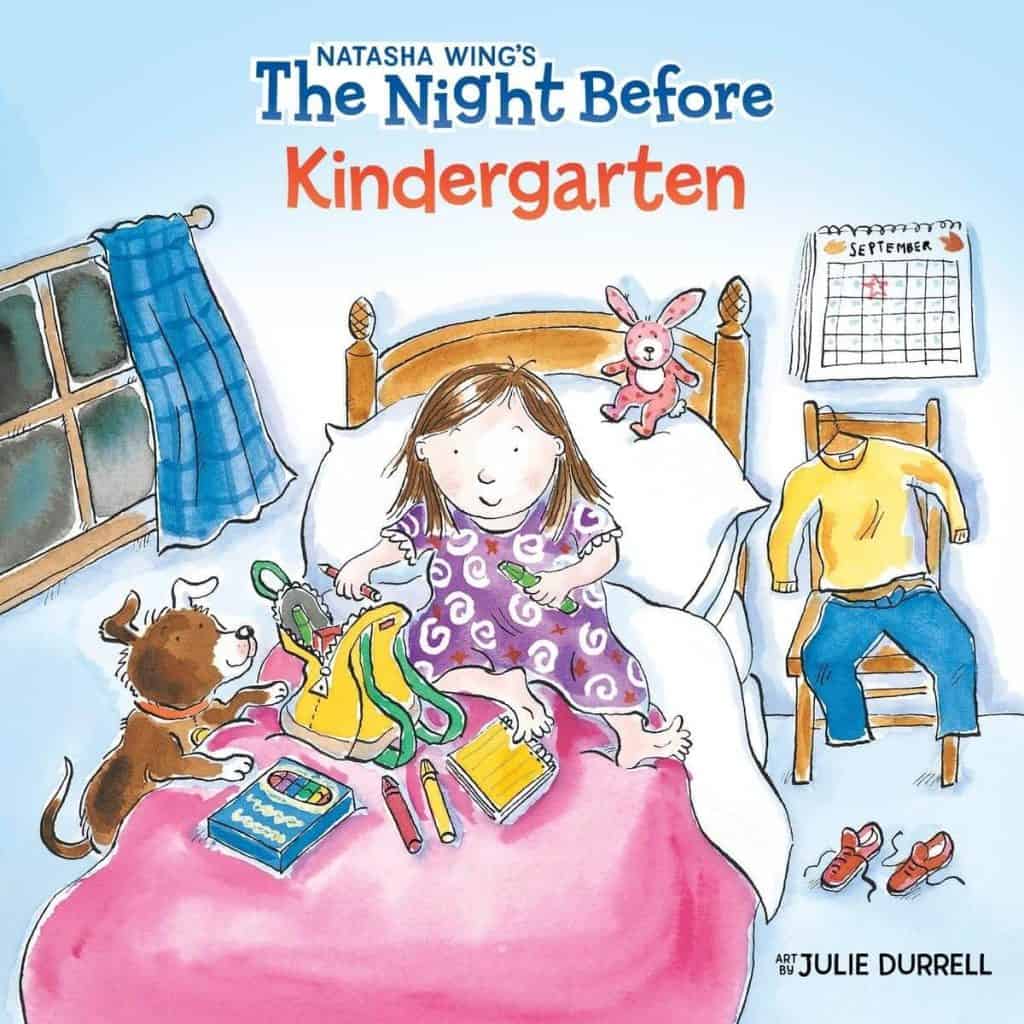


Toys and Gifts for Building Emotional Intelligence
Perfect for Pinning:
Sarah Jenkins
Thank you Amy! With my youngest entering Kindergarten in a few days, I really needed this. So helpful!!