

Sneak peek: Most of us have a goal of raising a thankful child, but the cultural narrative of entitlement is a major challenge. Simple ways to foster gratitude in kids.
Does this sound familiar? Your child is given a lovely gift for a birthday or invited to a friend’s party. You know he loved the gift or party. When it’s time to leave, you say the cliché phrase like all good parents do, “What do you say?” Your child looks at you and then murmurs a weak, “thank you” to the gift-giver or host. You smile and try to laugh it off, but deep down, you worry you aren’t raising a thankful child.
You know in your heart that your child really enjoyed the gift or party. Why were they so unenthusiastic with their appreciation? Are you really raising an ungrateful child?
Key Takeaways
Teaching kids gratitude works best through small, repeated moments rather than one big lesson. Say what you’re grateful for out loud, talk about needs versus wants, and explain how you make your own spending choices. Keep encouraging thank-yous, since the habit of speech comes first. Talk about feelings to build the perspective-taking gratitude depends on.
This post contains affiliate links. When you purchase through these links, I receive a small commission (at no added cost to you).
This situation is all too common, right? A major parenting goal for most of us is raising a thankful child who really appreciates all they’ve been given. Besides the inherent value of gratitude, raising grateful kids also increases their chances of being happy kids (and adults). Numerous studies have shown that gratitude is a major predictor in happiness, even among the younger generation. Gratefulness is a key component of kids’ social-emotional development.
In American today, however, this goal is very challenging. In American culture in our time, kids are inundated with the opposite message. Consumerism and consumption are the predominant narrative in popular culture, ads, websites and pretty much all media to which kids are exposed.
How to Raise Grateful Children
What’s the answer? Ban all shows, ads, and trips to the mall for our kids? That seems unrealistic, right? If that were our approach, we’d also have to limit friends’ interactions, school time and everything else that promoted an attitude of consumption. Not likely.

From a research perspective, what do we know about child development that can help us in raising a thankful child?

Children’s ability to understand the concept of thankfulness and gratitude develops with age and maturity. All along their path of development, we can incorporate small things into our daily interactions with them that will set the stage for a greater understanding of gratitude. Here are a few ideas for things we parents can do to foster gratitude:
Model thankfulness
This seems like a simple idea but it can have a big impact. Modeling thankfulness can, of course, be as simple as saying “thank you” to your child when she does a favor for you, but it can also be more than that. Modeling gratitude can be a regular part of daily life when we mention (so our kids can hear us) how grateful we are for things like:
- our kids getting along and not fighting on a weekend afternoon together
- the beautiful weather outside
- your child’s teacher who is especially patient or kind
- your child’s grandparents who babysit regularly
Discuss needs versus wants
Discussing the difference between “needs” and “wants” can be really eye-opening to older kids. Young children (under 4 years old) might have a harder time understanding this distinction. We can help our kids see the difference between items they need to survive and thrive versus items that are nice but are not necessary. Making this distinction clear, helps them see how they can be grateful for all the “add-ons” they have in their lives.
Explain choices
This idea goes along with the discussion of needs vs. wants. For older kids, it’s helpful to discuss how you make choices of needs versus wants in your own life.
Example: you could discuss how you choose not to go to Starbucks every day because it’s expensive and it’s a “want”, not a “need.” Instead, you save that money to give to charity or go on a family trip.
Example: our son was asking what version of the iPhone my husband had. When we told him it was not the latest version, he was surprised and mentioned that a friend at school had a newer one. We explained how the latest-version phone was more expensive and it was a “want”, not a “need.” We explained how we made that choice to save the extra money so he could participate in activities that cost money like baseball. That point really sunk in for him!
Repetition matters
While none of us are fans of our kids saying meaningless “thank yous” for gifts or treats, repetition does have a role in fostering gratitude. Young kids especially learn a lot through repetition and routine. To form a habit of mind, sometimes you must first form a habit of speech. By repeatedly encouraging our kids to say “thank you” or “please” for gifts or items, we reinforce a mindset of thankfulness. Although it may seem half-hearted at first, over time, most kids begin to really understand the significance of their words, especially if you are helping them learn gratitude in other ways as well.
Related reading: The Secret to Raising Happy Kids: Don’t Focus on Happiness
Teaching Toddlers Thankfulness
For parents of young children, the thought of teaching thankfulness may seem daunting. With their limited attention spans and active bodies, it’s often challenging to convey something as meaningful as thankfulness to very young children. Don’t despair! Even young children can learn simple ways of being thankful.
Discuss emotions
While we take our emotions for granted and understand them well, young children are just beginning to understand them. Discussing emotions, what they mean and how to cope with them is essential. One study found that children whose mothers who talked to them about how others might be feeling, were quicker to develop perspective-taking skills (e.g., putting yourself in someone else’s shoes). This perspective-taking ability is an important precursor to empathy. Similarly, discussing with our kids how gratefulness feels and why we should be grateful can broaden their understanding of this idea.

Activities reinforce the message
While talking to preschoolers about thankfulness is important, kids this age learn best through play and activities. While playing pretend, you might encourage your preschooler to act out (or have their stuffed animals or dolls act out) how to show thankfulness to one another. Thankful activities for kids can also be fun for preschoolers. Take a peek at my Pinterest board called Raising Grateful Kids for a plethora of fun activities. Look around discount stores for easy crafts or activities that focus on thankfulness (especially near Thanksgiving time).


Read books about thankfulness and gratitude
The stories we tell our children (and ourselves) matter more than we know. There is some fascinating research to back this up. In one study, children were more likely to reciprocate negatively (e.g., revenge) when a toy was taken from them but were not inclined to reciprocate positively (e.g. gratitude) when it was given to them. However, when kids were read a story about gratitude and positive reciprocity, they were more likely to show those traits in the next round of interactions. In other words, revenge may develop first in kids, but they can also easily be taught gratitude and positive reciprocity through books and stories.
Thanksgiving Gratitude Activities for Kids
Thanksgiving is a natural moment for teaching kids gratitude, because the whole family is already focused on being thankful. These activities work for different ages, take only a few minutes, and can become yearly traditions.
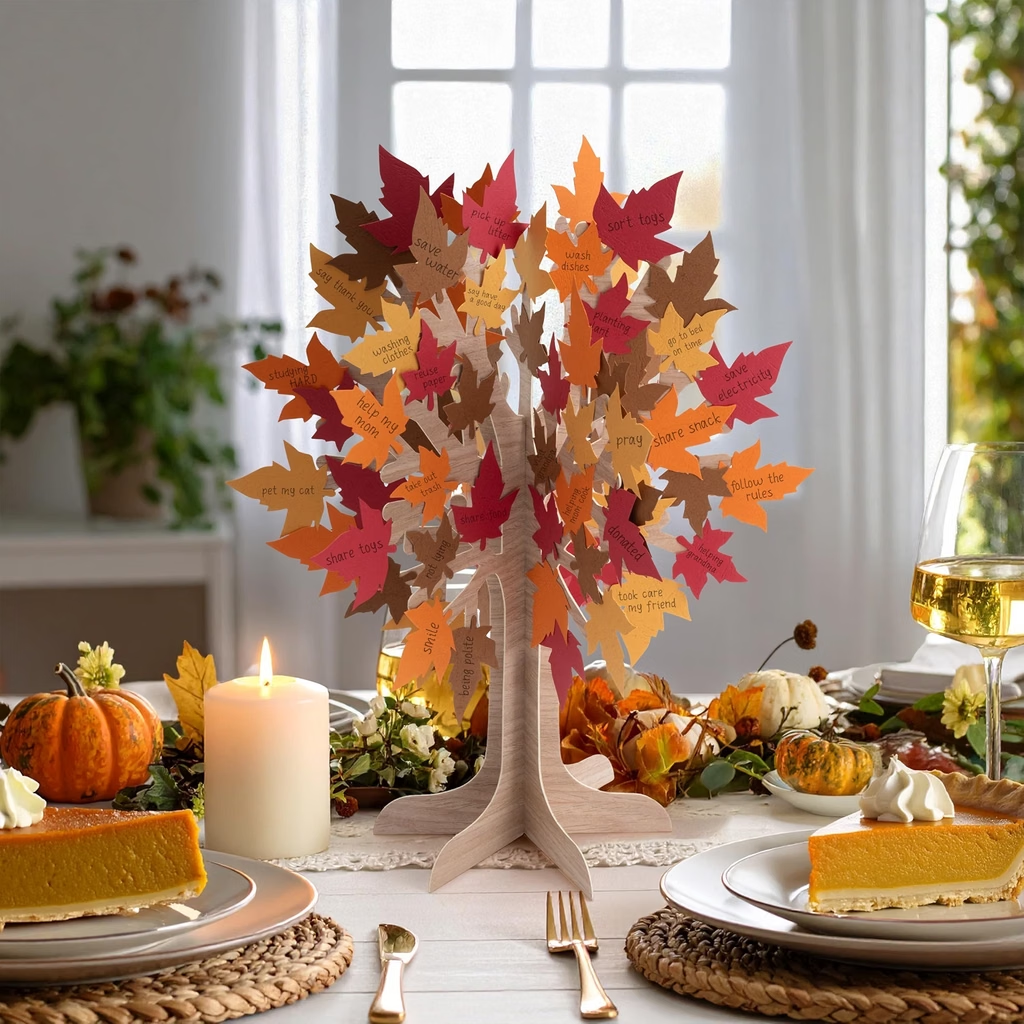
Make a gratitude tree (ages 3 and up)
Cut out paper leaves and trace a bare tree on poster board or a wall. Each day leading up to Thanksgiving, have your child write or draw one thing they’re thankful for on a leaf and add it to the branches. Younger kids can tell you their answer while you write it down. By Thanksgiving Day, you’ll have a full tree and a record of what mattered to them this year.
Pass the thankful jar at dinner (ages 4 and up)
Put slips of paper and a pen at each place setting and ask everyone to write one thing they’re grateful for, then drop it in a jar. After the meal, take turns reading them aloud and guessing who wrote each one. It’s a simple way to hear what your kids appreciate, and for them to hear what the adults do.
Try “thankful for you” notes (ages 5 and up)
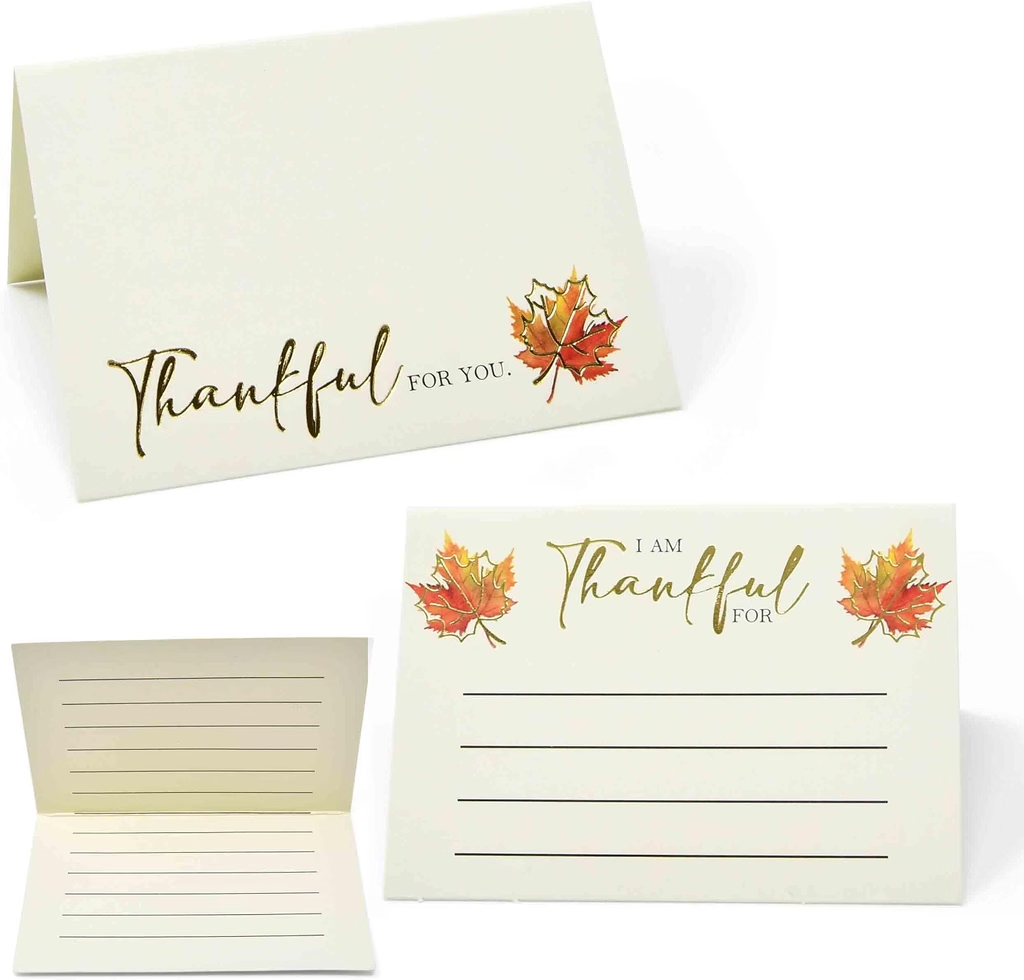
Instead of the usual thank-you for a gift, have your child write a short note telling a specific person why they’re grateful for them, such as a grandparent, teacher or neighbor. Encourage them to name something the person did: “Thank you for teaching me to bake cookies.” Specific notes build the habit of noticing what others do for us, which is the heart of real gratitude.
Give kids a real job in the meal (ages 3 and up)
Let your child help cook, set the table or make place cards. When kids see how many hands go into a meal, they’re more likely to appreciate it. For older kids, talk about where the food comes from, including the farmers, grocery workers and family members who made the meal possible.
Add one act of giving (all ages)
Choose a small way to give back together, like donating canned goods, making cards for a nursing home or helping a neighbor. Afterward, ask, “How did it feel to help?” Connecting gratitude with giving helps kids see that being thankful is about caring for others as well as appreciating what they have.
Start a “rose, thorn, bud” tradition (ages 6 and up)
Go around the table and have each person share a rose (something good), a thorn (something hard) and a bud (something they’re looking forward to). It makes gratitude more honest, since kids don’t have to pretend everything was perfect, and it keeps the conversation going well past the meal.
Looking for more ideas? Browse my Raising Grateful Kids Pinterest board for printable activities and crafts.
Books that Teach Gratitude and Thankfulness
Toddler books on gratitude

Llama LLama Gives Thanks: what toddler doesn’t love a good Llama Mama book!

The Thankful Book: a simple book for toddlers to introduce the concept of thankfulness

Biscuit is Thankful: my boys always loved the Biscuit books when they were younger. A good lesson of thankfulness for young kids.
Preschool Books on Gratitude

Last Stop on Market Street: a little boy rides with his grandma across town and realizes he doesn’t have some of the material items that others have. Grandma helps him see the beauty in the things they do have.

Before We Eat: this book takes a different approach to gratitude by helping kids understand all the hands that go into making their food. With many kids separated from the direct food production, this book is enlightening to see the full process. Having grown up on a farm myself, I had to include this book!
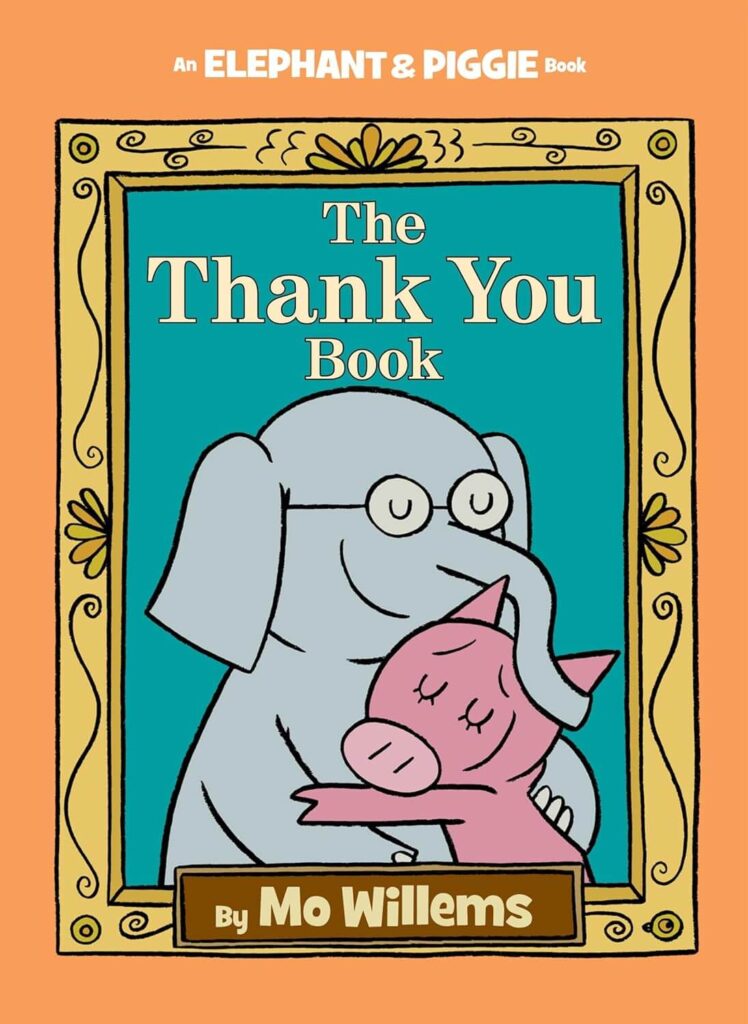
The Thank You Book: My kids love Mo Willems books. This one is fun but still has a great message.

Elementary and older age books about gratitude

Those Shoes: a great book to discuss the difference between “needs” and “wants.”


Grow Grateful: written by a school psychologist, this book helps kids focus on things to be grateful for all around them.

The One-Minute Gratitude Journal for Teens: as kids reach the teen years, you can help them establish a real habit of gratitude through journaling about it each day. Just a minute or two of reflecting on things they’re grateful for can make a big difference in their lives.
Raising a Thankful Child = Happiness
Although society may tell us that the “next best thing” is what will make our kids happy—a new pair of shoes, the newest video game, etc. we know that is not true happiness. Our heart tells us, and research backs up the fact that true happiness comes from gratitude and caring about others. But fostering gratitude doesn’t have to be just another item to check off on our “to do” list of parenting. By incorporating simple activities and being mindful of our words, our kids will naturally develop thankfulness that will anchor them to a place of lasting happiness.
FAQs About Teaching Kids Gratitude
Prompting is fine, but pressure and public scolding usually backfire. Remind your child quietly beforehand, model thank-yous yourself, and talk later about how the gift or party felt. A mumbled thank-you doesn’t mean your child is ungrateful, and the goal is real appreciation rather than a perfect performance.
Usually it’s development, not character. Young kids have a limited view of the world, so they often don’t see the effort or cost behind what they receive, and ads and media keep telling them more is better. Talking about feelings and needs versus wants builds gratitude over time.
Earlier than most parents expect, in simple forms. Toddlers learn through modeling, books and pretend play, while older kids can handle conversations about needs versus wants, and teens can journal. Start now and match the activity to your child’s age.
Stay consistent and patient, since gratitude develops gradually. Keep modeling it, and notice the moments your child does show appreciation. If thank-yous feel mechanical, shift from the words to the experience by asking, “What was your favorite part?”
Written by Amy Webb, Ph.D.
Leave a Reply