
As parents, we often think that a baby nighttime routine is the key to a long, peaceful sleep. Research points out a few key points of bedtime that can make a big difference for sleep.
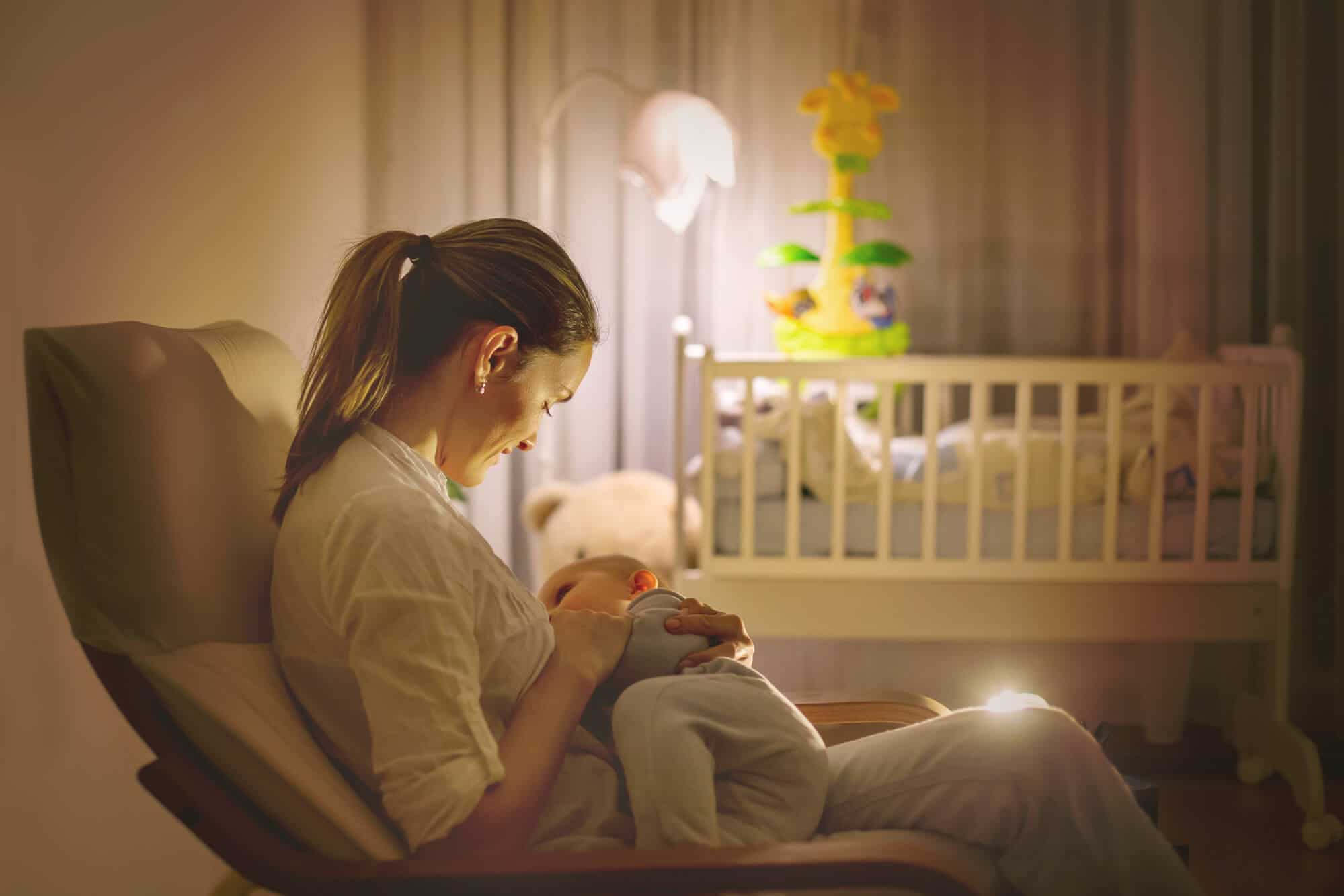
One evening just after my youngest turned 18 months old, he stopped wanting to be rocked at bedtime. Up to that point, pretty much every sleep of his life, I had been rocking him–in my arms, in the rocking chair, in a swing. His nighttime routine (and now toddler sleep routine) had become comforting for both of us. For him, rocking was the “holy grail” of sleep.
Then one night, he just pointed to the crib and said “night-night.”
Honestly, I was partly relieved but mostly sad. I had grown to love those moments of rocking him until his little eyelids were drooping.
Related reading: Parenting Research: Balancing Knowledge with Intuition
In this moment, I learned two quick lessons:
1. Time doesn’t slow down. It sounds cliché, but you do have to enjoy those little moments because they are fleeting.
2. The bedtime routine is HIS routine, not mine. If he wants to change it up a bit, I should probably follow his lead.
Only later did I realize that some research supported my thoughts. Kids’ bedtime routine (even a baby nighttime routine) while important, needs to be responsive and somewhat flexible.
Sleep is a huge issue for parents. Sleep deprivation is not just uncomfortable, it has been shown to put people, especially new moms, at risk for depression (and post-partum depression in particular). We need sleep to function properly, so it’s not just a selfish endeavor. We all know our kids need good sleep and it obviously makes them feel better and be more engaged in learning and exploring.

Research on Baby Nighttime Routines
I came across this great study on infant sleep routines conducted by child development researchers (yay!). I was excited to see this study and the fact that it was conducted at Pennsylvania State University, one of the top programs in Human Development and Family Studies, gave me hope that it would be a well-thought-out study. This particular study examined parents’ emotional responsiveness to infants/toddlers at bedtime and its association with how easily the child went to sleep and how well the child stayed asleep.
Related post: Will Co-Sleeping with My Kids Ruin My Marriage?
Like me, many parents had always heard that a kid’s nighttime routine is a key to helping an infant or toddler go to sleep easily and sleep peacefully. This study somewhat debunks this long-held thought.
The researchers studied infants and young children (2 years and under) and their parents using direct observation via video cameras in their bedrooms. The results showed:
that parents’ emotional responsiveness to children’s moods and needs prior to bedtime was a better predictor of children’s sleep than any sort of bedtime routine (i.e., reading books, quiet activities, etc.).

The Role of Emotions in Children’s Nighttime Routines
What does “parent’s emotional responsiveness really mean? Well, it’s probably many of the things parents commonly do with their children–
(1) speaking softly if the child seems upset,
(2) changing activities if the child seems uninterested in the current one.
The researchers point out that being emotionally available to the child at bedtime helps them feel safe and this, in turn, makes it easier for them to go to sleep without a struggle.
Related reading: Classic Books for Babies that Boost Brain Development
Personally, I don’t think this means that you should throw out your bedtime routine, but it did make me think about the importance of flexibility. I think infant sleep routines can be useful and also make children feel safe, however, children are different from day to day.
Some nights reading a book and rocking in a chair may work great, but other nights a child may not be into reading a book. The key, it seems from this research, is to be attentive to the child’s emotional needs at that particular moment. If the child doesn’t seem interested in a book, the best option may be to move on to something else and not worry too much about the routine. If they seem genuinely upset, then the routine may have to pause while you meet their emotional needs.

This research seems to indicate that if you get too caught up in keeping the routine exactly the same (even if the child is resistant) it may end up making it more difficult for them to fall asleep.
Hopefully, more great research on sleep is coming down from the ivory tower soon!
Related posts:
Research Reveals the Real Reason Why You Lost Your Temper with Your Toddler
Mothers’ Expectations about Infant Sleep: Is There a Link to Actual Sleep Patterns

Resources:

Leave a Reply