
Sneak peek: Wondering how to stop yelling as a parent? Learn a simple, science-backed approach using self-talk and parenting mantras to stay calm—even in stressful moments.
If you’ve ever yelled at your child—and immediately wished you could take it back—you’re not alone.
We don’t want to yell. It happens in those moments when everything builds at once: the noise, the mess, the repeated requests, the feeling of being stretched too thin. Even though we know we shouldn’t, it still happens.
So if you’re wondering how to stop yelling as a parent, the answer isn’t more willpower.
It’s understanding what’s happening in your brain—and using simple tools that work in the moment.
Key Takeaway
To stop yelling as a parent, focus on regulating your stress response in the moment. Simple tools like pausing, using calming phrases or mantras, and practicing self-talk can help you respond instead of react. Over time, these strategies retrain your brain to stay calmer under stress.
Why Do I Yell at My Kids?
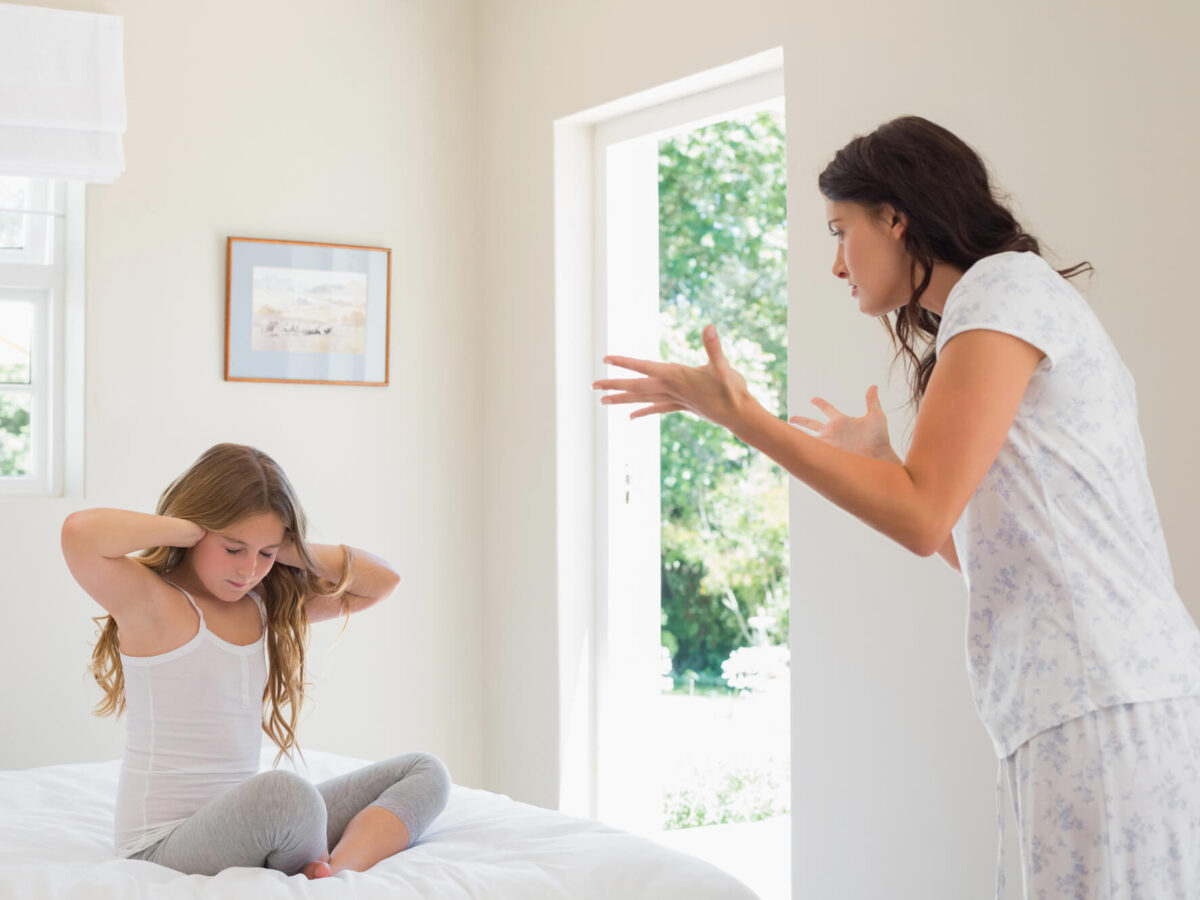
Yelling isn’t a parenting failure. It’s a stress response.
When you feel overwhelmed, your brain shifts into survival mode. The emotional center of your brain (the amygdala) takes over, while the part responsible for calm decision-making (the prefrontal cortex) becomes less active.
That’s why, in the moment, you might:
- React faster than you intend
- Struggle to pause
- Say something you regret seconds later
Research shows that higher parenting stress is directly linked to more reactive responses, including yelling. These studies found that a parent’s emotional state is one of the strongest predictors of how they respond to their child.
In simple terms:
It’s not just your child’s behavior—it’s your nervous system.
The good news is that this pattern can change.
Related reading: Want to be a More Patient Parent? Start Here…
Finding Emotional Regulation in Real Time
If you’re trying to figure out how to stop yelling as a parent, the key skill isn’t control—it’s regulation.
You need something that works in the moment, when your brain is already overwhelmed.
This is where most advice falls short. Telling parents to calm down or pause doesn’t help when your body is already in a stress response.
What does help is giving your brain a quick way to pause and reset.
One of the most effective, research-backed tools is something called distanced self-talk.
Instead of thinking:
“I can’t handle this.”
You shift to:
“You can handle this.”
Or even:
“[Your name], you can handle this.”
Research shows that using your name creates psychological distance. It helps you step out of the emotional moment just enough to respond more calmly.
This isn’t some psychological trick; it’s about giving your brain space to regulate.
How Parenting Mantras Help You Stop Yelling

When you’re overwhelmed, your brain doesn’t have the capacity for complex thoughts.
That’s why short, repeatable phrases—mantras—work so well.
They act like mental shortcuts. Instead of trying to think your way out of stress, you use a phrase your brain already knows.
Simple phrases like:
- “I choose to be calm.”
- “This will pass.”
- “Pause. Breathe.”
These can interrupt the stress response and help you regain control more quickly.
Over time, your brain starts to associate these phrases with calm.
Discovering Your Triggers
If you want to stop yelling consistently, it helps to look beyond individual moments.
Most yelling isn’t random. It follows patterns: specific behaviors you or your child do, certain triggers (sibling fights, repeated requests), or your own stress levels (tired, overstimulated, rushed).
When you start noticing these patterns, something changes. Your reactions become predictable—and that means they become changeable.
This is where simple tools like a parent trigger tracker can help. Reflecting on what sets you off makes it easier to respond differently next time.
Practical Ways to Stop Yelling as a Parent
If you’re looking for a place to start, keep it simple.
- Pick one phrase you’ll use when you feel triggered.
- Practice it when you’re calm.
- Use it early—before you hit your breaking point.
Then repeat.
You’re not aiming for perfection. You’re building a new default response.
Every time you pause instead of yelling—even for a second—you are changing your brain.
You’re strengthening the connection between the thinking part of your brain and the emotional part.
A Tool to Help You Stop Yelling
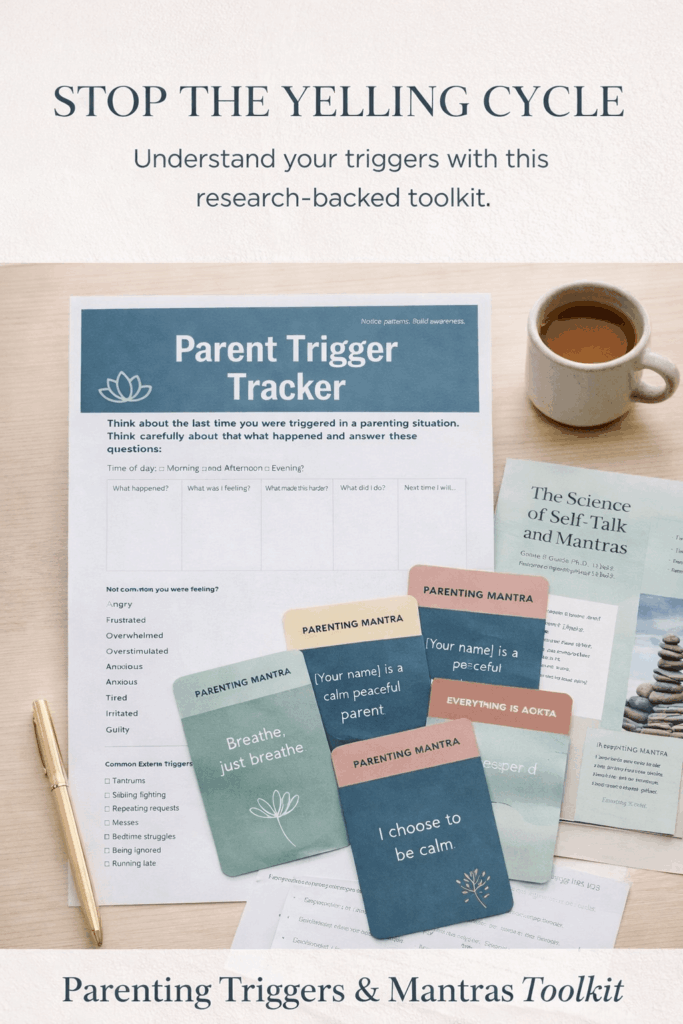
Download this Parenting Triggers and Mantras Toolkit as a starting point for becoming more intentional and calm in your reactions.
Learning how to stop yelling as a parent isn’t about becoming perfectly calm. It’s about having tools that help you recover faster and respond more intentionally.
And just as importantly, be compassionate with yourself.
Leave a Reply