
Sneak peek: Social emotional learning toys don’t have to be boring. These ideas will keep your kids growing, learning, and having fun.
My four-year-old was at it again. He, his big brother, and I were doing our usual Target run and they had convinced me to go to the toy aisle. What was I thinking?
The whining and begging from the little guy began pretty much as soon as we entered the first aisle that contained Hot Wheels and Nerf guns.
“Mom, can we get this?” he asked-whined (parent, you know this tone).
“No, sweetie,” I say in my trying-not-to-get-upset voice. “You know, I said we are just looking, not buying today.”
“But Moooom, it’s soooo cool,” he says in that dramatic voice.
Parents, you know how this goes and it hardly ever ends well. Many times, we leave the store with someone crying (hopefully not me).
I get it. He’s only four. Only recently has he gained the mental capacity for putting himself in someone else’s shoes. He’s emotionally immature in many ways. Even though he’s right on track with in terms of toddler development, he’s still learning to regulate his emotions. And those toys are SO tempting. Luckily, my eight-year-old has matured to the point where he can handle the toy aisle without fits of whining.

Unfortunately, as any holiday or birthday approaches, this focus on toys, rather than gratitude or giving tends to only increase in most kids. This year, in thinking about how to approach gift-giving, I decided I will focus on helping parents find gift ideas that promote positive child development—that is, social emotional learning toys that help promote the skills that we want to encourage.
Quick picks, if you’re short on time:
🦕 Best cooperative board game: Dinosaur Rescue — rescue game that builds teamwork
🃏 Best feelings card game: Who’s Feeling What — helps kids name and talk about emotions
🧸 Best plush for emotional learning: Kimochis — a feelings-labeling plush toy
🥚 Best for toddlers: Emotion Eggs — emotion-matching game, great for early feelings vocabulary
📖 Best book pick: Wonder by R.J. Palacio — the story of Auggie learning to belong
🎭 Best for pretend play: Dress Up Set — dress-up set for empathy-building imaginative play
🏠 Best role-play toy: Dollhouse — gender-neutral dollhouse for family role-play
The core of this mindset is a set of social-emotional skills that take years to build. However, parents can be key guides in this development process. Through interaction, connection, and modeling, your kids’ emotional development can blossom. Unlike the “hot” toy of the moment, the gift that these social-emotional skills bring is happiness and contentment—a value that lasts more than one season.
**This post contains affiliate links. Purchasing through these links helps support this blog at no added cost to you
Related reading: What I learned from MLK’s Legacy About Emotion Regulation in Kids
What are Social-Emotional Learning Toys?
Social-emotional learning (SEL) toys are games, books, and playthings specifically designed to build skills like empathy, emotional regulation, cooperation, and perspective-taking. Unlike toys designed purely for entertainment, SEL toys give kids low-stakes ways to practice recognizing feelings (their own and others’), working through conflict, and caring for someone or something besides themselves. The best ones don’t feel like lessons, they feel like ordinary play that happens to build real emotional skills along the way.
Here is the list of social emotional learning toys:
Social Emotional Learning Toys
These games just seem like family fun (which they are) but they all involve trying to perceive another person’s thoughts or feelings—key emotional skills that our kids can develop.
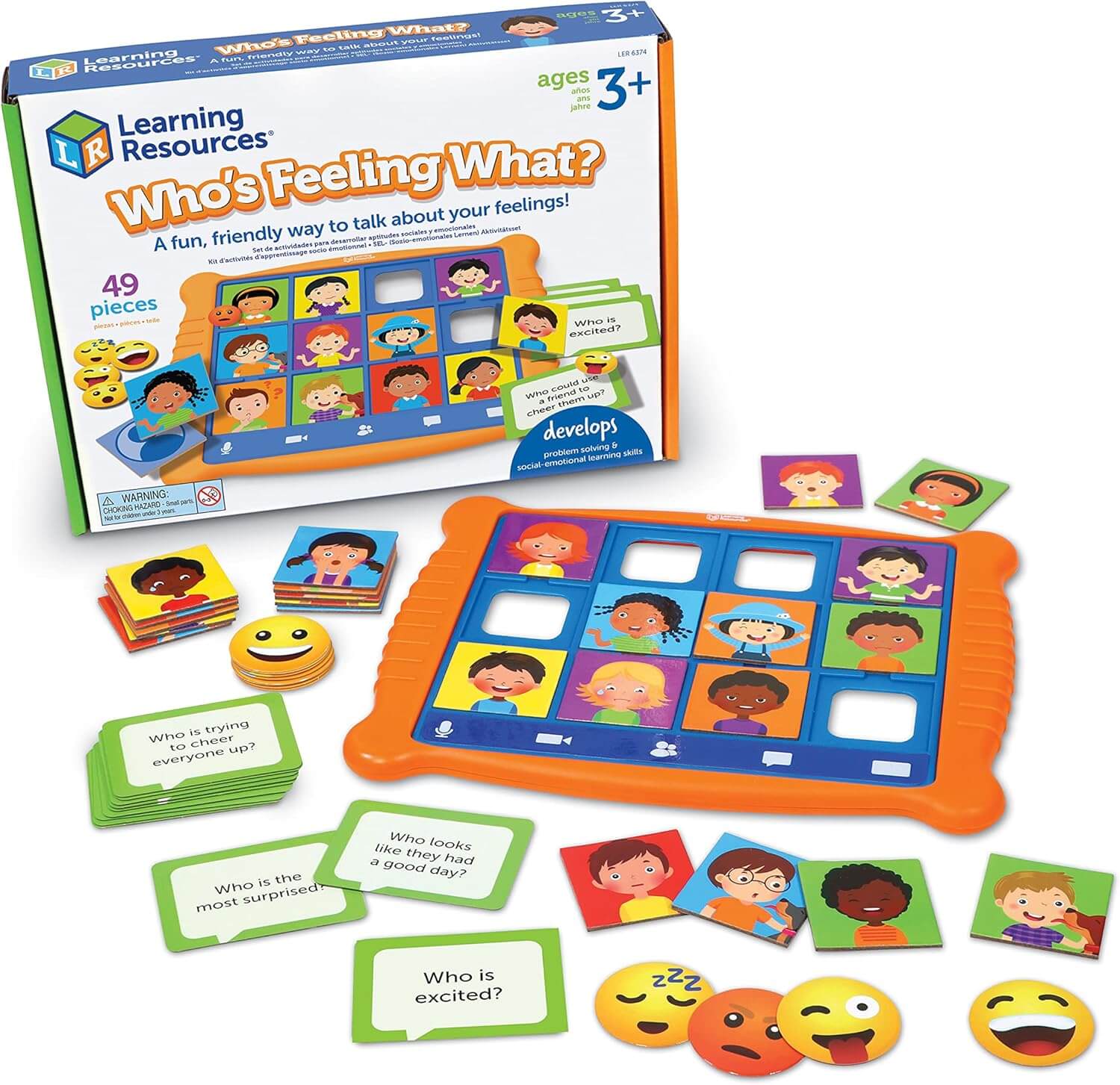
Who’s Feeling What?
A fun game to help kids learn about feelings. Age 3 and up.
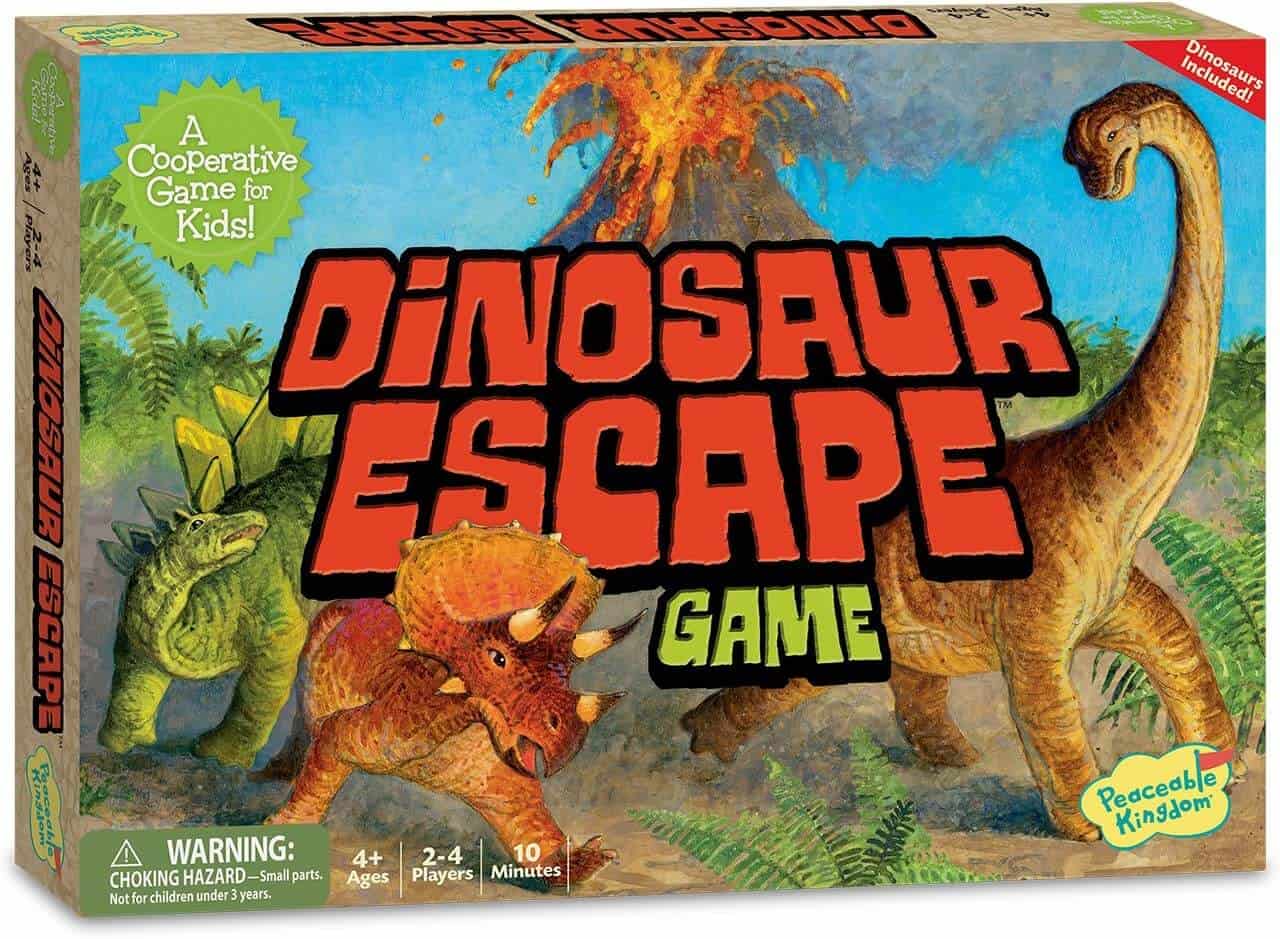
Dinosaur Escape Game
Instead of competing against one another, teams in this game work together to help the three dinosaurs escape from the volcanic eruption. It builds strategy, teamwork, and social-emotional skills. Age 4 and up.

Q’s Race to the Top
I’m excited about this one because in involves both active play and social skills. Kids have to advise the characters on what to do in certain social situations. Plus, there are that help kids practice physical skills like balance and coordination. Ages 3 – 10.
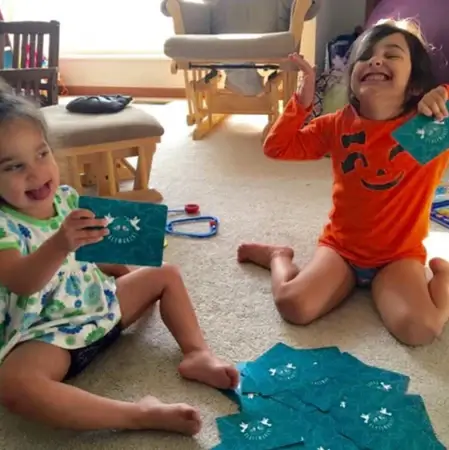
Peacemakers
A special card game that helps parents and connect while also learning about social-emotional skills like growth mindset and confidence. Ages 3 and up.

SnuggleBuddies
No ordinary social-emotional learning toy—this feelings toy helps kids understand their emotions and label their feelings. Understanding feelings and using the language for emotions is the first step in helping kids learn how to manage their big emotions. Ages 3 and up.
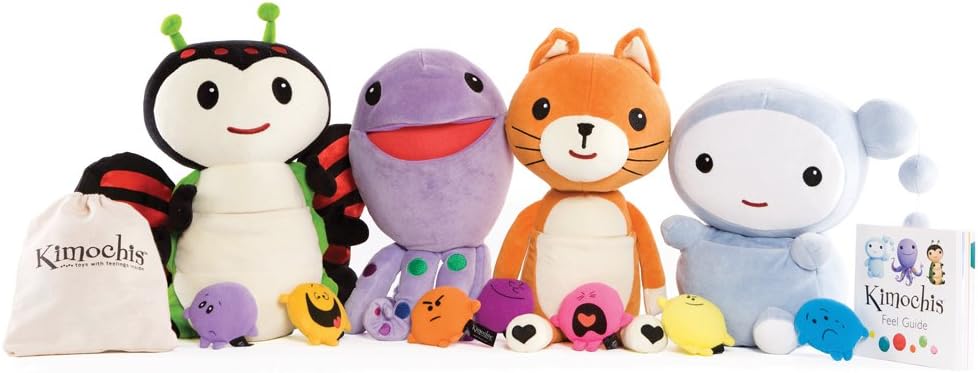
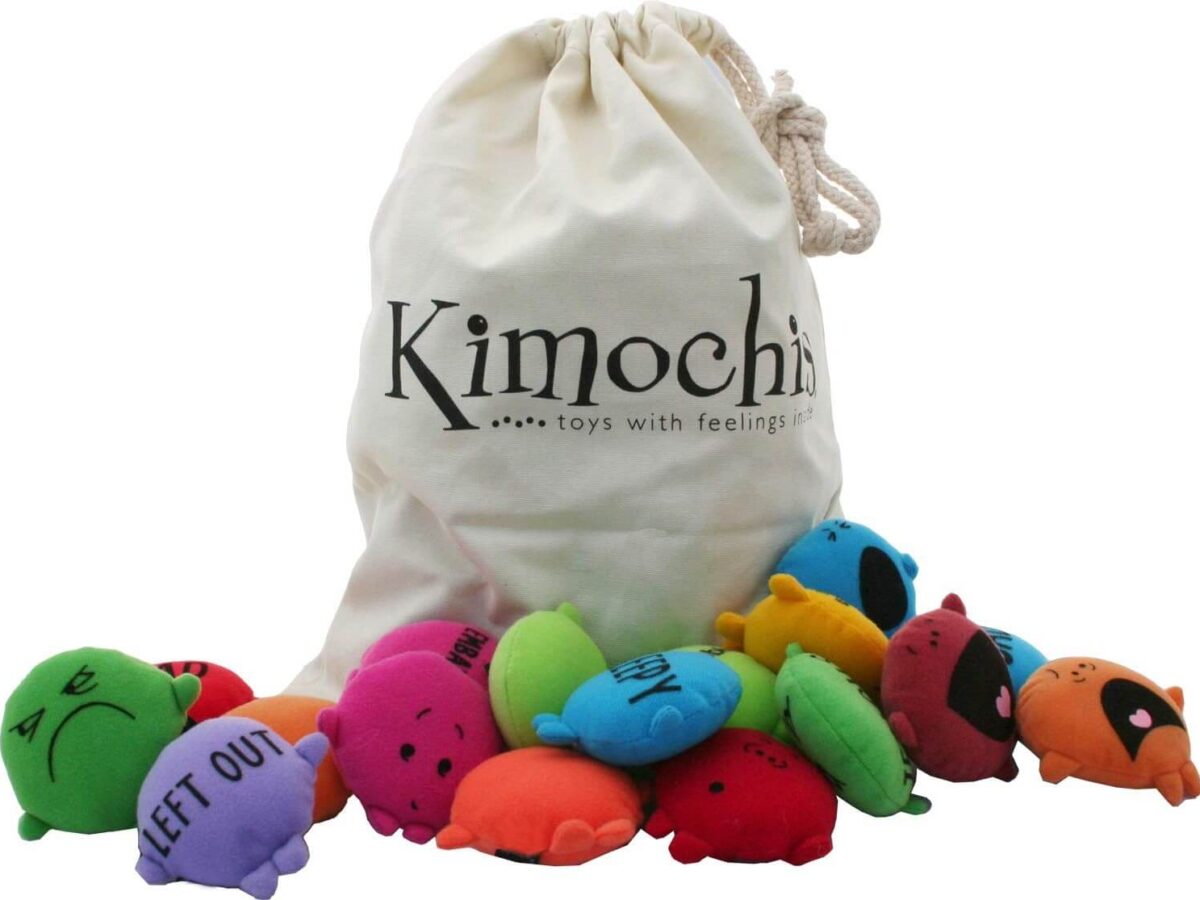
Kimochis
Aren’t these the cutest things? Each kit comes with a big creature and smaller “feelings” creatures inside. These adorable emotional toys help kids learn about feelings and how to cope with them. Ages 3 and up.
You may also enjoy: Social-Emotional Development: The Ultimate Guide for Parents
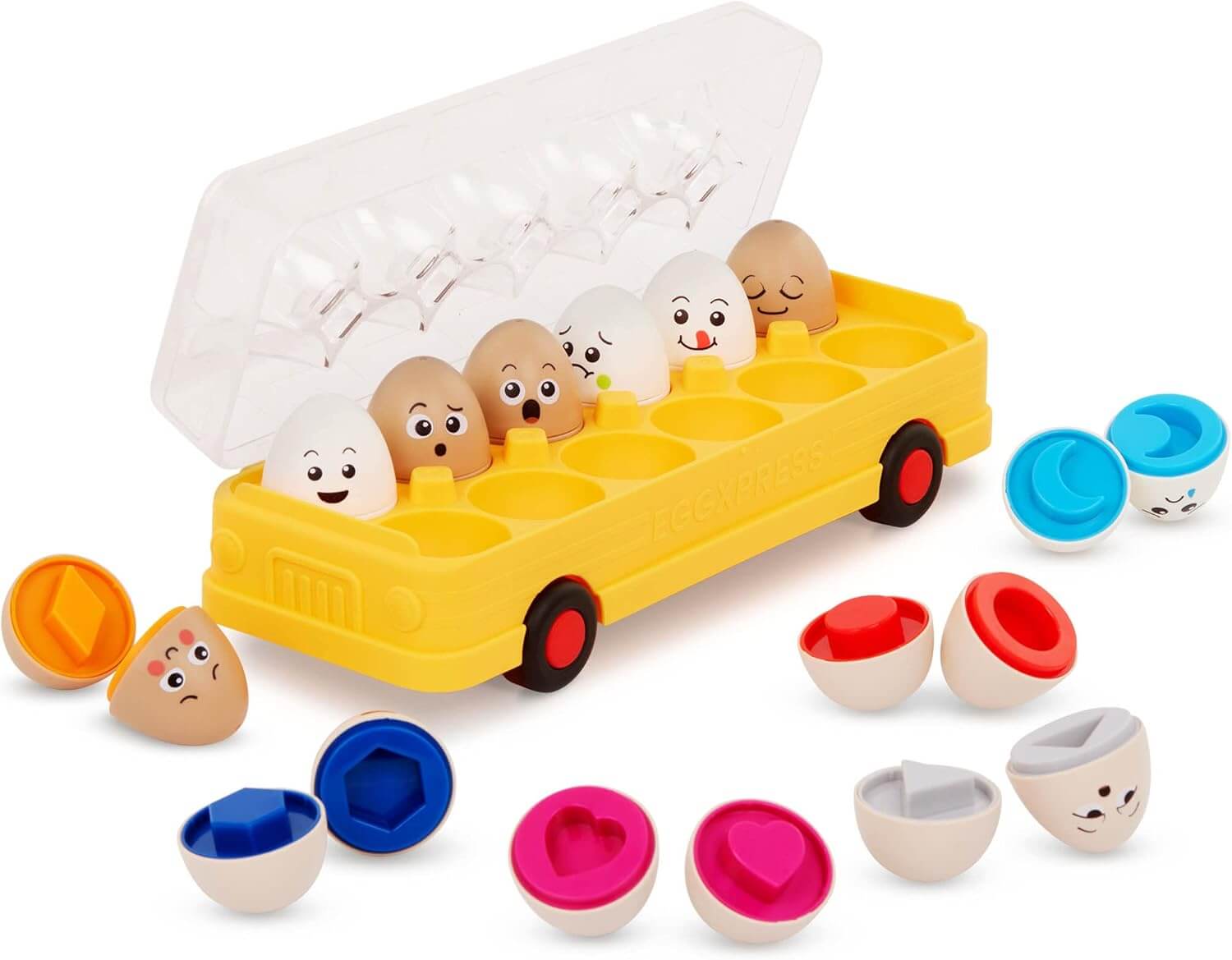
Emotion Eggs
For young kids, learning what the different emotions look like and the names for each is the first step in learning emotional skills. These eggs make learning emotions a fun game. Ages 18 months and up.
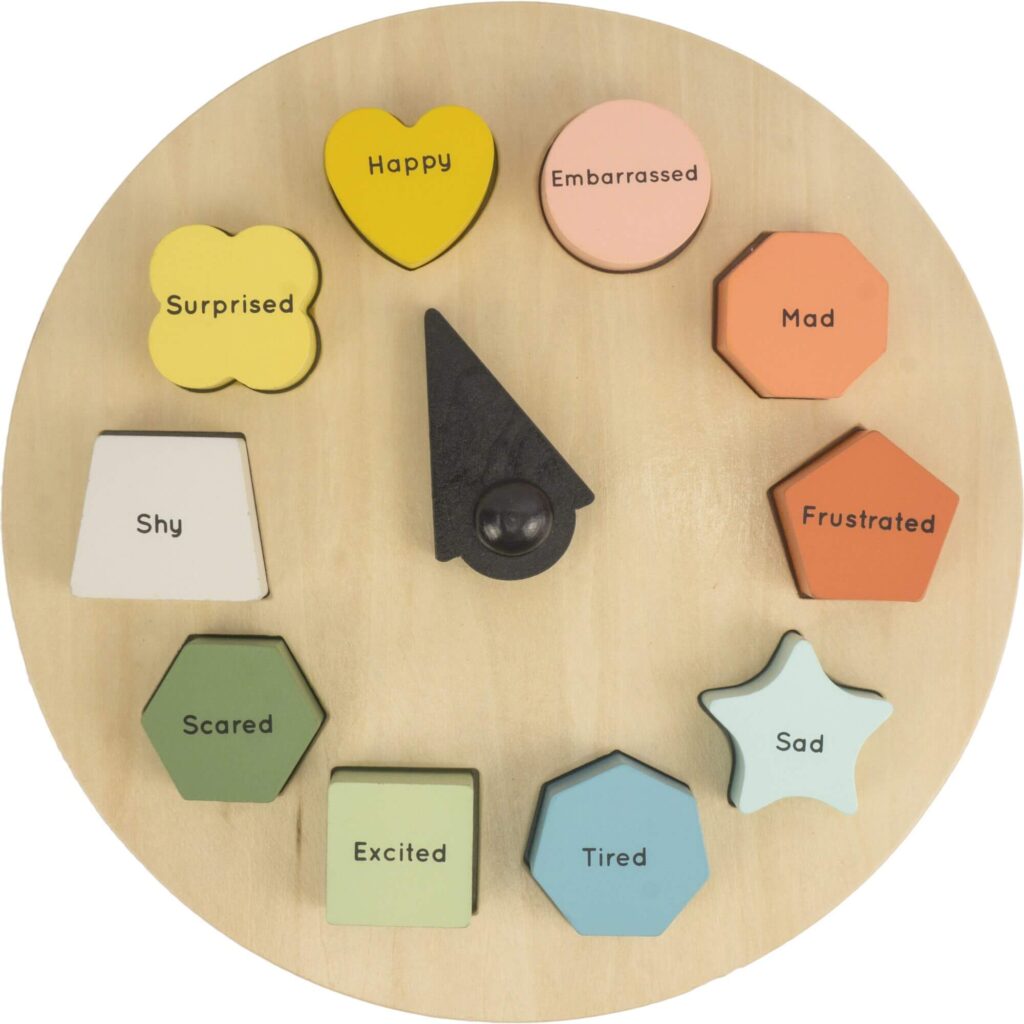
Shapes of Emotions Puzzle
This adorable puzzle combines shape learning with emotional vocabulary. When you flip over each block, it shows an image of a face expressing the emotion. This type of hands-on learning is wonderful for young children. Ages 2 and up.
Books that Foster Social Emotional Skills
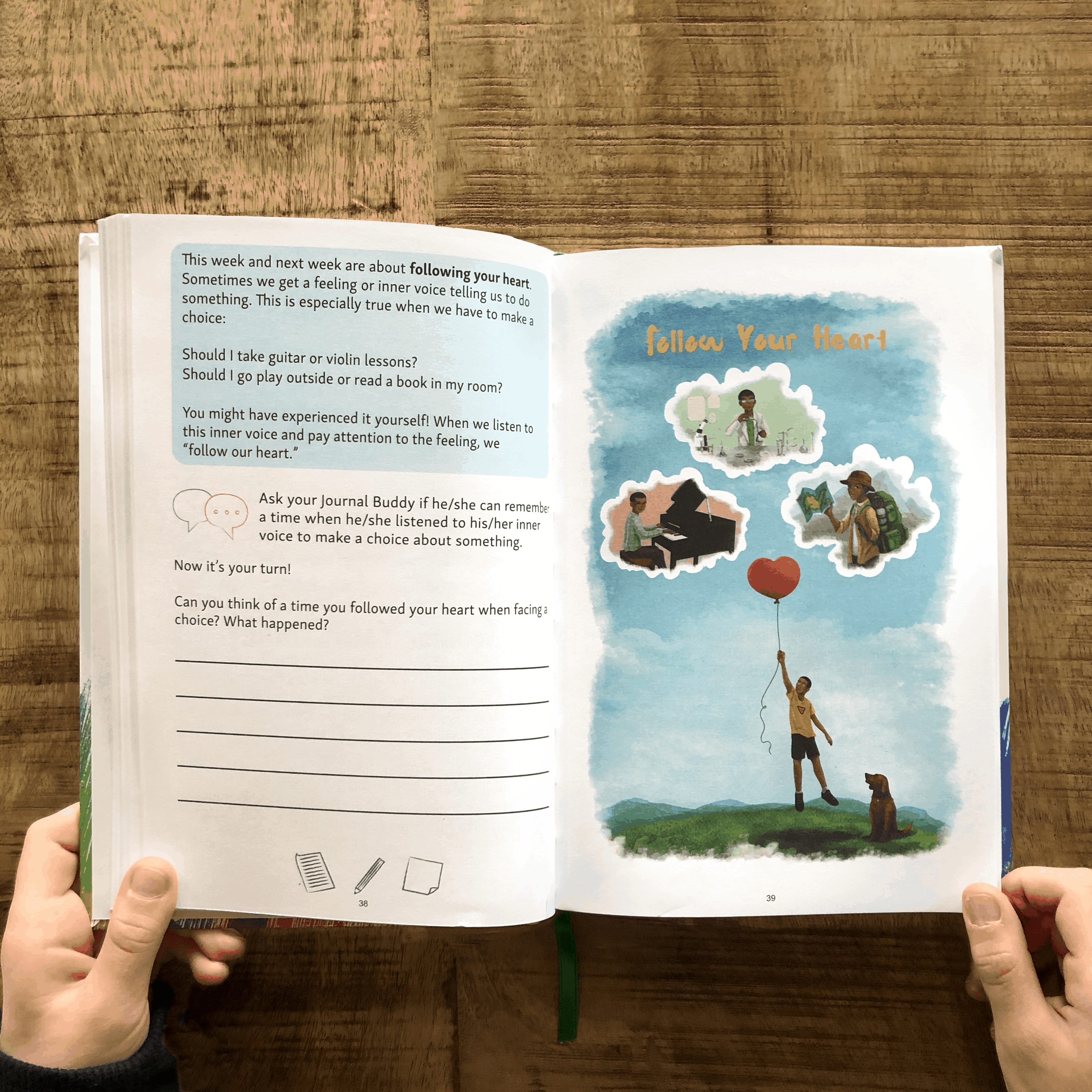
Big Life Journal:
The best growth mindset journal
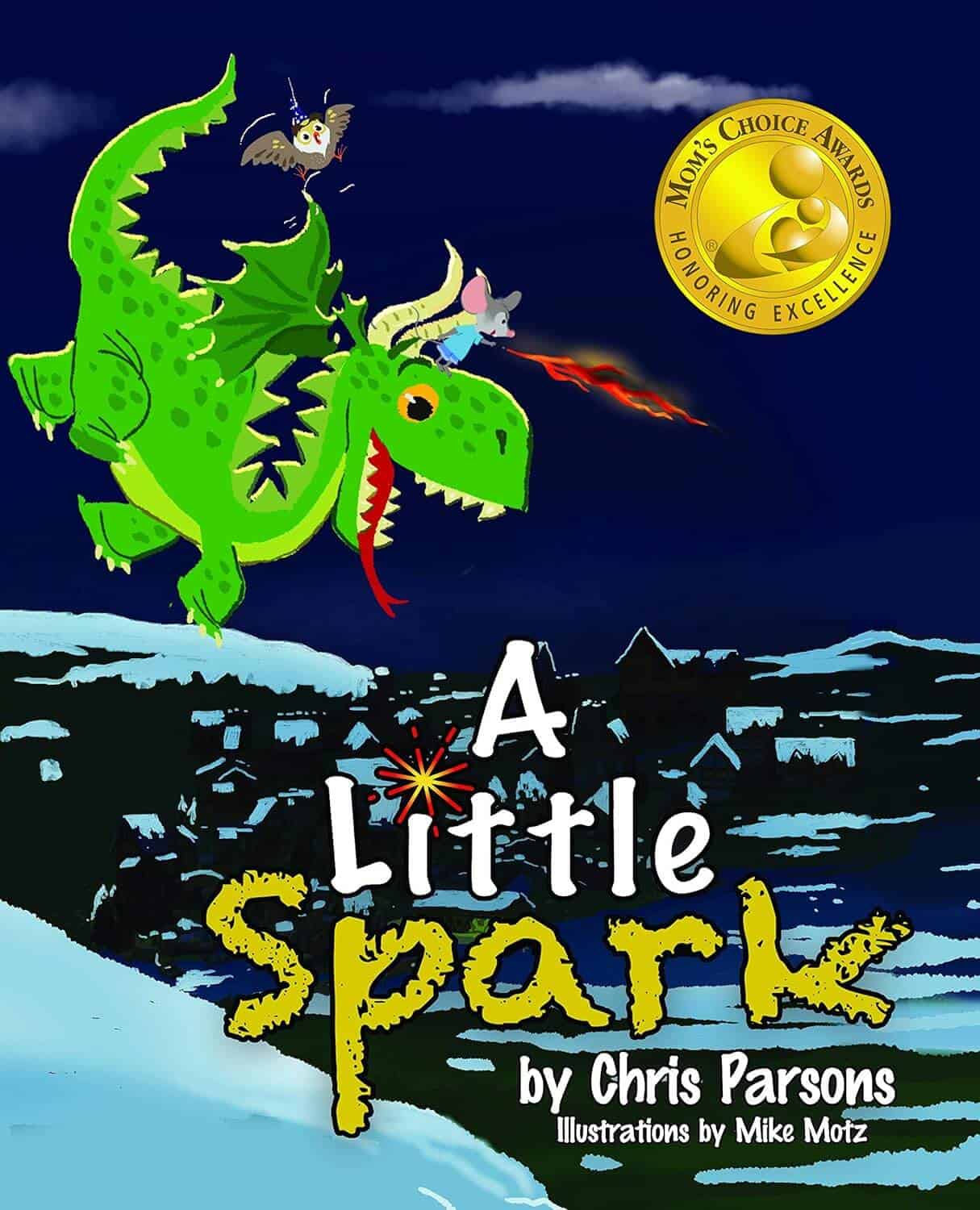
A Little Spark
A story of two unlikely friends who join forces to save their home
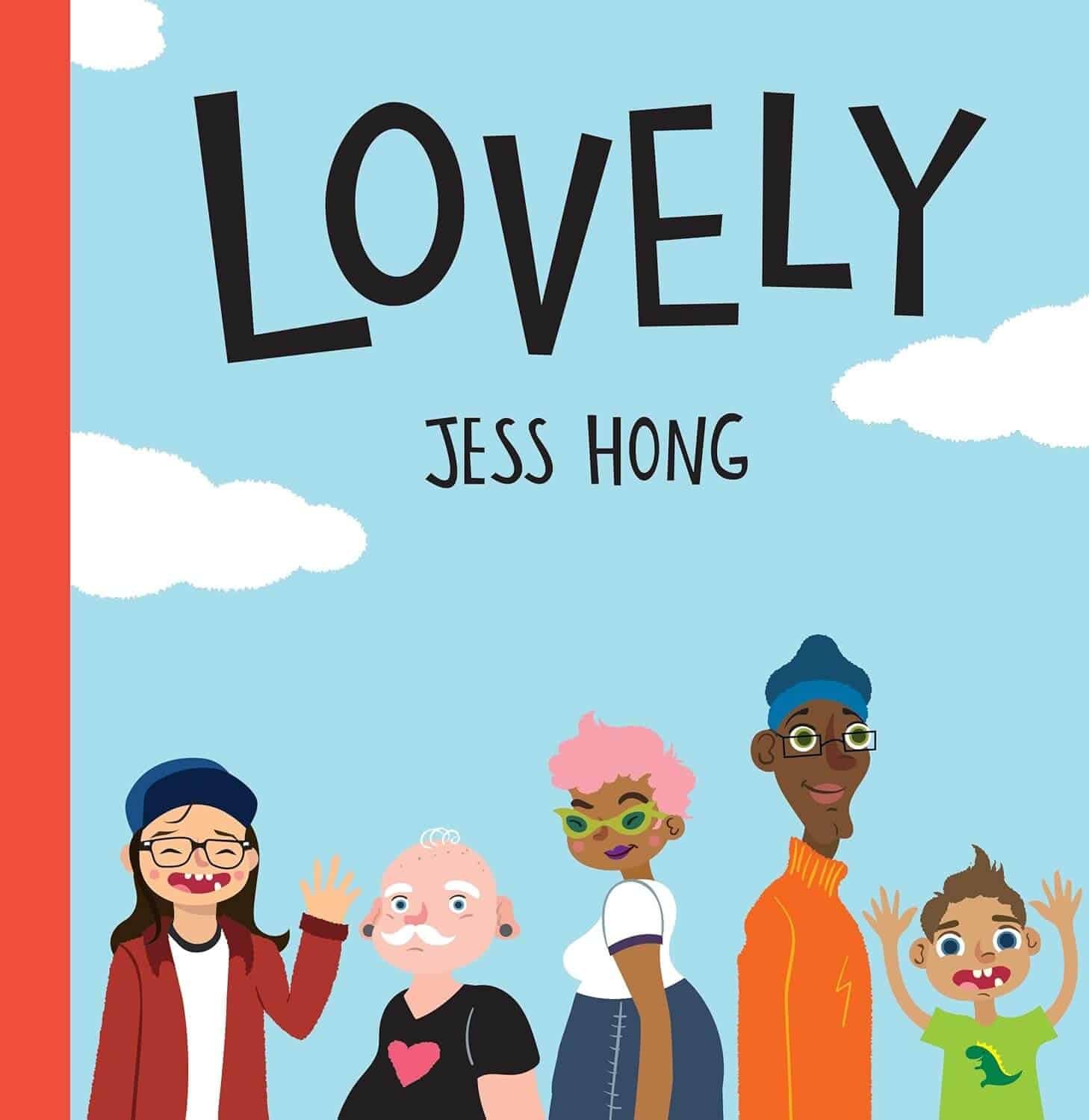
Lovely:
A simple look at how we are all different but lovely in our way.
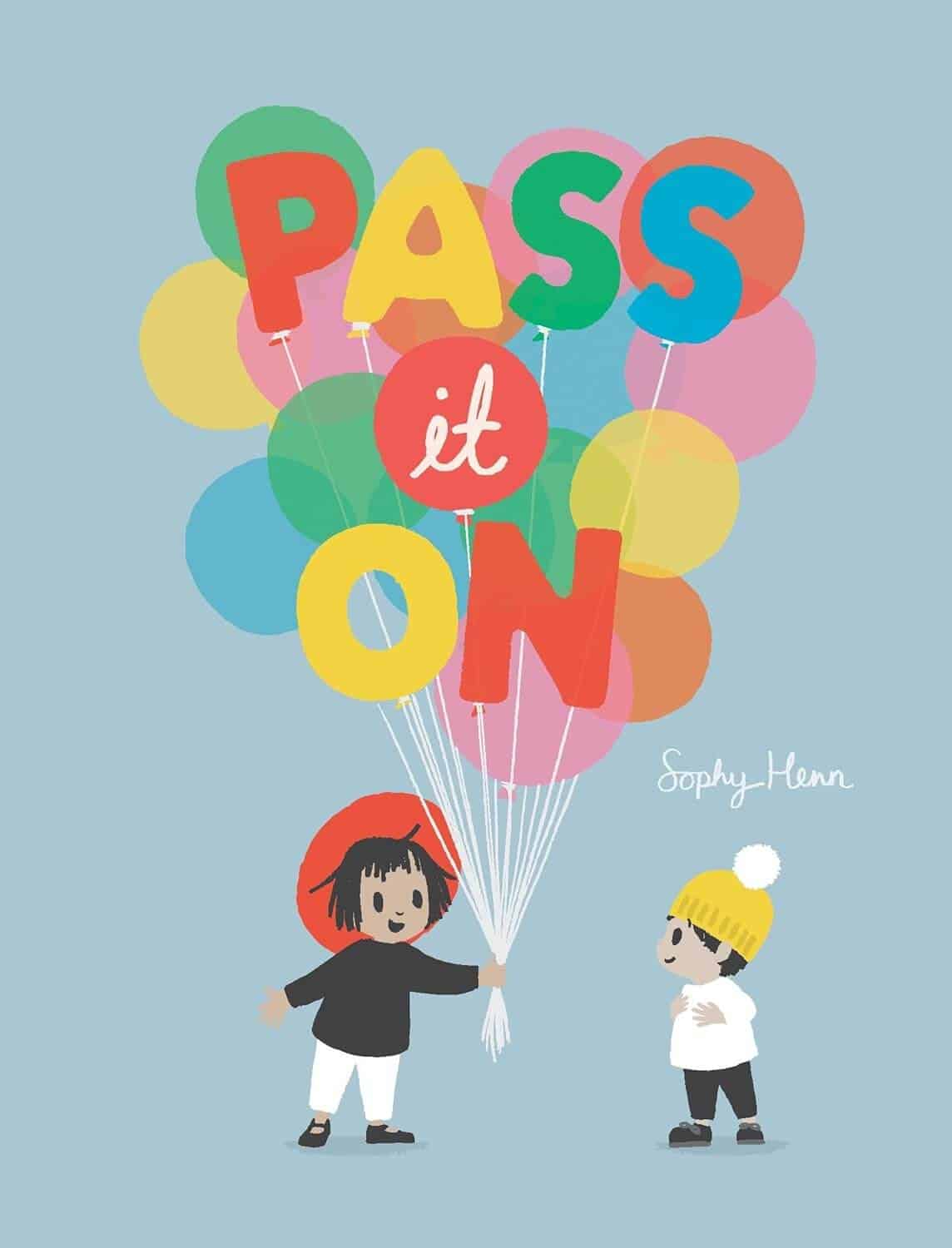
Pass it On
Simple ways to pass on joy and happiness
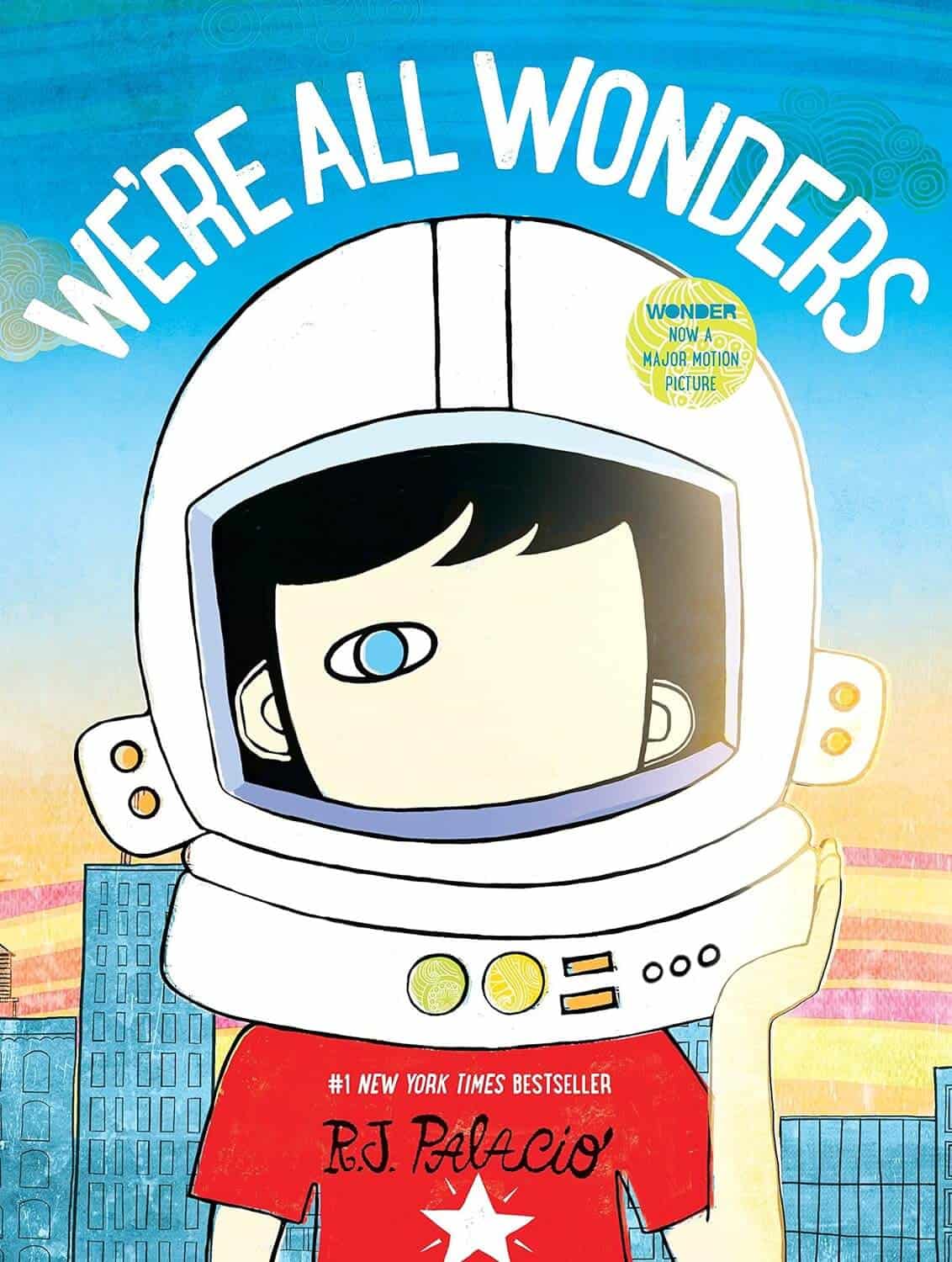
We’re All Wonders
The lovely story of Auggie and his need to belong
Pretend Play for Emotional Development
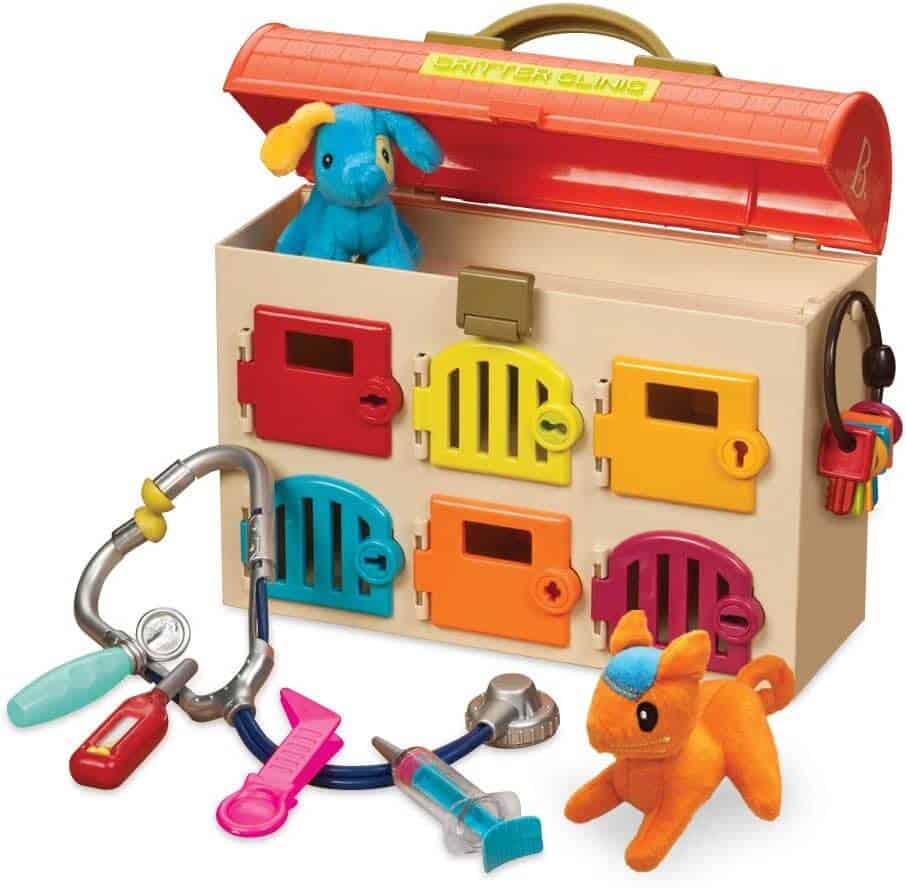
Pretend Vet Clinic
Kids love to care for animals but with this fun set, there’s no real mess to clean up. Kids can learn empathy and caregiving skills. Ages 2 and up.
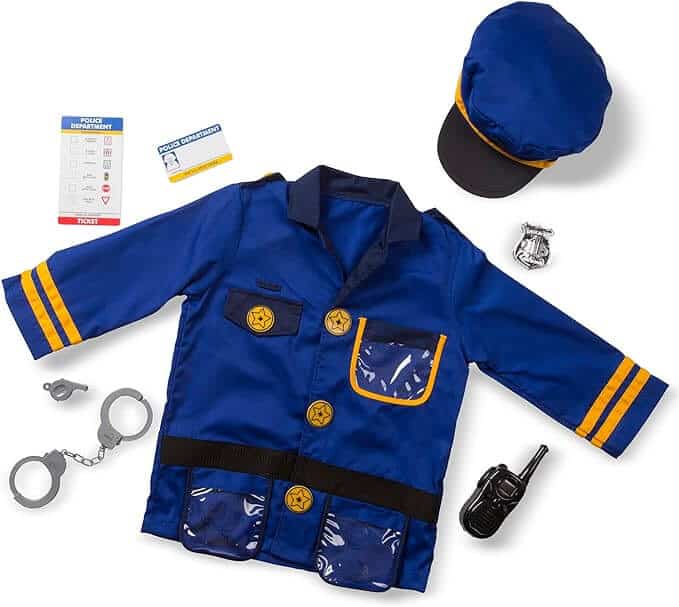
Police costume
I’ve written before about the developmental benefits of dress-up play and it doesn’t have to be Halloween for this to be the case. During dress up play, kids build social emotional development skills like empathy and perspective-taking. Ages 3 and up.
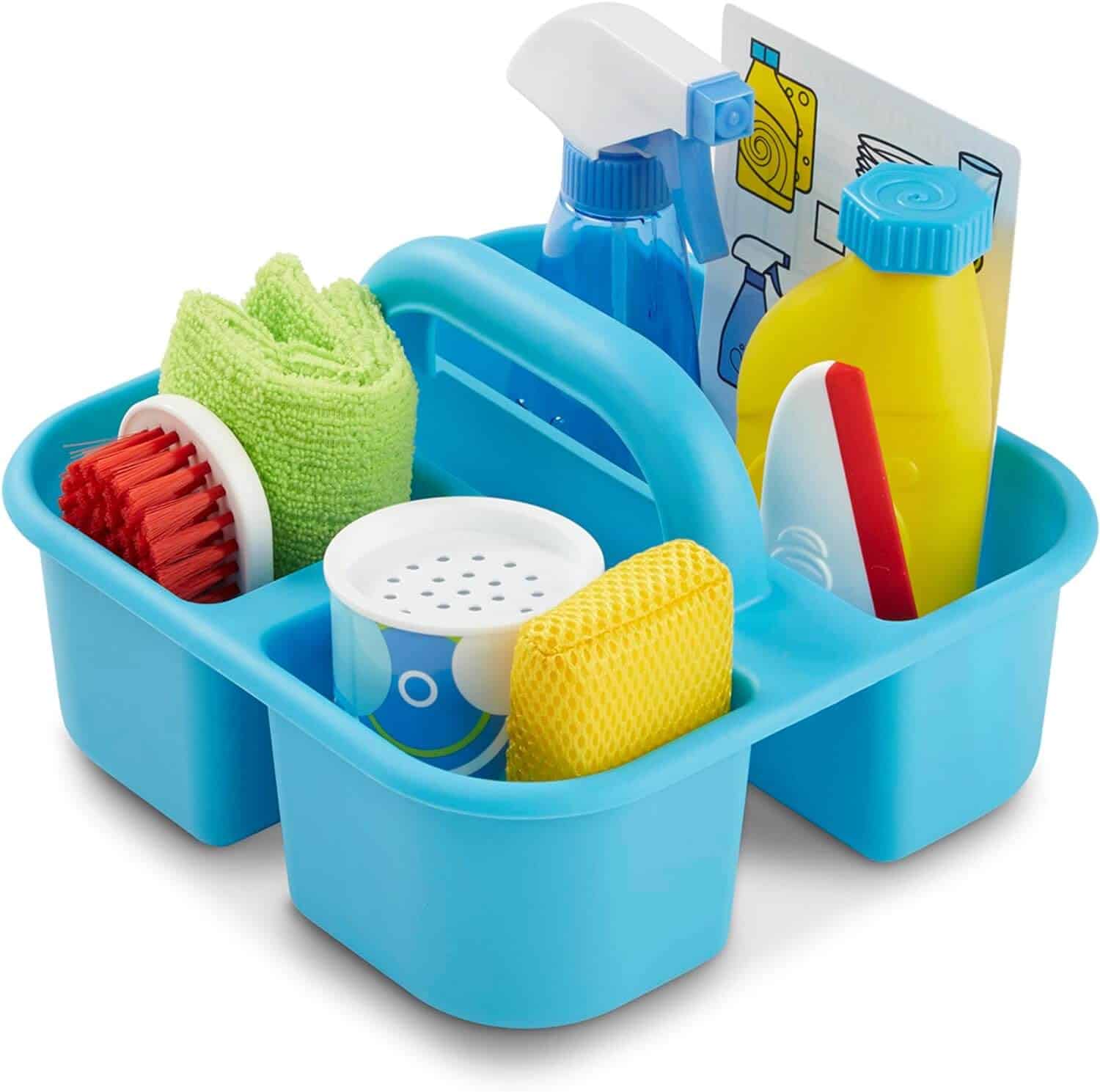
Pretend cleaning set
Parents, you will love this set. A toys that encourages cooperative skills and helping while your child has fun. Ages 3 and up.
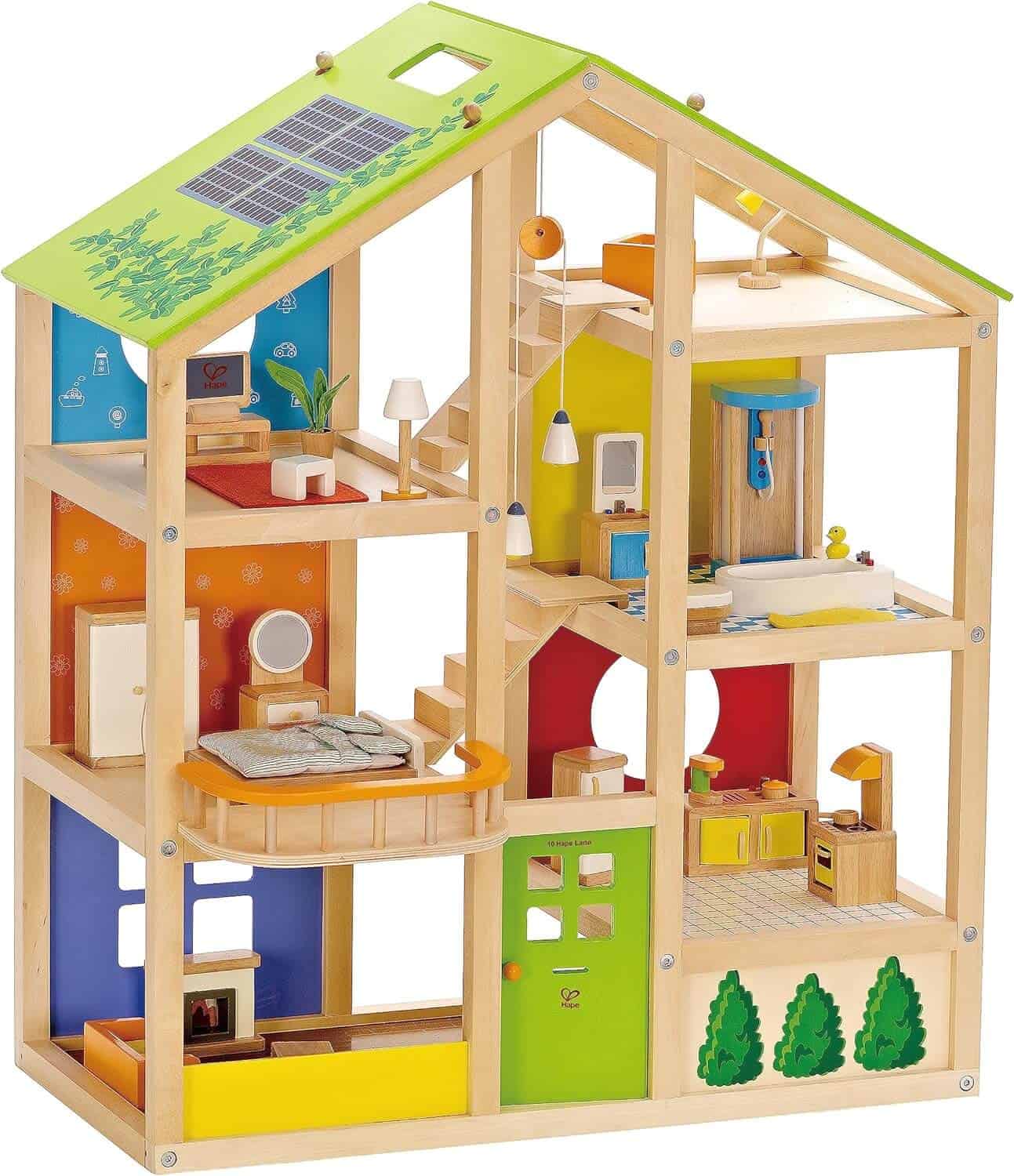
Dollhouse
Dollhouses aren’t just for girls! Now there are many nice gender-neutral ones on the market. Role-playing as family members is one of the best ways to encourage empathy and perspective-taking. Ages 3 and up.

Puppets
Puppets are underrated in today’s world of high-tech toys. We have only had a few in our house, but the kids always come up with such creative ways to use them: telling stories, trying out silly voices and telling jokes. Believe it or not, all this helps build emotional skills, cooperation, and language skills. Ages 2 and up.
Parents, I hope these ideas provide some new ideas for finding social emotional learning toys for your children.
FAQ About Social Emotional Learning Toys
Kids as young as 2–3 can start with simple feelings toys (like plush toys or emotion-matching games), while cooperative board games and role-play sets tend to work best for ages 5 and up, once kids can better understand perspective-taking.
Model kind behavior yourself, narrate feelings out loud (“I see you’re frustrated”), and give toddlers small, concrete ways to help others — making a treat for a friend.
Yes — play is one of the main ways young kids practice new skills. SEL toys give kids low-stakes repetition for recognizing emotions, cooperating, and empathizing, which builds habits over time.
Written by Amy Webb, a mom of two with a Ph.D. in Human Development and Family Sciences. Parenting writer and educator with 15 years of experience.
clare
awesome list!!! i love sarah m too!
Sarah
I love these ideas!! Definitely keeping these bookmarked!!