
Sneak peek: Although toddlers don’t intentionally mean to be challenging, their behavior is often difficult to handle as a parent. Real-life tips for how to handle a difficult toddler.
To effectively handle a difficult toddler, parents should align their expectations with the child's developmental stage, recognizing that behaviors are not intentionally defiant. Toddlers lack fully developed language skills and impulse control, which typically doesn't begin until around age 3. Research over the last few decades indicates that harsh discipline strategies such as hand slaps, yelling, or shaming are ineffective and detrimental to a child's development. Instead, The Thoughtful Parent advises focusing on providing guidance and setting boundaries that are appropriate for their age.
I’m happy to feature a guest post from writer Laurel Turnquist. Laurel is an early childhood educator, parenting coach, and play advocate. She shares her knowledge and experience by writing for Kids Who Play.
As babies grow, we are delighted to see their personalities develop and marvel at the fun things
they do. But this also means they are developing their own personalities. This can be a wonderful development but also presents some challenges.
It can be challenging to know how to respond when toddlers act in less-than-desirable ways, but
a few simple tools can help you keep yourself calm and handle your child like a pro.
Understanding toddler development
To effectively handle toddler behavior, it’s vital to have expectations that align with toddler
development. Young children are developing autonomy and a sense of self. Their brains are
developing, and they’re constantly taking in information about the world around them.
Important reminders about toddler development:
● Toddlers learn by touching, tasting, moving, and observing. They want to know what
happens when they throw the blocks, mash the food, or pull on the cat’s tail. They don’t
do these things to be intentionally annoying or defiant. This type of exploration is proof that their brain is developing.
● Toddlers don’t have the language skills to fully communicate what they want or
need. Whining, crying, and screaming are all ways that children communicate.
● Children don’t begin to develop impulse control until the age of 3, so it makes sense that
your toddler does the same things repeatedly, no matter how many times you tell them
no.
Knowing all of these things can help you understand how to handle a difficult toddler and be patient with your little ones.

What to avoid when handling frustrating toddler behaviors
Research over the last few decades has continued to illustrate that harsh, negative discipline doesn’t aid children’s development. These strategies mostly fail because they don’t model or explain how children should behave when they are experiencing difficult emotions. These are the types of harsh discipline strategies to avoid:
— hand slaps
— yelling
— shaming
— threats
— lose of privileges
These are all punishment tactics that seek to control children with force and fear and shouldn’t
be used with any age group. None of these strategies are in line with toddler development.
Hand slaps, for example, assume that toddlers have more impulse control than they do and do
little to solve the problem at hand. In addition, hand slaps tell a child, “Listen to me because I
am bigger than you and can hurt you,” and slowly squash their curiosity.
If you’ve been using less than effective discipline tactics, don’t worry; your children will give you
many opportunities to practice new skills. Be patient with yourself as you slowly shift in your discipline and how to handle a difficult toddler.
Top tips for how to handle a “difficult” toddler
Avoiding punishments doesn’t mean you can’t provide guidance and boundaries. Here are some tried and tested tips for helping you handle your little guys in ways that address your children’s behavior without punishing them.
These include tips to help you in the moment and proactive tips to help things go more smoothly
from the start.
Redirect
This is the number one tip for toddlers! Redirect, redirect, and redirect again. Your child is curious and excited about exploring the world around them. They aren’t being defiant and certainly don’t understand the word “no” in the way you think that they do.
Calmly state what behavior is not allowed and then find something else to do. Moving to a new
space can sometimes be helpful if your child continues to be drawn to that object or activity that
you’ve deemed inappropriate.
● “The trashcan is not for touching. Let’s go find something else to play with.”
Focus on what you can control
The only person you control is you. You can’t MAKE your toddler eat, sleep, poop, or stop screaming. Trying to force them to do so is a great way to get tangled up in a power struggle where your child is just as determined to “win” as you.
Focus on what you can control when learning how to handle a difficult toddler:
● “Your screams are very loud. It looks like we are going to have to leave the library.”
Calmly take your child and leave the library. You can’t stop their screams, but you can
keep them from disrupting others and give them an appropriate space to express their
big emotions.
● “Here’s your dinner.” Calmly eat your own food and engage in conversation while
making no comments about what your child eats. You can’t make your children eat, but
you can control what, how often, and where food is served.
Set up the environment for success
I don’t know about you, but there are only so many times that I can redirect my toddler during the day before I’m on the verge of losing it! This is where changes to the environment come to the rescue. In addition to controlling yourself, you control the setup of your house. Think about what you could change in your house to help the day go smoothly.
Examples:
● Problem: Your child is snacking from the cat’s food bowl 100 times a day, no matter how often you tell them no or try to get them interested in something else!
Solution: Move the cat’s food dish to the top of the washing machine where your child can’t reach it.
● Problem: Your child throws a screaming fit when you pick out a cup, and it’s not the color they wanted.
Solution: Put the plastic cups in a low cupboard so your child can pick whatever color they like from the available options.
● Problem: Your toddler keeps banging wooden blocks on a glass sliding door, and you’re nervous that the door might break.
Solution: Change out the blocks for soft blocks while they’re in a banging phase and give them a pile of rocks to bang together outside.
● Problem: Your toddler thinks it’s funny to knock over the trash can.
Solutions: Move the trash can!
What will you shift in your house to make the space more peaceful for you and your children? If you’re worried that this deprives children of the opportunity to hear “no”, remember that there will be many other times and places for you to set boundaries throughout your day – at the park, library, grocery store, or doctor’s office. Instead, you are giving children a yes space where they can learn through hands-on exploration.

Offer appropriate alternatives
Is your toddler throwing blocks, pulling on the cat, climbing the kitchen cabinets, or pouring out your morning coffee? Take note of these things. A child’s behavior simply demonstrates a need. Meet their need to explore by finding appropriate ways for them to engage in these activities.
If your child is:
● throwing blocks: give them some plush balls to throw instead.
● pouring out your morning coffee the instant your back is turned: head outside to pour at
a water table.
● climbing the forward-facing bookshelf: purchase a kid’s climber, or head to the park.
● pulling your hair: try creating a tugging box with a cardboard box and some ribbons.
Take a deep breath, remember your child isn’t being bad, and respond, “It looks like you need to do some throwing. These blocks are not for throwing. Come, let’s find something you can throw.”
Remember, young children are just trying to explore their world, and we want to give them lots of opportunities to do so.
Label emotions to give children the language
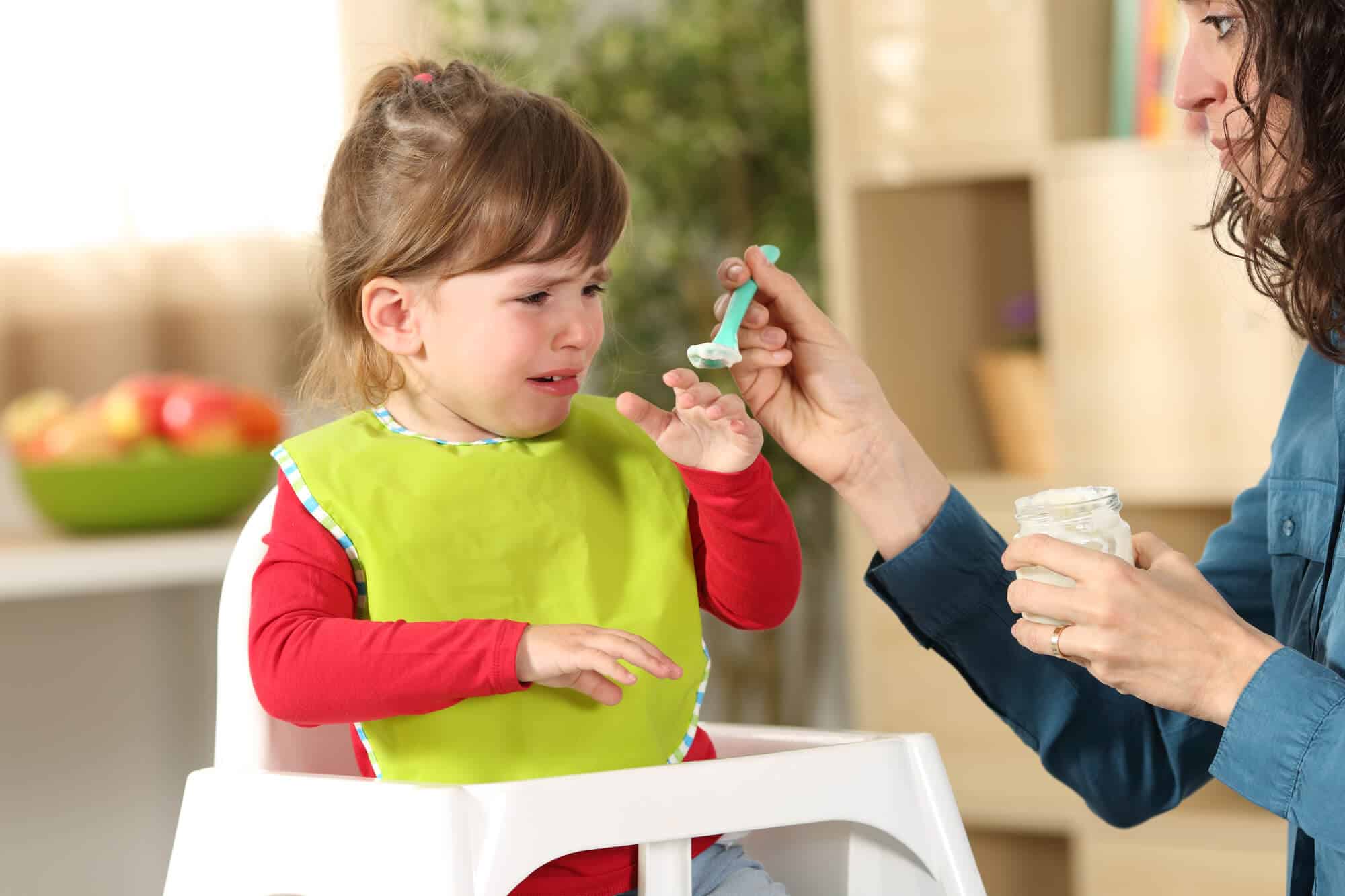
Emotional outbursts are developmentally normal for young children. Maybe they’re having some big feelings or used to getting their way by screaming, but either way, when your child throws a tantrum, they’re not intentionally trying to be difficult.
You can help them begin to communicate and handle their big emotions by labeling what you
see. They don’t have the language skills to do so for themselves. This also slowly helps children learn that all feelings are okay, but all actions are not.
When children are crying or having a meltdown, you can say what happened and then label how
they might feel.
● “Sam took your truck. I can see that made you really mad.”
● “Those blocks keep falling down. You seem so frustrated!”
● “You really wish we could eat ice cream right now and are sad it’s not ice cream time.”
In this way, you can validate your toddler’s feelings while still holding any necessary boundaries. You can use this same tactic with whining by saying, “It sounds like…” This will help give children the language they will eventually use to express themselves better and help you keep your cool.
● “It sounds like you really want some food. You can say, ‘I’m hungry!’”
You can label positive emotions as well in your children and other people. Notice when your
child is happy, excited, or having a good time.
● “You look really happy going down the slide!”

A newfound understanding of how toddlers learn and how their brains are developing will give you the extra patience you need throughout your day. Employ these tactics for managing difficult toddler behaviors and take a break every now and again to help you recharge for another day.
Leave a Reply