

Sneak peek: Executive function activities for 3 to 5-year-olds can help them develop much-needed skills like planning ahead, memory, and self-control. Understanding how their brains develop can help us foster their skills.
Perhaps the alternate title for this post should be: “Why your preschooler doesn’t take a coat when it’s cold outside.” I’ve been around young children to know that they often do not follow the directions or precautions you give them, no matter how many times you repeat yourself. So why is that? Are they just choosing to ignore you? Or is there something different about the functioning of their brain that makes it difficult for them to plan? New research shows that it probably has a lot more to do with the latter. So the question is: how can we incorporate executive function activities for 3 to 5-year-olds into their lives to help them build these skills in a fun way?

Key Takeaways
Executive function activities for preschoolers are play-based games and routines that build working memory, self-control, and flexible thinking. Good examples for ages 3 to 5 include Simon Says, Freeze Dance, pretend play, and memory games.
What Are Executive Function Skills in Preschoolers?
Executive function skills are the mental skills that help children plan, remember instructions, control impulses, and adjust when things change. In preschoolers, they show up in everyday moments like waiting for a turn, remembering to put shoes on before heading out the door, or switching from playtime to clean-up without a meltdown.
Researchers usually group executive function into three core skills:
- Working memory: holding information in mind and using it, like remembering a two-step instruction (“get your shoes, then bring me your backpack”).
- Self-control (inhibitory control): pausing before acting, such as not grabbing a toy, waiting to speak, or stopping when the music stops in Freeze Dance.
- Flexible thinking (cognitive flexibility): shifting between tasks or adapting to a change in plans, like moving on when a favorite activity ends.
These skills depend on the prefrontal cortex, one of the last brain regions to mature, and they develop gradually throughout childhood and into early adulthood. Between ages 3 and 5, they’re just beginning to take shape, which is why preschoolers can be so inconsistent. A child might follow directions perfectly one moment and forget them completely the next. That’s not defiance. It’s a brain that’s still under construction.
The good news is that these skills grow with practice, and young children practice them best through play. The activities below are designed to build all three.
Why Preschoolers Struggle to Plan Ahead
In the past, many researchers thought that the functioning of young children’s brains was much like little adults: they could reason and plan ahead but just not as effectively as adults. New research is showing that this may not be the case. Instead, young children’s brains function quite differently, especially concerning skills like planning ahead.
University of Colorado researchers conducted a creative study to understand how young children (3-year-olds) follow directions compared to older children (8-year-olds). They set up a simple computer game involving a set of rules:
– When a picture of the character Blue (from Blue’s Clues) was followed by a picture of a watermelon, the child was told to press the happy face button.
– When any other character appeared (e.g., SpongeBob Squarepants) they were told to press the sad face button.
– The researchers then used a device to measure the children’s eye activity to determine how much mental effort they were using to complete the task.

Related reading: The Fallacy of Early Academics: Why Play-Based Preschool Matters
What they found was that the older children had to exert very little mental effort to do this task because they could anticipate which picture was coming up next. Preschoolers, however, had to use more effort to think about which button to push in response to the game. They had to consciously think back to the character they had just seen, instead of being able to anticipate the future. This is why executive functioning skills activities for 3 to 5-year-olds are KEY — they need practice with these skills in order for them to become second nature.
Preschoolers’ Brains Work Differently
So what does this mean for parents of preschoolers? As the researchers point out, this study seems to indicate that parents shouldn’t expect their preschoolers to think ahead, for example, and bring their coat when going outside, even if you told them in advance. Just repeating this type of information over and over probably won’t help. While your preschooler is probably listening to you, their brain doesn’t really retrieve this information until it becomes immediately needed, like when they step outside and realize it’s cold. The researchers put it this way,
“The good news is what we’re saying to our kids doesn’t go in one ear and out the other, like people might have thought. It also doesn’t go in and then get put into action like it does with adults. But rather it goes in and gets stored away for later.”
CU-Boulder psychology professor Yuko Munakata
Related reading: What Does an Effective Preschool Look Like? A Guide for Curious Parents
Part of the mental skills involved in following instructions and retrieving information is what we call executive functioning skills. You’ve probably heard educators talk a lot about this. Executive functioning skills like working memory, self-control and attention are crucial to children’s success in school and later in life.

Executive Functioning Activities for 3 to 5-Year-Olds: Games and Books
Executive function skills, however, take years to develop in children. As parents, we can do things to help our children develop these skills:
The best executive function activities for preschoolers are short, playful, and slightly challenging. Each one below targets a specific skill, so you can focus on what your child needs most. Quick reference:
| Skill | Best for | Example activity |
|---|---|---|
| Working memory | Remembering instructions and information | “What’s Missing?” tray game |
| Self-control | Pausing, waiting, and stopping | Freeze Dance |
| Flexible thinking | Switching rules and handling change | Sorting Switch-Up |
Working Memory Activities
Working memory is the ability to hold information in mind and use it. These games stretch it gently.
1. Memory Match. Lay out 4 to 6 pairs of cards face down and take turns flipping two. Start with fewer pairs and add more as your child improves.
2. “What’s Missing?” Tray Game. Place 4 or 5 small objects on a tray and let your child study them for 10 seconds. Have them close their eyes while you remove one, then ask what’s gone. Add more items over time.
3. Multi-Step Treasure Hunt. Give a two-step instruction (“Get your shoes, then bring me a book”) and let your child carry it out. Move up to three steps when two feels easy.
4. Story Retelling. After reading a favorite book, ask your child to retell it in order: “What happened first? What happened next?” This builds memory and sequencing.
5. Pretend Play. Staying “in character” as a doctor, shopkeeper, or dragon requires holding the rules of the game in mind. Add props and a simple plan (“First we open the store, then we count the money”) to stretch it further.

Self-Control Activities
Self-control, or inhibitory control, is the ability to pause before acting. These games make stopping and waiting feel like fun.
6. Freeze Dance. Play music and dance until it stops, then freeze. Try making the freeze last longer or having your child freeze in a silly pose.
7. Simon Says. Your child follows commands only when they begin with “Simon says.” It practices listening closely and holding back automatic responses.
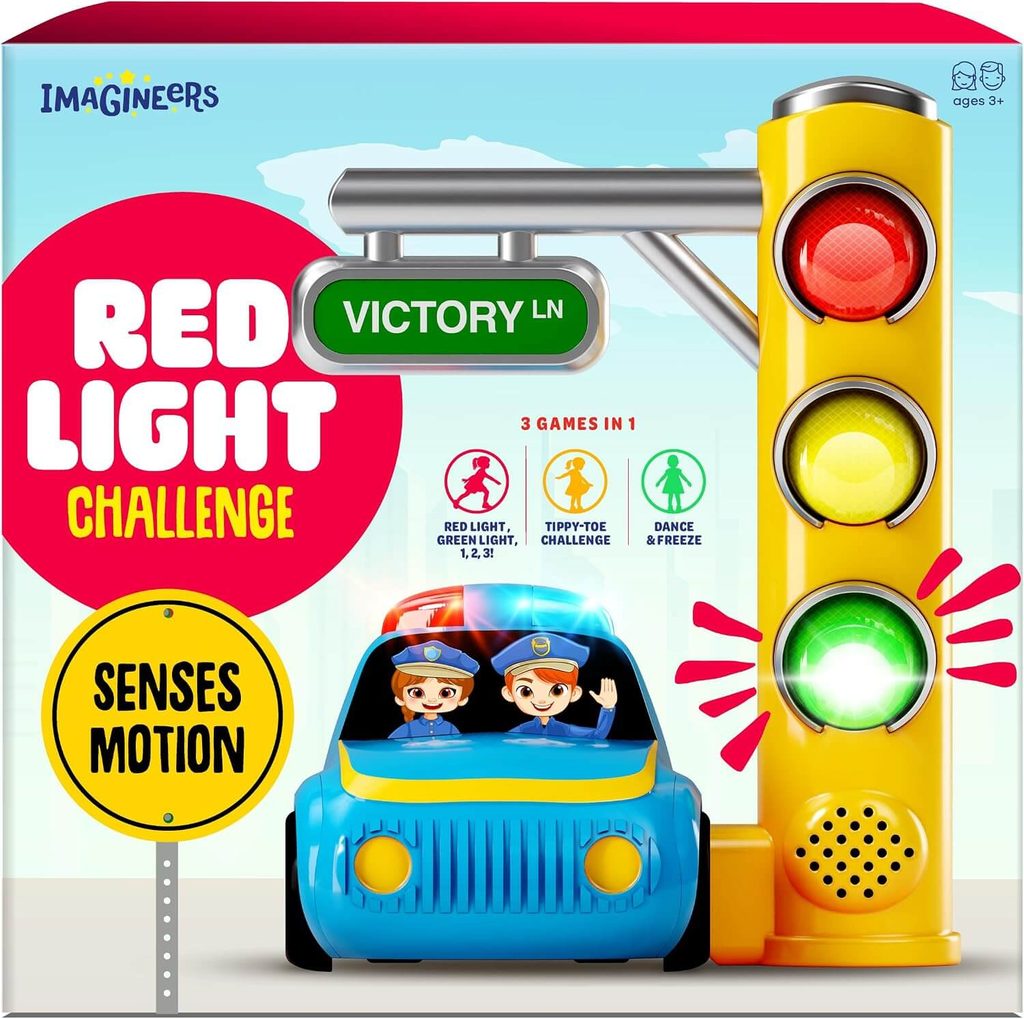
8. Red Light, Green Light. Your child runs or walks on green and stops on red. For a challenge, add yellow for slow motion.
9. Opposite Day. Ask your child to do the opposite of what you say: when you say “stand up,” they sit down. This takes real mental effort because they have to override the obvious response.
10. Slow Motion Race. The slowest person wins. Moving in slow motion is surprisingly hard for little ones and builds body control.
Flexible Thinking Activities
Flexible thinking, or cognitive flexibility, is the ability to switch between rules or adapt when things change.
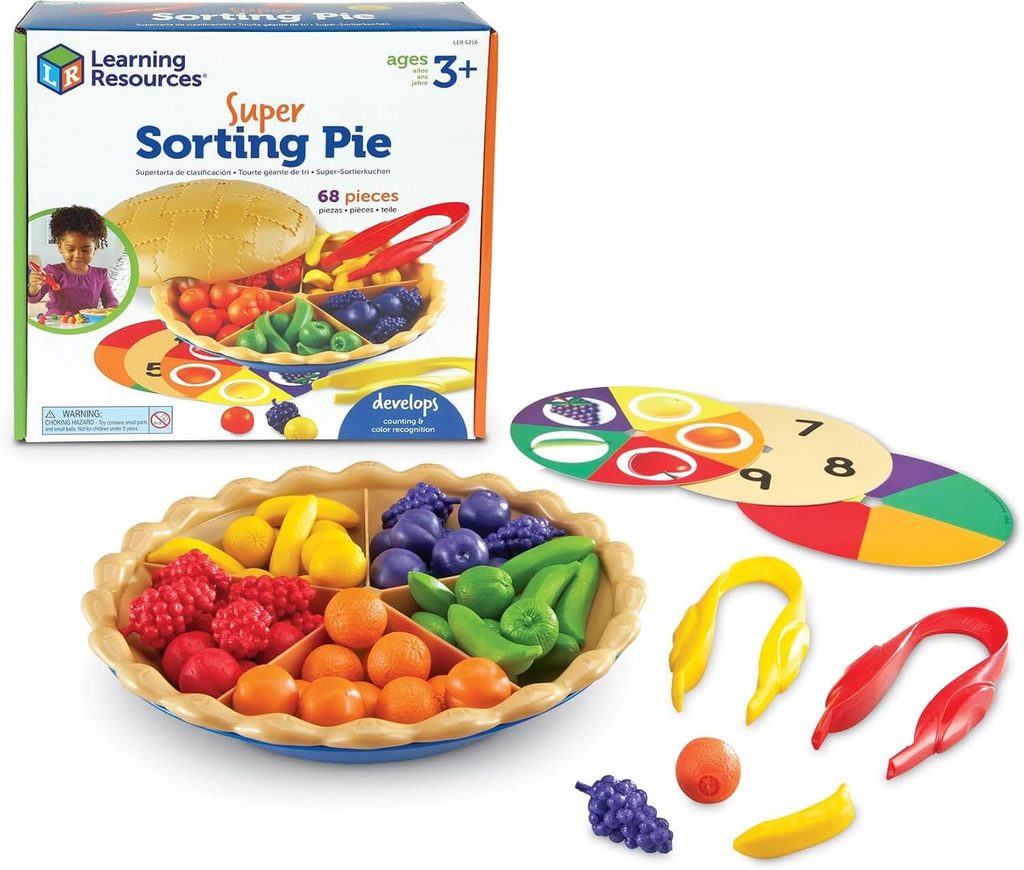
11. Sorting Switch-Up. Have your child sort a pile of toys or blocks by color, then suddenly ask them to sort the same items by shape. Switching the rule midway is the challenge.
12. Change the Rules Game. Play a simple game like tag or catch, then announce a new rule partway through (“Now we hop instead of run!”). Let your child invent the next rule too.
13. Role Reversal Pretend Play. Swap roles: your child plays the parent or teacher while you play the child. Seeing a situation from another point of view stretches flexible thinking.
14. Rhythm Switch. Clap a simple pattern and have your child copy it, then change the pattern without warning.
15. Spot It Jr. or Set Jr. Both games require noticing matches and switching what you look for from turn to turn. They work well as quick table games.

Books to Teach Executive Functioning Skills
It’s no big surprise that reading helps develop executive function. As kids grow and develop their executive function skills, they can remember longer plots and more characters. Some books also teach lessons involving executive function skills like waiting, taking turns and controlling your language. Here are a few of my favorites:


Games to Foster Executive Functioning Skills
Play games that require executive function skills like “Freeze Dance” or “Simon Says.” Kids think they are just having fun, but they are challenging their brains.
Of course, children’s brains do eventually mature to the point that they can plan ahead and anticipate future events. Even the 8-year-olds in the study already had a much easier time completing the task than the preschoolers. In the meantime, this study is a good reminder that young children are not just like adults in smaller bodies.
Other games to encourage executive function skills:

Set Junior: a sorting game for kids

Lettuce Play: matching and memory game for kids
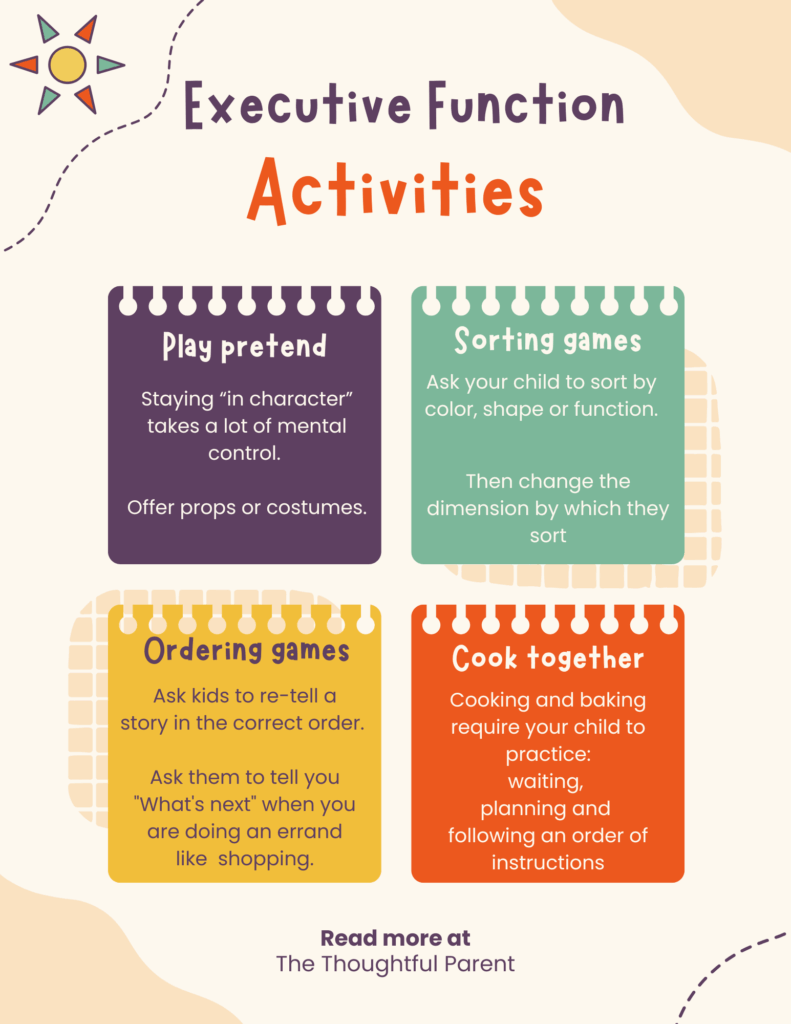
Need more ideas for executive function activities for preschoolers?
Click on the image below for a list of executive function activities for preschoolers. As a thank you for this resource, sign up as a paid subscriber (for less than a cup of fancy coffee) on my Substack and receive access to all ALL printables resources for families.
FAQs About Executive Functioning in Preschoolers
Executive function begins developing in infancy, grows rapidly between ages 3 and 5, and continues maturing into early adulthood. Preschoolers are just starting to build these skills, which is why they can seem inconsistent. Their abilities will look very different as they mature.
The most effective approach is regular, playful practice, plus routines that support their memory and self-control. Games like Simon Says, Freeze Dance, and pretend play build these skills without feeling like work. Consistent routines, visual checklists (like picture steps for getting dressed), and giving one or two-step directions also help. See the full list of activities above.
There isn’t strong evidence that screen-based “brain training” apps meaningfully improve executive function in young children. Real-world play, conversation, reading, and movement games, along with responsive caregiving, are better-supported ways to build these skills. If you use apps, treat them as a supplement.
By Amy Webb, Ph.D.
Leave a Reply