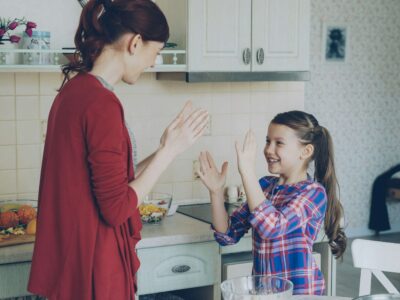
Sneak peek: Hand-clapping songs do more than entertain your child—they strengthen their memory, coordination, and even early reading skills.
Sometimes a research study comes along that makes you pause and think, “Who even thought to study that?”
That’s exactly how I felt when I came across research on hand-clapping songs and their impact on children’s brain development.
It turns out that those rhythmic games many of us remember from preschool, Patty-Cake, might actually help boost children’s cognitive skills and reading readiness.
How Hand-Clapping Songs Support Brain Development
In one fascinating study of early elementary students, researchers found that children who regularly took part in hand-clapping games showed stronger cognitive abilities than those who didn’t—even compared to children in music-only groups.
It seems that the combination of rhythm, coordination, and language, all happening at once, gives the brain a powerful workout. Kids aren’t just having fun; they’re synchronizing movement, memory, timing, and words, all in rhythm with a friend.
Research on all sorts of music training, including hand-clapping and drumming shows that these experiences help improve working memory, attention, and reading fluency. In fact, children who can keep a steady beat often show stronger early reading skills because rhythm helps the brain process the patterns and sounds that form language.
Rhythm and Reading: A Surprising Connection
It’s no coincidence that rhythm and reading go hand in hand. Researchers have found that kids who can recognize rhythmic patterns tend to be better at recognizing phonological patterns—the sounds that make up words.
A study from Northwestern University’s Auditory Neuroscience Lab showed that children who participate in musical rhythm games have more consistent neural responses to speech sounds, which helps them be more ready to read when the time comes. They already know how to listen for the sounds that make up words.
Related reading: Fun and Effective Executive Function Activities for Preschoolers
Fun Hand-Clapping Songs to Try with Your Child
If you’re ready to bring some rhythm into your child’s day, start with these simple, classic hand-clapping songs. They’re perfect for preschoolers and early elementary kids — and bonus: you’ll probably find yourself singing along, too.
- Pat-a-Cake – The classic toddler favorite that builds coordination and timing.
- Down Down Baby – Adds call-and-response fun while strengthening language skills.
- A Sailor Went to Sea, Sea, Sea – A silly song that builds rhythm and attention.
- If You’re Happy and You Know It – A classic song with both clapping and stomping.
These videos provide a model for how to recite these songs. But don’t worry about you or your child getting it perfect, especially the first time. Practicing rhythm and clapping can all help their brain grow new connections (and maybe yours too). The joy and connection you share with your child are the real magic.
Looking for more child development and research-backed parenting tips? Sign up for my Substack newsletter. Consider supporting my work by becoming a paid subscriber (for less than a fancy cup of coffee 🙂
Related resources:
Leave a Reply