

Sneak peek: With so many choices on the market, it’s hard to know which is the best milk for toddlers. A review of the choices and research on toddler milk choices.
I’m excited to feature a guest post from Alain Bertholet, co-founder of Voyager Milk. If you have a milk-loving toddler, as I did years ago, you will know the struggle of keeping milk cold and fresh while traveling or out and about. Voyager milk offers a healthy, easy solution to this challenge.
Every parent wants to give their child the healthiest start; however, selecting the best milk for toddlers can be confusing. With so many options, it’s hard to know which milk to choose—cow’s milk, almond milk, soy milk, or fortified milk. Knowing what meets your child’s unique nutritional requirements is important.
Experts consider milk to play a crucial role in supporting a toddler’s brain development, meeting their energy needs, and promoting bone strength. The choices made align with nutritional balance, which emphasizes a deeper understanding of the differences between milk options.

Overview of Toddler’s Nutrition Basics
Growth support
Toddlers undergo a period of fast development between the ages of one and three. Milk and other nutrient-rich foods provide the protein, fats, and vitamins that keep bones and muscles healthy, while also supporting the immune system.
Brain development
Whole milk provides essential fats that support healthy brain growth in toddlers. These natural ingredients support learning, memory development, and overall cognitive growth as toddlers continue to mature.
Strong bones
Calcium and vitamin D together help to form strong bones and teeth. According to research by the National Institutes of Health (NIH), early nutritional support is vital for preventing rickets and promoting skeletal health throughout life.
Energy boost
Young children require regular energy supplies. Whole milk and balanced foods contain carbohydrates and fats to support playtime and physical activity without fatigue or aggravation.
Immunity building
Zinc, iron, and vitamins A, C, and E help protect toddlers against infections. Fortified milk supplemented with these vitamins and nutrients helps in enhancing resistance to common childhood diseases.

Download the toolkit!
Best Milk for Toddlers: A Look at the Options
There are various milk options available to parents with varying nutritional content and digestibility. Making healthy choices will ensure that your toddler gets balanced nutrition to grow and be healthy. The list below features the most popular options, along with suggestions to help you pick the best milk for toddlers.
Whole cow’s milk
Whole cow’s milk is one of the most suggested products for toddlers because it offers a full supply of nutrients. It provides a good balance of protein, calcium, vitamin D, and fats that are essential to healthy growth. Research by the American Academy of Pediatrics (AAP) found that whole milk plays an important role in the development of children’s brains and bones, especially from ages 1 to 2.
Powdered toddler milk
Powdered milk for toddlers is the most convenient option for parents today, especially if they travel frequently. Voyager’s toddler milk stands out as one of the trusted brands with its organic, pediatrician-formulated blend enriched with calcium and Vitamin D that supports toddlers’ healthy growth.
Voyager milk is certified by the Clean Label Project and made in FDA-registered facilities that guarantee safety and purity. It stands out as a promise to offer safe toddler nutrition and to turn every journey easier for families. It is free from sugar, GMOs, and palm oil. Voyager Milk is expertly created for parents’ convenience, packaged in single-serve stick packs that need no refrigeration. It is the most nutritious and practical choice for traveling with growing toddlers.
Goat’s milk
Goat milk is sometimes used as a substitute for cow’s milk among toddlers with mild sensitivity to cow milk protein. It is easier to digest, and has lower lactose content, and the fat globules are smaller. Studies reported by the National Library of Medicine show that goat milk has the potential to improve the absorption of nutrients and reduce inflammation.
It also supplies calcium and vitamin A. However, parents should consider supplementing their toddler’s diet with iron and folate from other foods because goat’s milk is naturally lower in these nutrients than fortified cow milk.
Soy milk
Soy milk is a common plant-based alternative for families that prefer vegetarian or vegan diets. It contains a similar amount of protein as cow milk and, when fortified, provides vitamin D and calcium, which are necessary to build strength in bones. The Harvard T.H. Chan School of Public Health suggests that soy protein is heart-protective and safe for children when taken in moderation.
Pediatricians usually recommend unsweetened and fortified options to reduce sugar intake and support healthy developmental patterns.
Almond and oat milk
The oat milk and almond milk varieties have become popular because of their creamy feel and good taste. Nevertheless, these varieties do not typically provide enough protein and fats to support the development of a toddler. In choosing these options, it is crucial to have fortified options that have added calcium, vitamin D, and B12.
Health professionals tend to suggest that they can be used as an occasional addition, but not the primary source of milk unless recommended by a pediatrician or a nutritionist.

Key Nutrients to Look For in Milk
Even though toddlers are eating solid food, milk still provides a main source of several crucial nutrients.
Calcium strengthens and helps develop strong bones and teeth, assists with muscle contraction and nerve function, and allows toddlers to maintain posture during sudden physical development.
Vitamin D increases the absorption of calcium, immune defense, and the balance of skeletal mineralization essential in the initial bone development.
Protein supplies building blocks for tissues, muscles, and enzymes, and helps with general body repair and continuous developmental processes.
Healthy fats provide the brain with the necessary fatty acids to build brain structure and hormones, and to maintain balanced energy levels in toddlers.
Iron facilitates oxygen delivery in the bloodstream, prevents anemia, and enhances the development of cognitive and motor functions.
Milk Nutrition Tips for Parents of Toddlers
Introduce milk gradually
Use a little new milk with familiar types so the toddlers can easily adapt without upsetting their digestive systems.
Check labels
Select fortified foods that have calcium, vitamin D, and B12 and do not have any additives or artificial flavoring.
Limit sugar
Choose milk types that are not sweetened to avoid early sugar addiction and promote the use of natural flavors.
Observe reactions
Monitor symptoms such as bloating, irritability, or rash when using new types of milk to identify sensitivities early on.
Offer a balanced diet
Make sure milk is a supplement to whole grains, proteins, fruits, and vegetables, as they constitute a well-rounded daily meal.
When to Consult a Pediatrician
If your toddler ever exhibits abnormal responses, such as diarrhea, constipation, or skin irritation after drinking milk, consult your pediatrician. These symptoms may be signs of intolerance or allergies, which must be diagnosed.
A professional assessment will assist in deciding on an alternative milk option, supplementing, or modifying serving portions. Pediatricians can monitor growth trends, evaluate nutrient deficiencies, and recommend fortified milks or safe alternatives to promote balanced growth in the early stages.
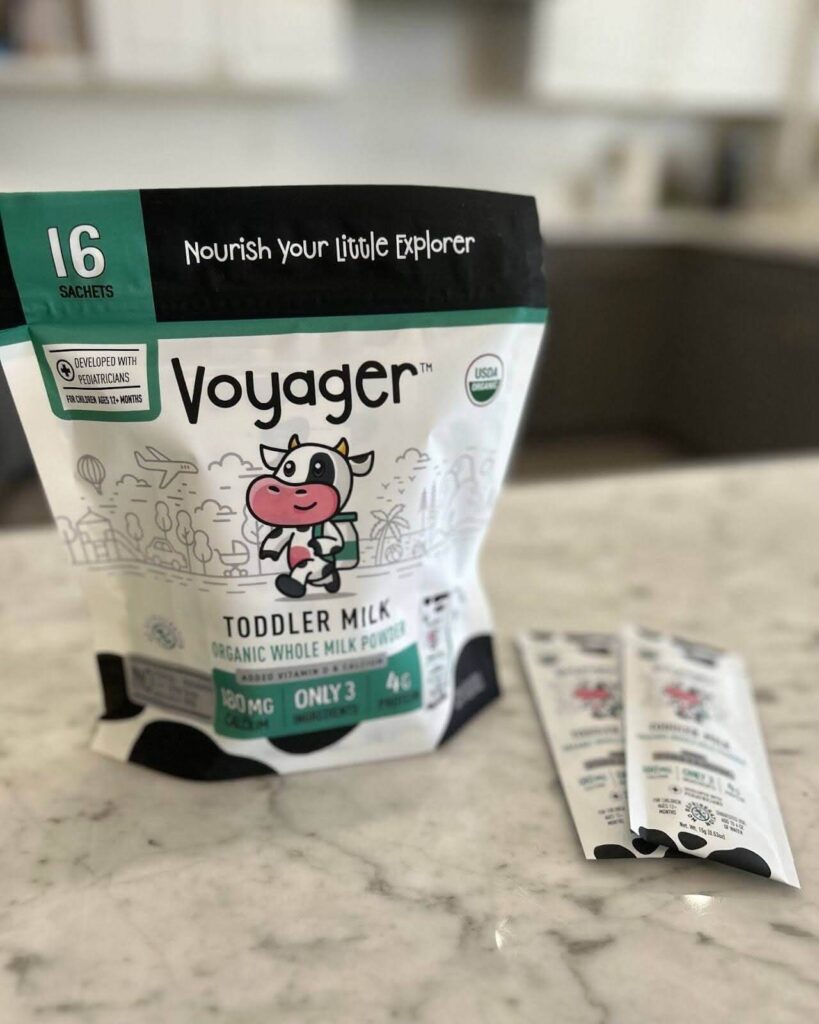
The process of choosing the appropriate milk to feed your toddler involves both personal preferences and awareness of the nutritional composition of the choices. Clinical studies consistently show that cow’s milk contains fats and proteins that are vital for early development. Voyager Milk is a clean-label, organic whole milk powder that is made with pure ingredients and is conveniently packaged in portable, single-serve sachets. It’s ideal for airplanes, road trips, family visits, hotels, and emergency prep.
Leave a Reply