

Sneak peek: If your child is working to improve their speech articulation, the repeated practice can sometimes feel like a chore. Try these active articulation games for kids to help make practice more playful and engaging.
Articulation games for kids transform speech practice into an engaging and playful activity, which is crucial for maintaining children's motivation and ensuring consistent at-home practice. These games help children achieve the high frequency of practice often recommended by speech-language pathologists (SLPs), who suggest 50-70 repetitions for effective articulation improvement. By making practice fun, articulation games ensure children stay immersed and motivated, leading to better progress in their speech development.
Is your child working on articulation in speech or certain speech sounds? If so, they may have been encouraged by a speech language pathologist (SLP) to practice these troublesome speech sounds repeatedly. Luckily, speech practice doesn’t have to feel like homework. SLPs often recommend articulation games for kids as a playful way to help them work on particular sounds. By making the practice into a game, your child will be more motivated to keep it up. As with all aspects of working with children, a playful approach always makes it more engaging and fun.

The benefits of articulation games for kids
How often should children practice articulation with games?
Research suggests that articulation games for kids, in both digital and hands-on formats, can help keep up the motivation to practice. This is crucial since SLPs often recommend that children complete 50-70 repetitions while practicing. That may sound like a lot, but if your child is playing an articulation game, the turns will add up quickly.
Why is at-home articulation practice important for children?
Even if your child attends regular speech therapy with a professional, at-home practice is key to making progress. Digital articulation games installed on a tablet or smartphone can be easy for active, on-the-go families to take with them so children can practice in the car or while waiting.
How do articulation games boost children's motivation and engagement?
When children are young, play-based learning is the gold standard for ensuring that they stay immersed and motivated. The same goes for speech practice—a playful approach works best. If you join in the fun with your child, you’ll enjoy moments of connection while helping their speech improve.
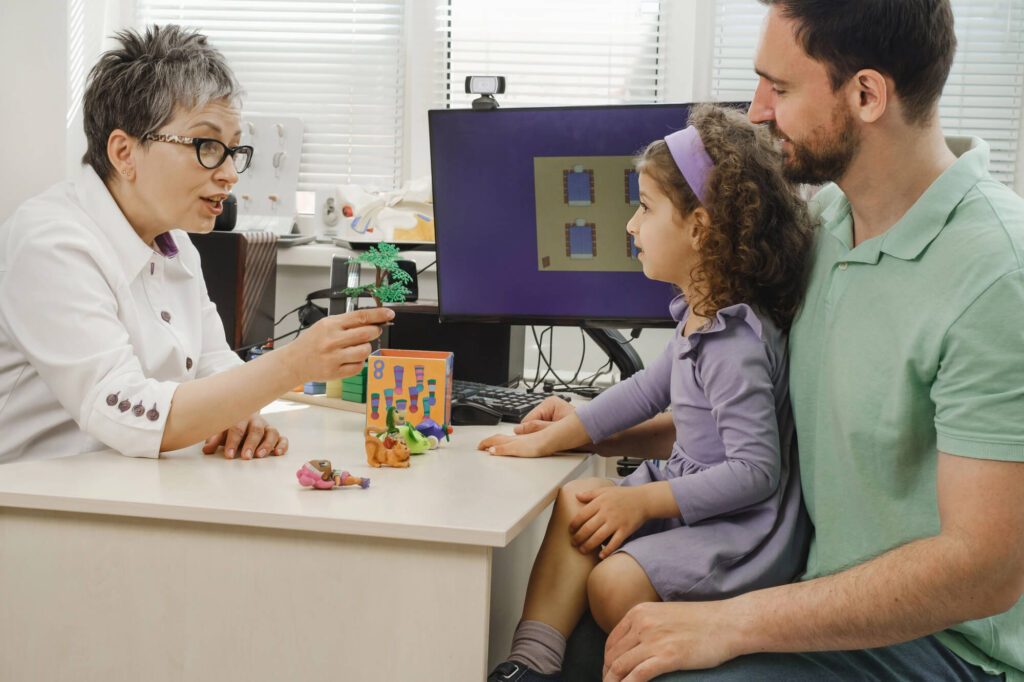
Hands-on articulation games for kids
Active, hands-on games can help keep your child excited to practice their articulation sounds. While these games are appropriate for children ages 4 to 10, if your child isn’t able to read all the target words, simply use cards with pictures instead. Try using a combination of hands-on and digital articulation games to keep the practice fresh and exciting each time.
How to play an articulation scavenger hunt game?
Fill a large plastic tub with dry beans or lentils. Hide small cards with your child’s target words or speech sounds on them in the tub. You can also add small objects or toys to make it more fun. As your child finds the card or object, encourage them to say the word or sound.
How to play an articulation beach ball toss game?
Use a beach ball and write your child’s target words or sounds onto different sections of the ball. Play a game of catch with your child using the ball. When they catch the ball, see what word their index finger lands on, and that’s the word they say out loud for practice.
How to use target practice for articulation games?
Write your child’s target words or sounds on index cards. Tape the index cards to areas around your house, like the back of a chair, on the stairs, or on the wall. Pull out your child’s Nerf blasters (or use a soft ball) and encourage your child to play using the cards as targets. Each time they hit one of the cards, they say the word out loud.
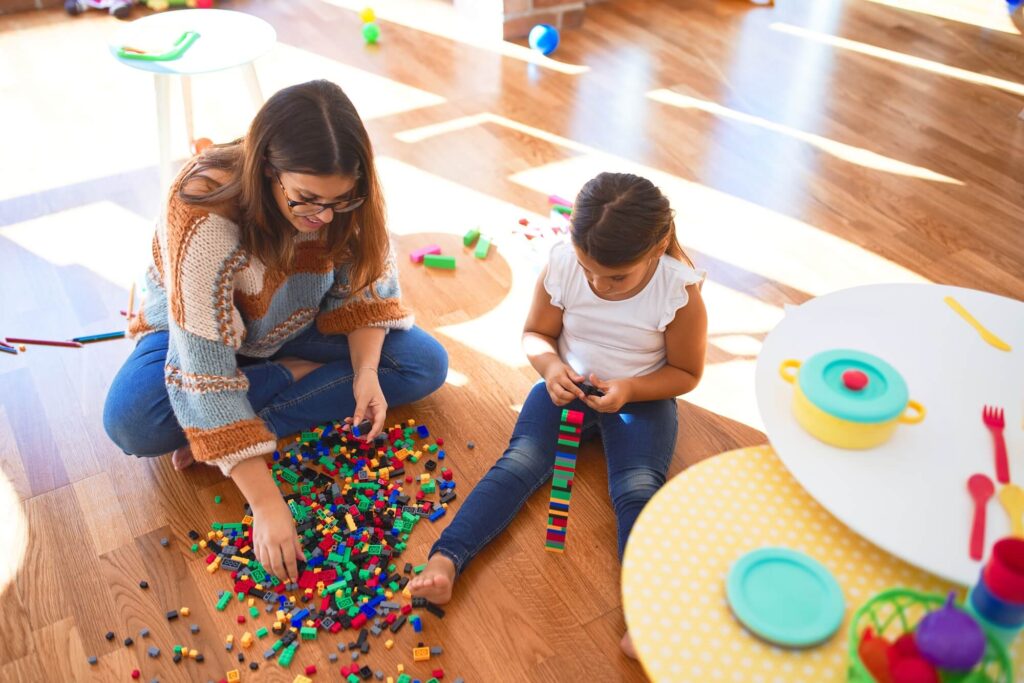
How to play an articulation Lego stack game?
Bring out a collection of Lego bricks and your child’s target word cards. Encourage your child to stack a Lego piece each time they correctly pronounce one of their words or sounds. See how many pieces they can stack in one session. The next time you play, encourage them to beat their record.
How to use podcasting for articulation practice?
Older children will really love this game. Use a phone voice recorder to allow your child to “podcast” their list of target words or sounds. Get creative! Encourage them to create a short story using their words, sounds, and even make sound effects. Replay the recording so they can hear their voice and make any adjustments.
Related reading: Toddlers Really Do Have Their Own Language (Sort of…)
Speech practice doesn’t have to feel like another chore for your child to complete. Using a variety of articulation games, your child’s practice will turn into real progress. Over time, they’ll gain confidence, which will motivate them to keep playing again and again.
Leave a Reply