

Sneak peek: Looking for Life360 alternatives? One parent’s take on the best family safety apps for 2026…and the private tracking option they found.
This post is sponsored by HeyPolo. All opinions, stories, and experiences shared are my own.
My son had just started driving, and like a lot of parents, I downloaded a tracking app the same week he got his license. For months, I told myself the little blue dot was about safety. I told myself it was no different than teaching him to check his mirrors.
But somewhere between the “arrived at school” pings and the notifications every time he took a different route home, I realized I wasn’t checking on his safety anymore. I was just watching him and that didn’t make either one of us feel good.

A New Perspective on Teen Driving
The moment that did it for me was more of a slow, uncomfortable realization. I write about autonomy-supportive parenting. I believe in it. And yet by night, I was opening an app to trace my son’s every move, route by route, stop by stop. I felt like a hypocrite. I was telling other parents that kids need room to become capable, independent people, while quietly treating my own son’s drive home like something to watch like a hawk.
I wanted to give him room to grow into an independent driver. That was the whole point of him having a license in the first place: autonomy, trust, the chance to make his own calls on the road. But I also genuinely wanted to know he was safe. Was he driving too fast? Had he been in an accident? Those weren’t unreasonable questions. What was unreasonable was how I’d been trying to answer them: by watching every move, all the time, like I was some kind of digital big brother.
That’s when I started looking for Life360 alternatives. I needed something that could ease my anxiety without turning our relationship into a surveillance operation.
Research Life360 Alternatives
What I found during that search genuinely surprised me. A lot of “free” family tracking apps aren’t really free; they’re funded by something, and that something is often your family’s location data. I started reading through privacy policies (riveting, I know) and realized a lot of these apps were quietly building profiles off exactly the kind of movement data I was trying to use responsibly. That didn’t sit right with me. I wasn’t trying to trade my son’s privacy for my own peace of mind; I was trying to find both.

That search is what led me to look more seriously at family tracking app reviews and specifically at digital privacy for families as its own category, not just an afterthought.
The Discovery
That’s how I landed on HeyPolo. The pitch that caught my attention was simple: safety doesn’t require surveillance. Crash detection and SOS features run quietly in the background — they’re there if something actually goes wrong, but they’re not narrating my son’s entire day back to me in real time.
It turns out this is kind of their whole philosophy. From what I understand, the team behind HeyPolo has a background in security, which honestly makes sense. The encryption is built to a standard closer to what you’d expect from a privacy-first VPN than a typical location-sharing app. It’s privacy-by-design, not privacy-as-an-afterthought.
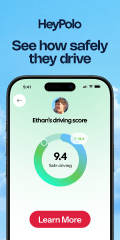
What actually changed things for us was a feature called Visibility Layers. Instead of one all-or-nothing view into where he is at every second, we could set up something more like… appropriate trust. He has more independence day-to-day, and I have a way to know if something’s actually wrong. Location, crash detection, and driving scores, all in one place, without it feeling like I’m sitting behind him in the passenger seat forever.
The Result

I won’t pretend this fixed everything overnight. But something did shift. I stopped opening the app throughout the day just to see where he was. He stopped feeling like every drive was being logged and judged. When it mattered — when I actually needed to know he was okay — the information was there, immediate and unambiguous, without me having to go digging for it.
That’s really the whole idea behind it: reach them, when it matters most. Not reach them constantly. Not monitor them endlessly. Just — when it counts, know.
If you’re a parent standing where I was — wanting to trust your kid’s independence but still needing some kind of safety net, and maybe feeling a little like a hypocrite in the process — it might be worth looking at what’s out there beyond the traditional tracking app. For us, it turned out safety and surveillance didn’t have to be the same thing after all.
Leave a Reply