

Meet the Author
Amy Webb, Ph.D. is a scholar turned child development blogger. She is a wife and mom to two young boys. With her blog, The Thoughtful Parent, she brings academic child development and parenting research into the lives of parents so they can use it to make informed decisions.

Sneak peek: Parenting affects child development. There’s no doubt about that. But research — and thirteen years of raising two boys — has taught me it’s a two-way street. Kids shape how we parent them just as much as we shape them.
Parenting significantly affects a child’s cognitive, emotional, and social development, but it isn’t the only factor. A child’s temperament, genetics, and environment interact with parenting in a constant back-and-forth, which means two kids raised by the same parents, in the same house, can turn out very differently.
That’s the honest, research-backed answer. It’s also the exact lesson my own two sons have spent years teaching me, sometimes loudly, through all stages of development.
I have a Ph.D. in Human Development and Family Sciences. I’ve read the studies. But some of my clearest lessons about parenting and child development haven’t come from a journal article, they’ve come from watching my own two boys, respond differently to basically the same parenting.
Why Parenting Matters So Much for Child Development

Rearing a child means to nurture, care for, and guide them to adulthood — and how consistently and responsively parents do that has real, measurable effects. Decades of child development research point to how parenting affects child development. In fact, parenting is one of the most influential modifiable factors in how kids turn out. This means, unlike genetics or birth order, it’s something parents can actually learn and adjust.
Parenting shapes children in a few key domains:
- Emotional and brain development. A child’s earliest relationships help wire the emotional and stress-response systems in the brain. Sensitive, responsive caregiving early on is linked to better stress regulation later in life.
- Self-regulation and executive function. How parents respond to a child’s big emotions — modeling calm, or matching the chaos — teaches kids how to eventually manage their own emotions and behavior.
- Social development. Children learn how relationships work by watching and experiencing their relationship with their parents first. That template gets carried into friendships, romantic relationships, and eventually their own parenting.
- Academic and life outcomes. Interestingly, self-regulation and other “soft” executive function skills, built largely through parenting, are often better predictors of a child’s future academic and life success than IQ.
The Four Parenting Styles
Developmental psychologists generally describe four broad parenting styles, based on how much warmth and how much structure a parent provides:
- Authoritative — warm and responsive, but with clear expectations and structure. Most consistently associated with well-adjusted, confident kids.
- Authoritarian — high expectations, low warmth or dialogue. Kids may be obedient but can struggle with self-esteem or decision-making.
- Permissive — warm but with few rules or limits. Kids may struggle with self-control.
- Uninvolved — low warmth, low structure. Associated with the most difficulty in social and emotional development.
Knowing these styles is useful. But here’s what the framework leaves out, and what thirteen years of parenting has hammered home for me: the same parenting style doesn’t produce the same child.
Parenting Is a Two-Way Street
It’s tempting to think that how parenting affects child development is a simple one-way street. In reality, developmental researchers describe it as a transactional or bidirectional process: parents shape children, and children shape parents right back, in a loop that runs from birth onward.
I felt that firsthand with my first son. From day one, he didn’t react to things the way the parenting books — or the other babies around us — suggested he would. I don’t think I was doing anything differently than the moms around me. He just came wired differently, and that changed how I had to parent him.
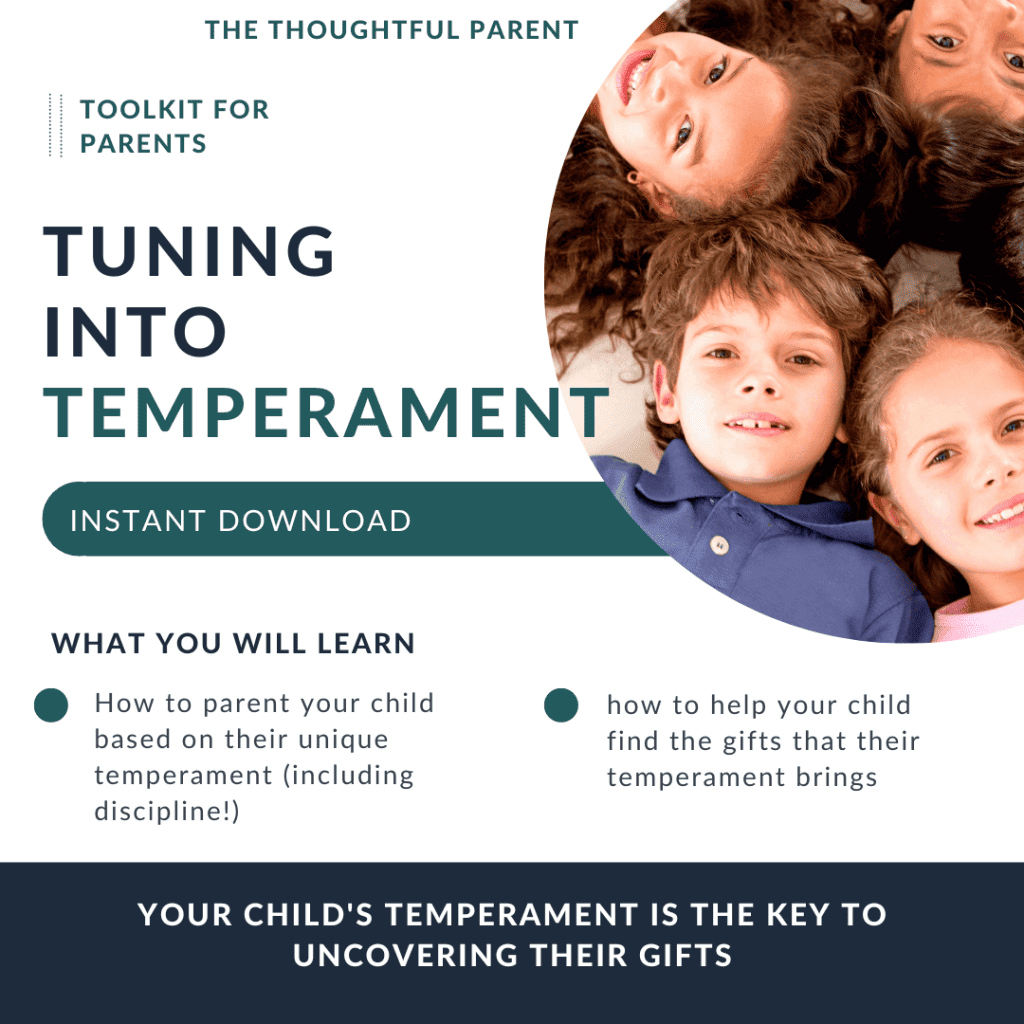
This is the part of the parenting-and-child-development conversation that doesn’t get enough attention: your child’s temperament is doing just as much work as your parenting is. Here are the lessons that experience taught me.
Lesson 1: Conformity Isn’t Everything
Don’t worry if your child doesn’t “fit the mold” or do what other kids do.
From day one, I felt like my first son didn’t react to situations the way other babies did. Maybe I just had unrealistic expectations as a first-time mom, but he always seemed a little different from the babies I’d been around. I always saw newborns sleeping peacefully in car seats at stores or restaurants. Would my son sleep in a car seat? Not at all. Almost from birth, he had colic-like symptoms and hated the car seat. I’d strap him in to run to the store or meet a friend, and he’d scream from door to door. At first, this made me really upset. I’d break down in tears almost every time we went for a car ride. Eventually I realized he just hated the sensations, the noise, the confinement. Understanding your child’s temperament is key. Over a few months he got a little better, but it wasn’t until he was a toddler and old enough to enjoy a toy, a book, a song on the radio, that car rides actually got easier.

As a toddler, he was a ball of energy. All toddlers have energy, but he seemed to never stop. I vividly remember a playgroup at our church, my son around 2 years old, and he was the only kid climbing on anything climbable in the room: a stack of chairs, a table, anything. He was also the only kid who never sat down to eat. All the other toddlers sat with their sack lunches, happily eating. My son would run to the table, grab some food, and run off chewing the whole way. I’d tried every tactic I knew to get him to sit for more than two seconds, and none of it worked. I could have physically restrained him in my lap, but that felt counterproductive.
He’s now a teenager, and he sits down and eats a meal normally, though he still likes to multitask.
The lesson: don’t feel too bad about yourself if your child doesn’t fit the mold of what other people expect. He was, and still is, intensely curious about the world around him. I didn’t want to squelch that instinct just to make a playgroup lunch go smoother. Table manners and self-control come with time and practice; they’re not usually a sign of what kind of parent you are on any given day.
Of course, if your child’s behavior seems genuinely dangerous, or you’re seeing signs of a developmental delay, that’s worth a conversation with your pediatrician. But short of that, it’s worth understanding why your child is acting the way they are before rushing to enforce conformity.
Lesson 2: Self-Regulation Matters More Than Manners
Manners and self-regulation overlap, but I think of them differently. Manners are behaviors adults impose on kids from the outside. Self-regulation is a child’s own ability to manage their emotions and behavior from the inside. If you build self-regulation, manners tend to follow. And the research backs this up: self-regulation and other executive function skills are a better predictor of a child’s future academic and life outcomes than IQ.
Self-regulation takes an enormous amount of practice for little kids. I learned early with my first son that this skill was non-negotiable. As a toddler, he’d get very upset over small things, like a toy not working the way he wanted.
My second son is similar, maybe even more easily frustrated. He’d try to throw toys when they don’t cooperate. This is common with toddlers, but as a parent, it’s genuinely hard in the moment. The easiest instinct is to just quiet the child down or punish the outburst, but that approach doesn’t actually teach either of my sons anything about regulating themselves.

Get supplies for your Calm Down Corner
With my first son, we started teaching “take a deep breath” to calm down. I’d model it, then encourage him to do the same. It took a lot of repetition, but by age six, taking a breath was his first move when he got upset. With my second son, the same technique didn’t land the same way — so I tried counting to calm down, or stepping away from the toy and coming back later.
The lesson: learning self-regulation is always a work in progress — for kids, and honestly, for adults too. And it works best inside a relationship where your child trusts you not to lose your temper, at least not often. Kids who trust that eventually learn to handle their own emotions more effectively, because they’ve watched it modeled for them.
Lesson 3: Slow Down and Let Kids Tinker
Even as a stay-at-home parent, it’s easy to get rushed. You’d think not commuting to an office would mean easing through the day with your kids, but there’s still laundry, meals, and a running list of things to get done. It’s easy to get so focused on the routine that you forget to actually enjoy your children. When I noticed I’d fallen into that pattern, I started deliberately slowing down to let us meander and tinker.
This is easiest outside. Kids love wandering a park or a pond. There are always bugs to find, water to splash, holes to dig. Even in an age full of screens, kids still genuinely love unstructured time to figure things out on their own. Educator Gervais Tulley has spoken widely about the developmental value of “tinkering” — giving kids open-ended time and materials with no fixed outcome — and it’s worth looking into if you want the research case for why unstructured time isn’t wasted time.
So How Much Does Parenting Actually Matter?
Parenting does matter a lot. The research is clear that parenting meaningfully shapes a child’s brain, emotional regulation, and social development.
But it’s not the whole story. Your child brings their own temperament, wiring, and personality to the relationship, and that shapes how your parenting actually impacts them. The goal isn’t to find the one “correct” parenting technique and apply it uniformly. It’s to stay curious about your particular kid, adjust accordingly, and trust that the relationship will keep you heading in the right direction.
Frequently Asked Questions
Both matter. Genetics and temperament set a child’s starting point, but parenting significantly influences how that potential is expressed, especially in emotional regulation, social skills, and stress response.
Research most consistently favors an authoritative style — warm and responsive, but with clear structure and expectations.
Yes. Developmental psychologists call this “goodness of fit” — the idea that effective parenting adapts to a child’s individual temperament rather than applying one approach to every child.

Tinker Lab for kids

Leave a Reply