
Sneak peek: Stickers, treats, and sticker charts are one of the most popular potty training strategies out there, but does the research actually back them up? Here’s what the evidence says about using rewards for potty training, plus how to do it in a way that works (and doesn’t backfire).
If you’ve started researching potty training methods, you’ve probably run into two very different camps: parents (and even some experts) who swear by sticker charts and small treats, and others who say rewards are basically bribery in disguise.
So which is it?
The honest answer: rewards can work for potty training, but when used in a thoughtful way. Used carelessly, they can lose their effectiveness — or even backfire. Let’s break down what’s actually going on.
What research says about rewards and potty training
The idea of using rewards for potty training isn’t new. It traces back to a landmark 1974 study by psychologists Nathan Azrin and Richard Foxx, published in their book Toilet Training in Less Than a Day. Their method combined frequent practice, modeling, and immediate positive reinforcement: praise, hugs, and small treats given right after a successful trip to the potty.
The results were striking: children in their original study saw bathroom accidents drop by roughly 97% within about a week. Later studies replicating the method found somewhat more modest (but still strong) success rates.
More recent research backs up the reward piece specifically. A 2016 study broke the Azrin-Foxx-style package down into its individual parts:
- a 30-minute sit schedule,
- wearing underwear instead of a diaper, and
- reinforcement for staying dry or using the toilet
They studied all these aspects to see which components actually mattered. Reinforcement held up as one of the effective pieces.
Quick Answer: Do rewards work for potty training?
Yes, sometimes. Rewards, especially praise paired with small, immediate incentives can help some children. They work best when given immediately after success, paired with genuine praise (not just a treat), and gradually phased out once the habit sticks.
The catch: not all rewards work the same way
Separate research on child motivation has found that relying too heavily on material rewards (like toys or candy) can sometimes undermine a child’s natural motivation to do a behavior once the rewards stop. This is sometimes called the “overjustification effect,” first demonstrated in a 1973 study by Stanford psychologists Mark Lepper and David Greene along with Richard Nisbett. In that study, preschoolers who were promised a reward for drawing — an activity they already enjoyed — spent about half as much time drawing during free play afterward compared to children who weren’t promised anything.
A later large-scale analysis pooling 128 separate studies confirmed the pattern: tangible rewards can measurably reduce intrinsic motivation, especially for tasks a child already finds engaging.
The idea: when an external reward becomes the reason a child does something, they can lose interest in doing it for its own sake once the reward disappears.
A few things the research suggests actually make a difference:
- Praise matters more than the prize. Verbal praise and enthusiasm (“You did it! I’m so proud of you!”) tend to build more lasting motivation than the sticker or treat itself.
- Immediate rewards work better than delayed ones. A toddler’s sense of time is short — a small reward or sticker given right after success is far more effective than a bigger reward promised for “the end of the week.”
- Rewards should fade over time. The goal is for using the toilet to become a normal, independent habit, not something your child expects payment for indefinitely.
- Consistency matters as much as the reward itself. A reward system only works if it’s used every time, at least at first. Inconsistent rewards send a confusing message.
What most research doesn’t address
Although much of the research implies that rewards can help, I will say that from personal experience with two boys, nothing is a “magic bullet.” The aspect of potty training (and parenting in general) that is often overlooked by the research is the issue of temperament.
So much of potty training and whether rewards will work depend a lot of your child’s unique personality and temperament. No one really likes to talk about it, but some kids are easier to parent than others. That doesn’t make the child “bad” or less loveable, it’s just a fact.
For example, I could only find one study that considered children’s temperament in potty training. It found that among children who take longer or have difficulty potty training, those with “difficult” temperamental traits are overrepresented. What do they define as “difficult” temperament traits:
- less adaptable,
- less persistent, and
- more negative mood.
In other words, these are the kids who don’t just “go with the flow.”
Having potty trained my two boys, both of whom are fairly strong-willed, I can speak to this from experience. Neither of my boys were completely potty trained until close to or at 4 years old. That seems so late by most people’s standards. I tried ALL THE THINGS but ultimately they had to decide they wanted to go in the potty at the right time. I could only encourage, reward, and cajole so much. This aspect of potty training (and parenting) is all about temperament.
How to set up a reward system that actually works
If you want to use rewards, here’s a research-informed way to structure it:
1. Start with small, immediate rewards
Stickers, a sticker chart, a high-five, or a few minutes of a favorite song work well. Avoid saving up for a big prize, toddlers respond to immediacy, not delayed gratification.
2. Reward the attempt, not just the success
Especially at the start, give praise or a small reward for sitting on the potty, even without results. This builds comfort with the routine before results are expected.
3. Pair every reward with genuine praise
Say specifically what your child did well: “You told me you needed to go, and you made it to the potty!” This reinforces the behavior itself, not just the transaction.
4. Avoid turning it into a bribe
There’s a subtle but important difference between a reward (“Great job — here’s a sticker!”) and a bribe (“If you go potty, I’ll give you candy”). Bribing tends to happen before the behavior and can teach a child to negotiate; rewarding happens after, and reinforces what already happened.
5. Phase out the rewards gradually
Once your child is having regular success, start stretching out the reward schedule. Move from rewarding every trip to rewarding a “great day,” and eventually replace the reward with proud acknowledgment alone.
What if rewards aren’t working?
If your child seems unmoved by stickers or treats, they’re not alone. Rewards aren’t a magic fix for every kid, and readiness matters, along with temperament. If your child is resisting the potty altogether, it may be worth stepping back and checking readiness first before troubleshooting the reward system. (Our Potty Training Readiness Quiz can help you figure out where your child stands.)
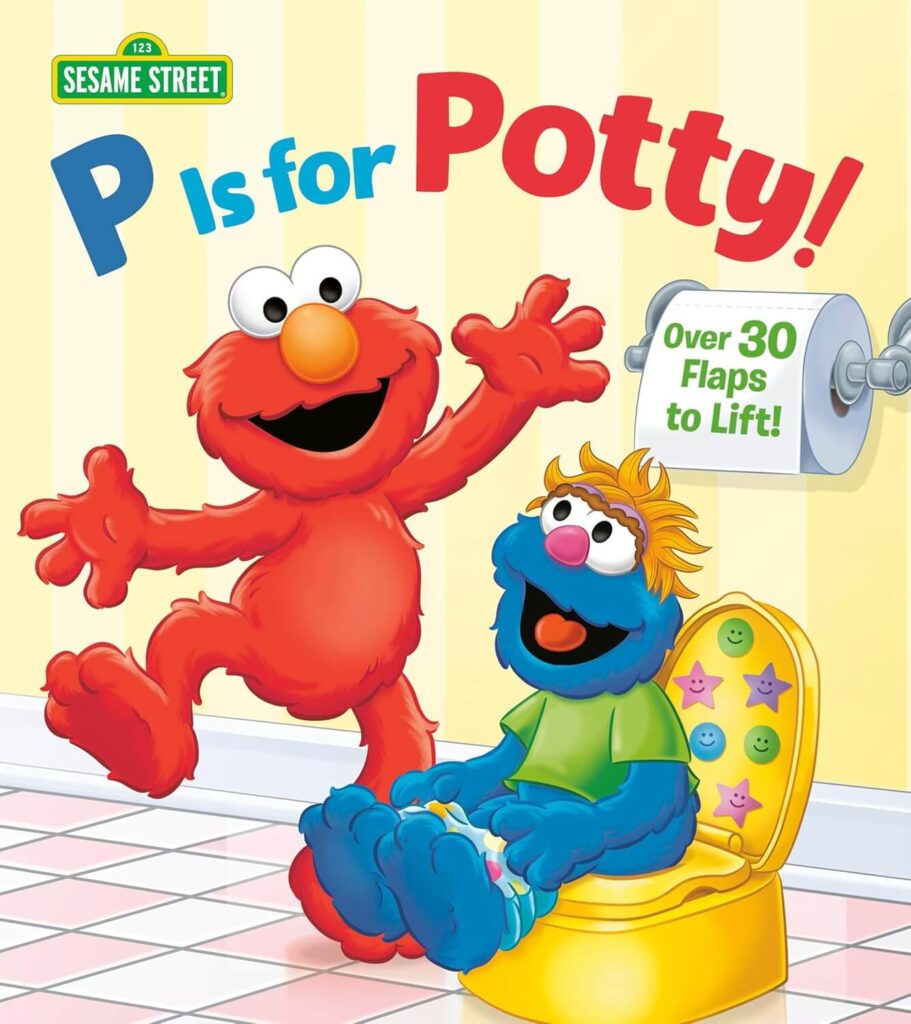
It’s also worth pairing a reward system with a potty training book. Modeling the behavior through a story tends to make rewards land better, since your child already has a mental picture of what success looks like.
Potty Training with Rewards FAQ
Do sticker charts actually work for potty training?
Yes, for some children. Sticker charts work by providing an immediate, visual form of positive reinforcement. They’re most effective when paired with genuine verbal praise.
What are good rewards for potty training?
Small, immediate rewards tend to work best: stickers, a favorite song, a special stamp, a few minutes of one-on-one play, or enthusiastic praise. Avoid large or delayed rewards, since toddlers respond much better to immediate feedback.
Can too many rewards backfire?
Yes. Relying too heavily on material rewards for too long can reduce a child’s internal motivation once the rewards stop. Balancing rewards with genuine praise, and fading them out over time, helps avoid this.
Rewards aren’t a shortcut around the hard parts of potty training, but used thoughtfully, they’re can be one tool.
Related Resources:
Leave a Reply