

Sneak peek: Research is beginning to reveal a connection between screen time and emotional regulation, particularly in young children.
Have you ever handed your phone or tablet to your child when they were fussy—or even in the middle of a tantrum? If so, you’re not alone. It’s an easy trap to fall into. We’ve done it on occasion in my family. Sometimes you just need a moment of calm, and screens can feel like the fastest solution.
However, as screens become a regular part of family life, many parents are starting to ask a crucial question: What is the connection between screen time and emotional regulation in young children?
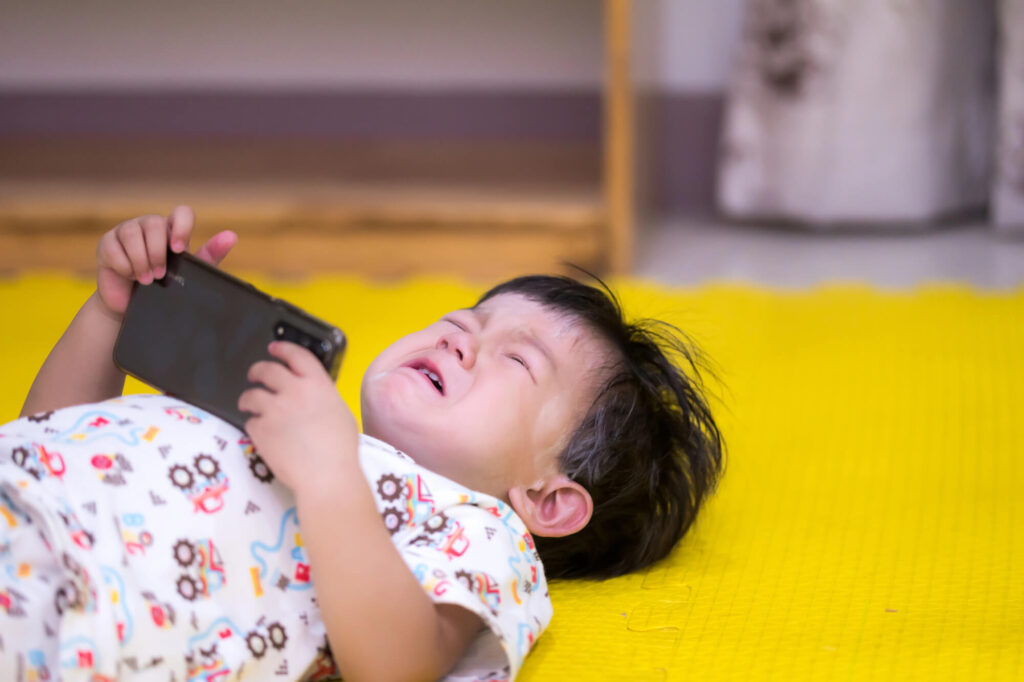
How Screen Time and Emotional Regulation Are Connected
Emotional regulation is a skill children develop over time. It includes the ability to identify feelings, tolerate frustration, calm down after being upset, and cope with disappointment. These skills don’t come naturally—they’re learned through repeated real-life experiences, often with adult support.
When screens are frequently used to calm children down, especially during moments of distress, researchers worry that kids may miss out on opportunities to practice emotional regulation skills.
What Research Says About Screen Time and Emotional Regulation
The research on this topic is not always detailed or one-sided. The chicken-and-egg situation is most likely at work here. Perhaps children who are more emotionally reactive tend to get exposed to screens more because they have more big emotional outbursts than other children. Or maybe it’s the other way around. We don’t really know yet.
One early study of toddlers found that children with greater social-emotional difficulties were more likely to be given mobile devices to calm them. While the study couldn’t determine cause and effect, it raised important questions about whether screens are responding to emotional challenges—or contributing to them.
More recent research strengthens these concerns. A longitudinal study published in JAMA Pediatrics found that frequent use of mobile devices to calm children ages 3–5 was associated with greater emotional reactivity over time. In other words, children who relied more on screens to calm down tended to show stronger emotional reactions and more difficulty regulating emotions later on.
Importantly, it’s also possible that context matters. Occasional screen use may not be a problem, but repeated use of screens as the primary coping tool could interfere with emotional development. This seems probable, but we don’t yet have this type of specific research.
Related reading: Self-Regulation for Kids: A Lifelong Lesson
What This Means for Parents
This research is not about blaming parents. No parent gets it “right” all the time. The key takeaway is awareness.
If screens become the default response to emotional distress, children may have fewer chances to learn how to:
- Sit with uncomfortable feelings
- Calm their bodies
- Use words instead of behavior
- Learn that emotions rise and fall
These are skills children need for school, relationships, and life.
Supporting Emotional Regulation Without Relying on Screens
When possible, try these research-supported alternatives:
Emotion coaching
“I see you’re really frustrated. That’s hard.”
Stay close
Your calm presence helps regulate your child’s nervous system before they can do it themselves.
Teach skills when your child is calm
Practice deep breathing, counting, or taking a break before big emotions hit.
Use screens intentionally
Choose high-quality content and, when you can, watch or play together instead of using screens as a calming shortcut.
Seek out support
Stress, lack of sleep, or financial struggles can affect how we respond to our kids. Support—whether from friends, family, or community resources—isn’t a luxury; it’s essential.
Related reading: Toddlers Have Big Emotions. Insight from Research on How to Respond
The Bottom Line on Screen Time and Emotional Regulation
Screens can be helpful tools, but they’re not neutral when used repeatedly to manage emotions. Research on screen time and emotional regulation suggests that while screens may calm children in the short term, relying on them too often can interfere with the development of self-regulation skills.
The goal isn’t perfection—it’s balance, intention, and support for both children and parents.

FAQ’s About Screen Time and Emotions
Screen time doesn’t directly cause tantrums, but research shows that frequent screen use is associated with higher emotional reactivity in young children. Some studies suggest a cycle in which children who struggle with emotions are given screens more often, which may then make emotional regulation more difficult over time.
The American Academy of Pediatrics recommends:
Under 18 months: Avoid screen time (except video chatting)
18–24 months: High-quality content with adult co-viewing
Ages 2–5: Limit to about 1-2 hours per day of high-quality programming
More important than the exact number is how screens are used—especially avoiding screens as the main emotional calming tool.
No. Not all screen time is equal. Co-viewing with a caregiver, using screens for learning or connection, and keeping screen time predictable and limited are very different from using screens as a frequent emotional coping tool. Context and intention matter.
Related Resources:


Leave a Reply